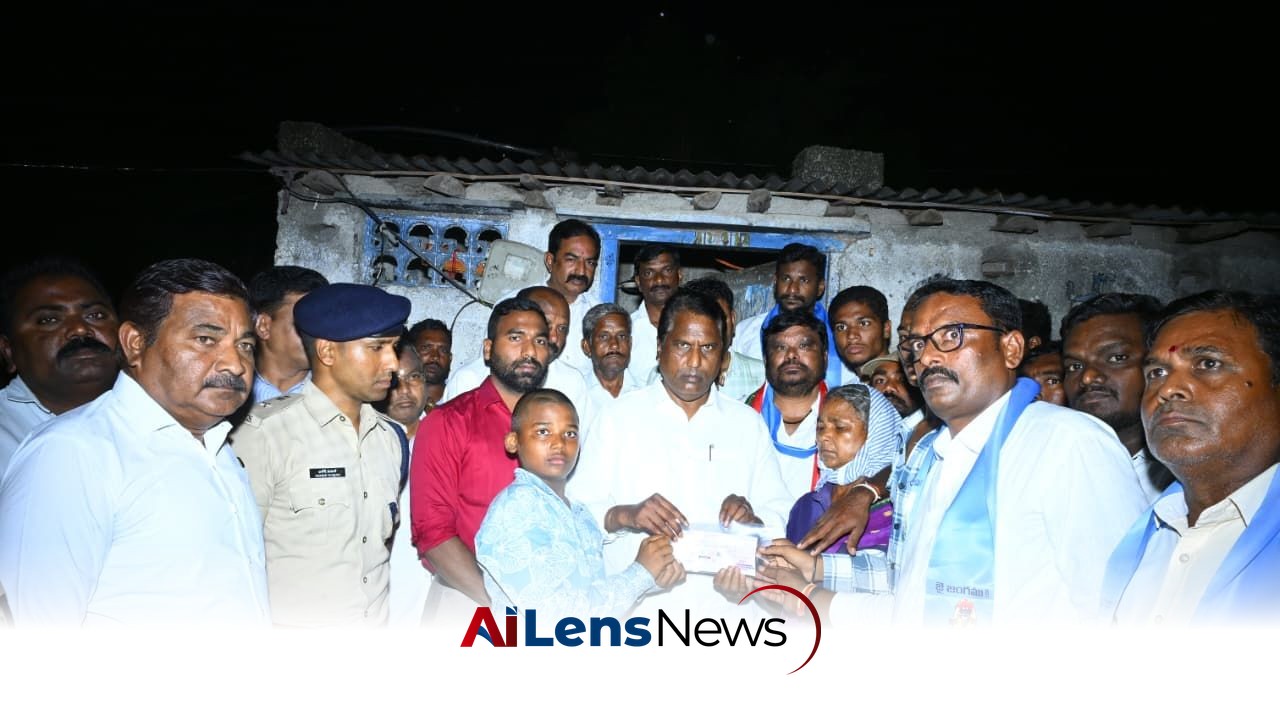


Welfare Minister Adluri Lakshman Kumar visited the family of Karre Sunitha, a murdered Dalit woman, offering financial aid and educational support for her children.
Hyderabad, India Jul 21, 2026 ALN: Karimnagar: In a significant move reflecting the government's commitment to support marginalized communities, Welfare Minister Adluri Lakshman Kumar visited the family of Karre Sunitha, a Dalit woman who was tragically murdered in Chintalapet, Metpally mandal. The minister handed over an ex gratia cheque amounting to Rs 4.12 lakh to Sunitha's family, marking a critical step in providing financial assistance to the bereaved.
The murder of Karre Sunitha has not only shocked the local community but has also raised broader concerns about the safety and protection of Dalit individuals in the region. Dalits, historically marginalized in Indian society, continue to face discrimination and violence, making incidents like this particularly alarming. The minister's visit and the financial support provided to the family can be seen as a response to these ongoing issues, aiming to offer some measure of relief during this tragic time.
During his visit, Minister Lakshman Kumar presented the cheque to Sunitha's grandmother, Karre Chinnakka, symbolizing the state's recognition of the family's loss. The emotional weight of such a gesture is profound, as it not only provides financial support but also serves to acknowledge the pain and suffering endured by the family. The government’s involvement in such personal tragedies is essential, as it underscores the need for systemic change and support for vulnerable populations.
In addition to the financial compensation, the minister expressed particular concern for the welfare of Sunitha’s two sons. Recognizing the potential impact of their mother’s death on their future, he announced that the government would take responsibility for their education. This commitment includes the admission of the children into Social Welfare residential educational institutions, which are designed to provide quality education and support to children from underprivileged backgrounds. The initiative aims to ensure that these children have access to opportunities that may otherwise be out of reach, thereby promoting social equity.
The commitment to support the education of Sunitha's children reflects a broader governmental strategy to uplift Dalit families and provide them with resources to overcome socio-economic challenges. In a society where educational attainment can significantly alter life trajectories, the government's proactive stance in this case could serve as a model for future interventions aimed at supporting marginalized communities.
Moreover, Minister Lakshman Kumar directed local officials to expedite the sanctioning of an Indiramma house for the family. The Indiramma scheme is a government initiative aimed at providing housing for the poor, particularly targeting marginalized groups. By ensuring that the family secures a stable living environment, the government is addressing one of the fundamental needs that can help alleviate their distress following such a loss.
Addressing the media, the minister emphasized the importance of timely compensation, stating that the first instalment of Rs 4.12 lakh had been released in accordance with government norms. He also highlighted that a second instalment of compensation would be disbursed after the filing of the chargesheet, ensuring that the family receives the full extent of the support available to them under the law. This structured approach to compensation not only provides immediate financial relief but also reinforces the legal framework surrounding such tragic incidents.
In his remarks, Lakshman Kumar reiterated the government's unwavering commitment to ensuring justice for the victim’s family. He underscored that those responsible for crimes against Dalits and tribals would face legal action, regardless of their social standing or influence. This statement is particularly significant in the context of India, where cases of violence against Dalits often go unpunished due to systemic biases and power dynamics. The minister's assurance aims to instill confidence in the legal system and encourage victims and their families to seek justice.
The murder of Karre Sunitha and the subsequent government response highlight the ongoing struggles faced by Dalit communities in India. Despite constitutional protections and various welfare schemes, the reality on the ground often reflects a different narrative. Incidents of violence against Dalits serve as a stark reminder of the deep-rooted social issues that persist, necessitating a multifaceted approach to address both immediate needs and long-term systemic changes.
The implications of this case extend beyond the immediate community, serving as a potential catalyst for broader discussions on social justice, equity, and the protection of marginalized groups in India. By actively engaging with the family and providing support, the government not only addresses the immediate aftermath of a tragic event but also sets a precedent for how similar cases may be handled in the future.
As the legal proceedings unfold, it is crucial for the community and the government to remain vigilant in ensuring that justice is served and that the lessons learned from this tragedy contribute to meaningful change. The path forward will require sustained efforts from all stakeholders, including government officials, civil society organizations, and the community at large, to create an environment where such violence is no longer tolerated and where every individual, regardless of caste, can feel safe and secure.
The case of Karre Sunitha is emblematic of the larger societal challenges that Dalits face in India. Despite the constitutional guarantees that aim to protect their rights and dignity, the reality often falls short, with many Dalits experiencing discrimination and violence. This incident not only highlights the urgent need for better law enforcement and protection mechanisms but also calls for a cultural shift to address the ingrained prejudices that fuel such violence.
Furthermore, the government's response, while commendable, raises questions about the adequacy of existing measures to prevent such tragedies from occurring in the first place. The provision of financial compensation and educational support is a necessary step, but it must be accompanied by comprehensive strategies aimed at eradicating caste-based discrimination and violence. This involves not only legal reforms but also community education and awareness programs that challenge the stereotypes and biases that perpetuate violence against marginalized groups.
In the wake of Sunitha's murder, community leaders and activists are likely to call for greater accountability and transparency in the investigation process. The assurance from Minister Lakshman Kumar that justice will be pursued vigorously is a positive development, but it must be matched by actions that demonstrate a commitment to holding perpetrators accountable. The effectiveness of the legal system in addressing such crimes will be scrutinized, and any perceived failures could lead to further unrest and demands for reform.
Moreover, this incident may spark wider conversations about the role of government in protecting vulnerable populations. The proactive measures taken by the government in this case, including financial support and educational commitments, could serve as a model for how to approach similar cases in the future. However, it is crucial that these measures do not become mere token gestures but are part of a sustained effort to address the root causes of violence against Dalits.
As discussions around social justice and equity continue to gain momentum in India, the murder of Karre Sunitha serves as a tragic reminder of the work that remains to be done. The government's response, while important, must be part of a larger framework that prioritizes the safety and dignity of all individuals, regardless of their caste. Only through concerted efforts can the cycle of violence and discrimination be broken, allowing for a more just and equitable society.
To learn more about the latest developments in Crime & Law, stay updated with our exclusive reports and analyses on AiLensNews.

