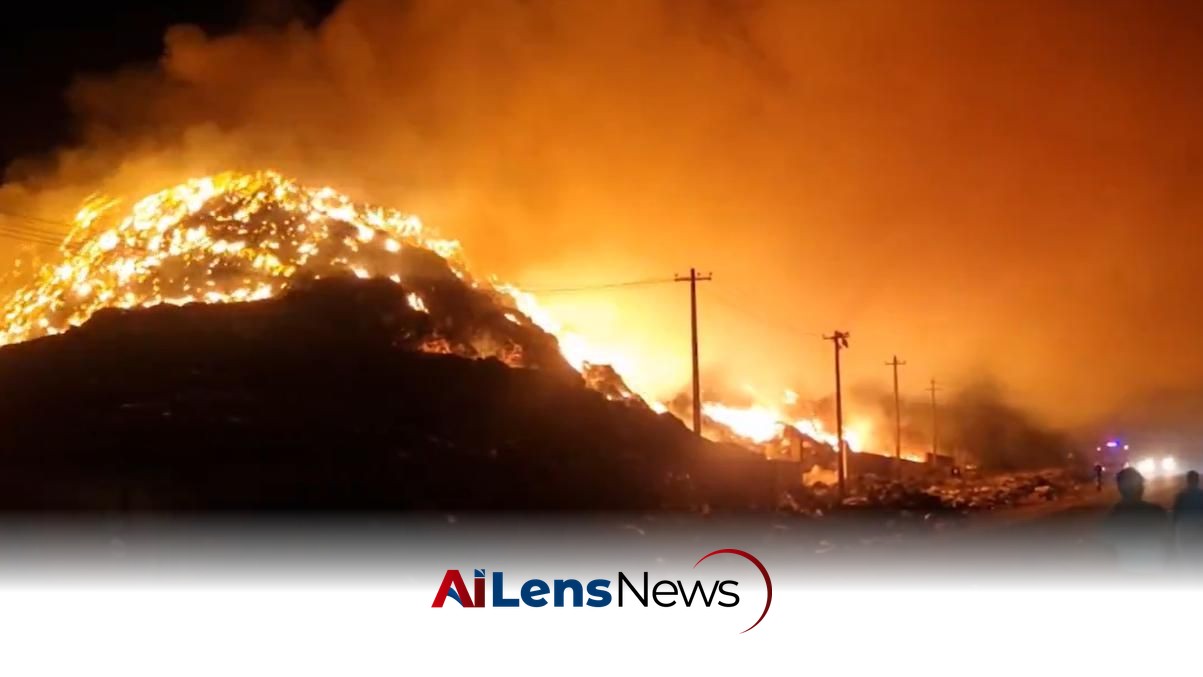


A significant fire at the Karur garbage dump has been raging for over five hours, prompting a large firefighting response amid thick smoke and intense heat.
Chennai, India Jul 16, 2026 ALN: Karur: A massive fire broke out at the garbage dump owned by the Karur City Municipal Corporation on Wednesday night. The incident has raised alarms regarding waste management practices and public safety in the region, prompting discussions about the environmental implications of such fires.
The fire reportedly ignited suddenly at around 8 pm, quickly spreading across the mountain-like heap of accumulated waste and engulfing the area in thick smoke. Such incidents are not uncommon in areas where waste is improperly managed, as decomposing organic material can generate heat and, in some cases, ignite spontaneously. The combination of dry conditions and the presence of flammable materials in the waste can lead to rapid fire spread, making containment efforts challenging.
The flames have been burning for more than five hours, causing significant concern as they spread across huge piles of garbage, emitting intense heat and thick smoke into the surrounding area. Smoke from such fires can pose serious health risks to nearby residents, particularly those with respiratory conditions or other health vulnerabilities. The particulate matter and toxic substances released into the air can contribute to long-term health problems, making the need for effective firefighting and waste management practices even more critical.
More than 20 personnel from the Karur Fire and Rescue Services are currently battling the blaze, utilizing three fire engines in their efforts to contain the fire. Firefighters face numerous challenges in combating fires at garbage dumps, including the risk of hazardous materials igniting and the difficulty of accessing certain areas of the dump. Firefighters often need to take special precautions to ensure their safety while working in such hazardous environments.
This municipal garbage yard, located near the Government Footwear Unit, routinely receives solid waste collected from all 48 wards under the Karur City Municipal Corporation. The management of waste in urban areas is a growing concern worldwide, particularly in developing regions where rapid population growth and urbanization have outpaced infrastructure development. Inadequate waste management can lead to a variety of environmental issues, including groundwater contamination, air pollution, and the proliferation of pests.
In the case of Karur, the garbage dump has become a focal point for discussions about the city's waste management strategies. The fire serves as a stark reminder of the potential dangers associated with neglecting proper waste disposal methods. It raises questions about the effectiveness of current waste management practices and the need for improvements in the collection, segregation, and treatment of waste materials.
Further details regarding the cause of the fire and ongoing firefighting efforts are awaited. Investigations into the incident will likely focus on identifying the source of the ignition and assessing the fire's impact on the surrounding environment. Local authorities may also consider implementing new safety measures to prevent similar incidents in the future.
In the broader context, this incident highlights the urgent need for cities like Karur to adopt more sustainable waste management practices. This could include investing in waste-to-energy technologies, increasing recycling efforts, and promoting community awareness about proper waste disposal methods. By addressing these issues, municipalities can not only reduce the risk of fires but also contribute to a healthier and more sustainable environment for their residents.
Moreover, the incident may prompt local government officials to reevaluate existing policies regarding waste management and to consider allocating more resources towards improving infrastructure. This could involve upgrading facilities for waste sorting and processing, as well as enhancing public education campaigns to inform citizens about the importance of waste reduction and responsible disposal.
As the situation develops, it will be crucial for the community to stay informed about the firefighting efforts and any potential health advisories related to smoke exposure. Residents living near the dump may need to take precautions, such as staying indoors and using air purifiers, until the fire is fully contained and air quality is assessed.
In conclusion, the massive blaze at the Karur garbage dump not only poses immediate challenges for firefighters and local authorities but also serves as a critical reminder of the ongoing issues surrounding waste management in urban areas. The incident underscores the importance of proactive measures to prevent such occurrences in the future, ensuring the safety and well-being of the community while promoting environmental sustainability.
To understand the implications of this incident fully, it is essential to consider the broader context of waste management in India and the challenges faced by municipalities across the country. Rapid urbanization has led to an increase in waste generation, often outpacing the capacity of local governments to manage it effectively. Many cities struggle with outdated waste management systems that are ill-equipped to handle the growing volume of waste, leading to issues such as open dumping and uncontrolled fires.
In addition to the immediate health risks posed by smoke inhalation, long-term exposure to pollutants released during such fires can exacerbate chronic health conditions, particularly asthma and other respiratory diseases. Vulnerable populations, including children and the elderly, may be particularly at risk. Authorities may need to implement health monitoring initiatives for residents living near the dump to assess and address any potential health impacts resulting from this incident.
The environmental implications of such fires extend beyond immediate health concerns. Fires at garbage dumps release greenhouse gases and other pollutants, contributing to climate change and air quality degradation. This is particularly concerning in the context of global efforts to combat climate change, as cities like Karur must balance waste management with environmental sustainability.
Furthermore, the incident may serve as a catalyst for community engagement and activism around waste management issues. Residents may become more vocal about their concerns regarding waste disposal practices and demand accountability from local officials. This could lead to increased pressure on the municipal government to take action and implement more sustainable waste management practices.
In light of the fire, local authorities may also explore partnerships with non-governmental organizations (NGOs) and community groups focused on waste management and environmental sustainability. Collaborative efforts could lead to innovative solutions, such as community-led recycling initiatives or educational programs aimed at reducing waste generation at the source.
As Karur grapples with the aftermath of this incident, it serves as a critical moment for reflection and action. The need for comprehensive waste management strategies that prioritize public health, environmental protection, and community engagement has never been more urgent. By learning from this incident and taking proactive steps, Karur can work towards a safer and more sustainable future for its residents.
Ultimately, the massive blaze at the Karur garbage dump is a multifaceted issue that highlights the interconnectedness of waste management, public health, and environmental sustainability. It calls for a concerted effort from local authorities, community members, and stakeholders to address the root causes of such incidents and to develop effective strategies that promote responsible waste management practices. Through collaboration and commitment, the community can strive to ensure that such incidents are not repeated and that the health and well-being of residents are safeguarded.
To learn more about the latest developments in Local & Regional, stay updated with our exclusive reports and analyses on AiLensNews.

