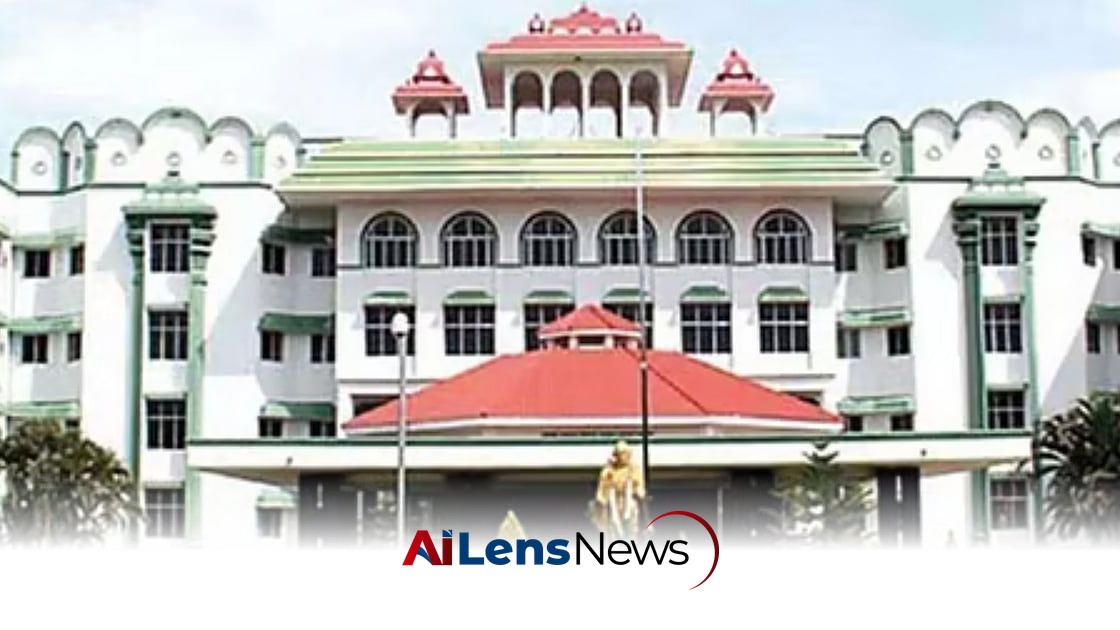


The Madurai Bench Bar Association has raised concerns over the exclusion of 'Tamil Thai Vazhthu' from the Madras High Court's Independence Day celebrations, urging adherence to tradition.
Chennai, India Aug 14, 2026 ALN: The Madurai Bench Bar Association has expressed strong objections regarding the omission of the traditional Tamil anthem, ‘Tamil Thai Vazhthu’, from the Madras High Court’s Independence Day celebrations. This decision has sparked significant controversy and led to a formal representation being submitted to the Registrar of the High Court by the association.
‘Tamil Thai Vazhthu’, which translates to ‘Invocation to the Mother Tamil’, is a revered Tamil anthem that holds cultural and historical significance for the Tamil-speaking population. It is often sung at various public and official gatherings in Tamil Nadu, symbolizing pride in the Tamil language and heritage. The anthem is not only a musical composition but also a representation of the Tamil identity, embodying the values of respect and reverence towards the Tamil language and culture.
The Madurai Bench Bar Association, a prominent legal body in the region, has a long-standing tradition of beginning court functions and significant events with the rendering of ‘Tamil Thai Vazhthu’. This practice is seen as a way to honor Tamil culture and to instill a sense of unity and respect among the legal fraternity and the public. The omission of the anthem from such an important event as Independence Day celebrations is perceived by the association as a disregard for the cultural heritage of the Tamil people.
The representation submitted to the Registrar of the High Court emphasized the importance of adhering to established customs and practices that reflect the values of the community. The association urged the court administration to reconsider its decision and to reinstate ‘Tamil Thai Vazhthu’ as part of the ceremonial proceedings during Independence Day celebrations. This appeal highlights the deep-rooted cultural sentiments associated with the anthem and the expectations of the Tamil-speaking populace regarding its inclusion in formal events.
This incident is not an isolated one; it reflects a broader context of cultural identity and the significance of language in public life in Tamil Nadu. The state has a rich history of linguistic pride, and the Tamil language has been a central element of its identity. The prominence of ‘Tamil Thai Vazhthu’ in various public and cultural ceremonies underscores the collective memory and historical struggle for recognition of the Tamil language, especially in the face of colonial and post-colonial challenges.
In recent years, there have been numerous discussions and debates around the role of regional languages in official settings, particularly in a country as diverse as India, where multiple languages coexist. Tamil Nadu has been at the forefront of advocating for the protection and promotion of its linguistic heritage. The omission of ‘Tamil Thai Vazhthu’ from the Independence Day celebrations can be seen as part of a larger narrative regarding the status of Tamil language in formal and governmental contexts.
Legal and cultural experts have weighed in on the implications of this incident. Many argue that the inclusion of regional languages and culturally significant practices in official ceremonies is essential for fostering a sense of belonging and identity among citizens. They believe that such practices contribute to the social fabric of the state and promote inclusivity. The Madurai Bench Bar Association’s protest against the omission can be interpreted as a call to reaffirm the importance of cultural practices in state functions, particularly in a legal setting that is meant to uphold justice and equality.
Moreover, the backlash against the omission of ‘Tamil Thai Vazhthu’ may lead to a broader discourse on how regional identities are represented in national celebrations and public life. As India continues to navigate its diverse cultural landscape, the role of language and regional identity in shaping public policy and ceremonial practices remains a pertinent issue. This incident may prompt other regional bodies and associations to voice their concerns regarding similar omissions in various contexts, further highlighting the need for sensitivity towards cultural practices.
In conclusion, the Madurai Bench Bar Association's protest against the omission of ‘Tamil Thai Vazhthu’ from the Independence Day celebrations at the Madras High Court not only reflects the sentiments of the legal community but also resonates with a larger movement advocating for the recognition of Tamil language and culture in public life. The outcome of this protest may have implications for future practices within the court system and could serve as a catalyst for discussions around the importance of cultural representation in official state functions. As the situation develops, it will be crucial to observe how the High Court administration responds to the concerns raised by the association and whether this will lead to a reinstatement of the anthem in future celebrations.
The controversy surrounding this incident also underscores the ongoing tension between regional and national identities within India. The country is characterized by its vast diversity, with multiple languages, cultures, and traditions coexisting. The Tamil language, with its ancient roots and rich literary heritage, has often been a focal point in discussions about cultural pride and identity. This incident, therefore, is not merely about a song; it is emblematic of the larger struggles faced by regional languages in asserting their place in a predominantly Hindi-speaking national narrative.
The Tamil Nadu government has historically taken a strong stance on promoting the Tamil language and culture, often leading initiatives to ensure that Tamil is used in official capacities. This includes education, administration, and public communication. The omission of ‘Tamil Thai Vazhthu’ from a significant event like Independence Day could be perceived as a step back in these efforts, potentially alienating those who feel strongly about the preservation and promotion of their linguistic heritage.
Furthermore, the social implications of this incident extend beyond the legal community. The Tamil-speaking population at large may view this omission as a slight against their cultural identity, igniting discussions about the importance of recognizing and celebrating regional languages in official ceremonies. This could lead to increased activism and mobilization among cultural groups and associations advocating for the inclusion of regional languages in public life.
As the Madurai Bench Bar Association continues to push for the inclusion of ‘Tamil Thai Vazhthu’, it may also inspire similar movements in other states where regional languages are underrepresented in official functions. Such movements could foster a renewed focus on linguistic rights and cultural representation, prompting a reevaluation of how national celebrations are conducted across the country.
In light of this incident, it becomes imperative for authorities and policymakers to engage in dialogue with cultural and linguistic communities to ensure that their voices are heard and respected. The inclusion of regional languages and cultural practices in state functions can serve as a bridge to foster unity and respect among the diverse populations of India. By recognizing the importance of these cultural expressions, the state can reinforce a sense of belonging and pride among its citizens, which is essential for social cohesion in a multicultural society.
Ultimately, the Madurai Bench Bar Association's protest is more than a reaction to a single event; it is a reflection of the ongoing struggle for cultural recognition and the affirmation of identity in a rapidly changing world. As discussions around language and identity continue to evolve, the outcomes of this protest may have lasting implications for how regional languages are integrated into the fabric of public life in India, shaping the future of cultural representation in a diverse nation.
To learn more about the latest developments in Crime & Law, stay updated with our exclusive reports and analyses on AiLensNews.

