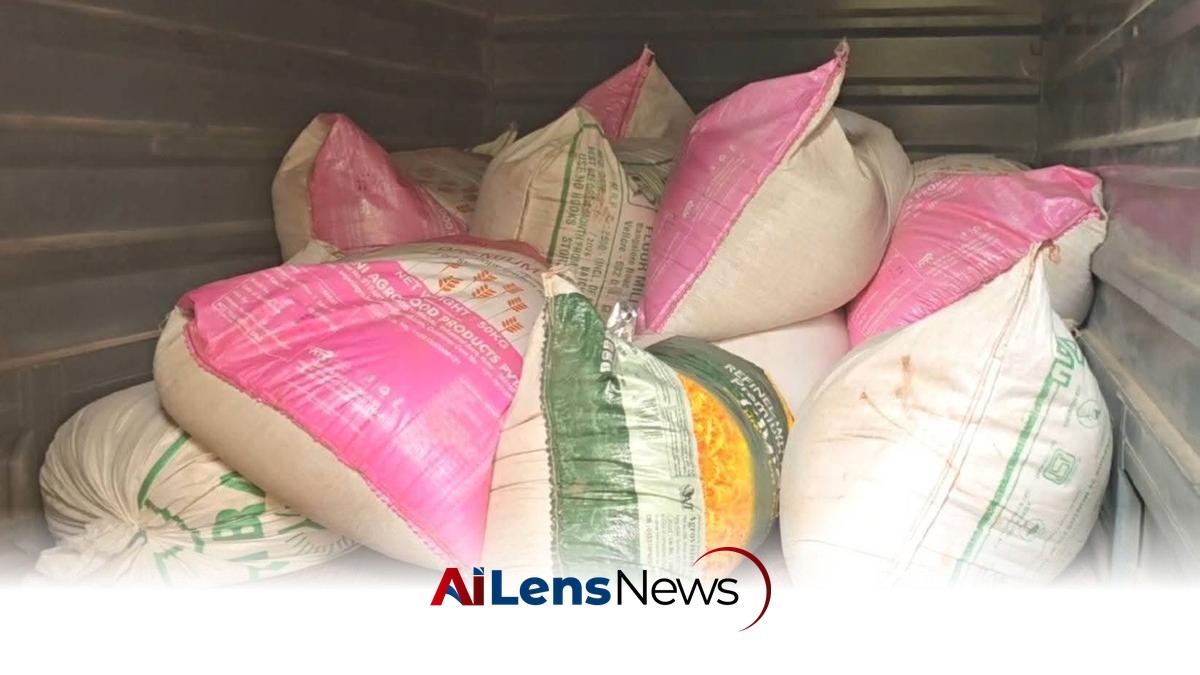


A surprise check led to the seizure of one tonne of rice meant for the Public Distribution System in Ranipet, with police investigating the suspects involved.
Chennai, India Jul 25, 2026 ALN: The recent seizure of one tonne of rice intended for distribution under the Public Distribution System (PDS) in Ranipet has highlighted ongoing concerns regarding the smuggling of essential commodities in the region. The operation, conducted by a team led by the Arakkonam Taluk Supply Officer (TSO) of the Department of Civil Supplies, took place in Pudur village, marking a significant effort to curb illegal activities associated with the distribution of subsidized food grains.
The Public Distribution System, established in India to provide food security to the economically disadvantaged sections of society, plays a crucial role in ensuring that essential commodities such as rice, wheat, and sugar are available at subsidized rates. However, the system has often been plagued by issues of diversion and smuggling, where subsidized goods are illegally sold in the open market for profit, undermining the very purpose of the PDS.
According to police reports, the seizure was executed following directives from Collector N. Priya, who recognized the urgent need to address the rampant smuggling of PDS rice in the district. In response, special teams comprising police personnel and Civil Supplies officials were formed to conduct surprise checks across various locations in the district. This proactive approach reflects a broader strategy to combat corruption and ensure that food security measures are effectively implemented.
During the surprise checks, which took place in Panapakkam, Nemili, and surrounding villages, the team stopped a van that was found to be carrying several bags of PDS rice. The operation was swift; however, the driver of the vehicle and an associate managed to flee the scene, raising concerns about the organized nature of such smuggling operations. The authorities' response included sending the seized rice to a godown maintained by the Department of Civil Supplies in Ranipet, where it would be safeguarded until further investigations could be conducted.
In the aftermath of the incident, police began analyzing CCTV camera footage from the area, which revealed a group of individuals loading rice sacks onto the vehicle. This evidence not only supports the case against the suspects but also indicates a potential network involved in the diversion of PDS rice. Authorities indicated that the rice seized was likely collected from various towns such as Arcot, Arakkonam, Sholinghur, and Walajah, where it is distributed to the public under the PDS. The intention behind the smuggling operation appears to be to transport the rice to Andhra Pradesh, where it would be sold to wholesale dealers at a profit, further exacerbating the challenges faced by the PDS.
The implications of such illegal activities are severe. When subsidized rice is diverted from the PDS, it not only deprives the intended beneficiaries of essential food grains but also contributes to inflated prices in the open market. This can lead to food insecurity among vulnerable populations who rely on the PDS for their daily sustenance. Moreover, the diversion of PDS commodities undermines government efforts to stabilize food prices and ensure that basic needs are met for those in need.
As the investigation progresses, the Nemili police have registered a case and are actively pursuing leads to apprehend the suspects who fled the scene. The formation of special teams indicates a commitment to addressing this issue comprehensively, with an emphasis on both immediate enforcement actions and longer-term strategies to strengthen the integrity of the PDS.
In recent years, various states in India have implemented measures to enhance the efficiency and transparency of the PDS. Initiatives such as the use of technology for tracking the distribution of food grains and the introduction of biometric identification systems have been introduced to minimize leakages and ensure that benefits reach the intended recipients. However, the persistence of smuggling and diversion highlights the need for ongoing vigilance and reform to address the systemic vulnerabilities that allow such practices to continue.
The incident in Ranipet serves as a reminder of the challenges faced by government authorities in maintaining the integrity of the Public Distribution System. It underscores the importance of community engagement and public awareness in identifying and reporting suspicious activities related to food grain distribution. As the investigation unfolds, it will be crucial for authorities to not only focus on apprehending those involved in this specific incident but also to implement broader measures aimed at preventing future occurrences of PDS smuggling.
Ultimately, the effectiveness of the Public Distribution System hinges on the cooperation of various stakeholders, including government agencies, law enforcement, and the public. By working together to combat corruption and ensure the proper distribution of food resources, the government can better fulfill its commitment to food security and support the most vulnerable populations in society.
Moreover, the issue of PDS diversion is not confined to Ranipet or even ; it is a problem that affects various states across India. The magnitude of the challenge is underscored by the fact that, according to some estimates, a significant portion of the food grains allocated under the PDS never reaches the intended beneficiaries. This leakage not only affects food security but also has broader implications for poverty alleviation efforts and social welfare programs.
In light of this incident, there is a pressing need for policymakers to reevaluate the mechanisms of the PDS. Strengthening the monitoring and evaluation processes, enhancing the accountability of officials involved in the distribution, and engaging with local communities to promote transparency are all vital steps that can be taken. Additionally, public awareness campaigns can empower citizens to report irregularities and hold the system accountable.
The role of technology cannot be overstated in this context. The integration of digital platforms for tracking the movement of food grains, coupled with robust data analytics, can provide real-time insights into distribution patterns and help identify anomalies that may indicate diversion. Furthermore, implementing a more robust grievance redressal mechanism can ensure that complaints regarding PDS operations are addressed promptly and effectively.
As the investigation into the Ranipet incident continues, it will be important for authorities to share their findings with the public to maintain transparency and build trust in the system. By doing so, they can foster a sense of community ownership over the PDS and encourage citizens to take an active role in safeguarding this vital resource.
In conclusion, the seizure of PDS rice in Ranipet serves as a critical reminder of the ongoing challenges facing the Public Distribution System in India. Addressing the root causes of diversion and smuggling requires a multifaceted approach that combines enforcement, community engagement, and technological innovation. Only through a concerted effort can the government hope to ensure that the benefits of the PDS reach those who need them most, thereby fulfilling its commitment to food security and social welfare.
To learn more about the latest developments in Crime & Law, stay updated with our exclusive reports and analyses on AiLensNews.

