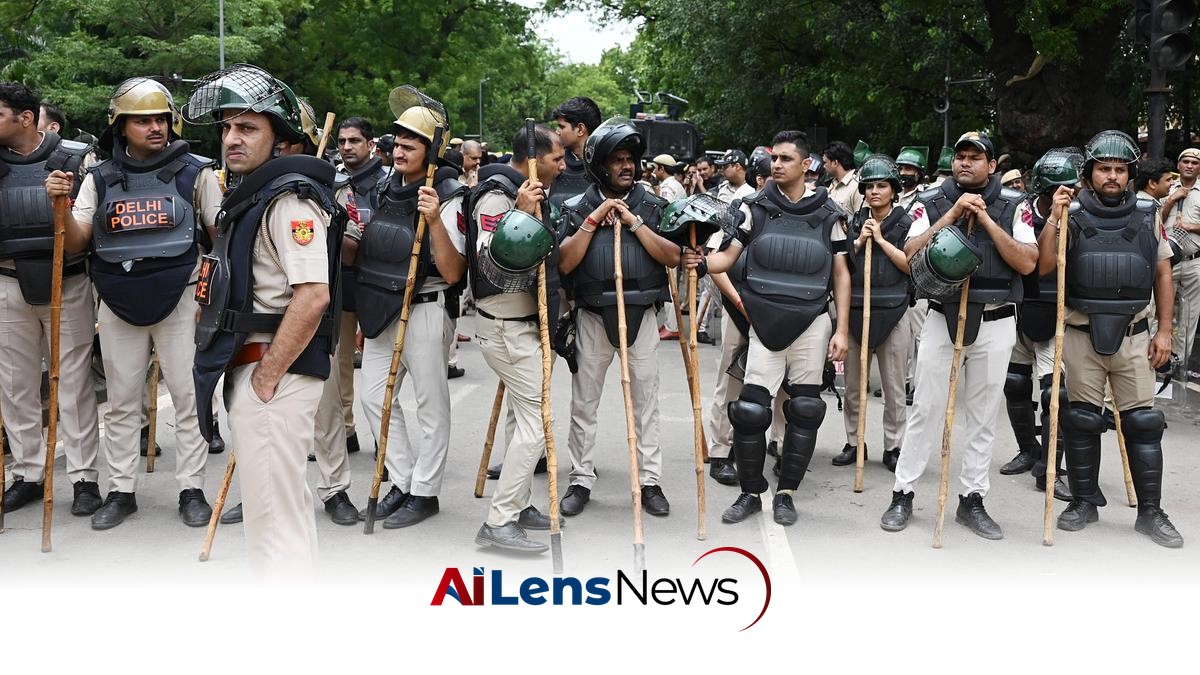


The Supreme Court is scrutinizing the Delhi Police's communication with the Ministry of Home Affairs during the NEET-UG protests, raising concerns about political influence.
New Delhi, India Jul 29, 2026 ALN: The Supreme Court of India is currently examining the role of the Delhi Police in connection with the violent protests that erupted during the Eligibility cum Entrance Test for Under Graduate (NEET-UG) on July 20. The protests, which were primarily led by students advocating for their rights and demanding reforms in the examination process, escalated into significant unrest, prompting law enforcement to intervene. The court's scrutiny comes at a time when the accountability of police actions, particularly in relation to protests, is a matter of growing public interest and concern.
As the situation unfolded, little information has been disclosed regarding the instructions or consultations that took place between the Delhi Police and the Ministry of Home Affairs (MHA). The MHA has a critical role in overseeing the Delhi Police, as articulated under Article 239AA of the Indian Constitution. This provision grants the MHA authority over the police force in the capital, highlighting the intertwined relationship between law enforcement and political oversight. The MHA's responsibilities include ensuring public safety and order, which raises questions about the degree of political influence on police operations during times of civil unrest.
In examining past precedents, the Supreme Court's judgment from February 2012 in the Ramlila Maidan Incident versus Home Secretary serves as a significant reference point. The judgment referenced an affidavit submitted by the then Delhi Police Commissioner, which indicated that the police routinely keep the MHA informed during instances of public unrest. The court noted that the MHA has a vested interest in maintaining law and order in the capital, and therefore, it closely monitors situations that could disrupt public peace. This historical context underscores the established protocols between the police and the political executive, which can influence the handling of protests.
The implications of this relationship are profound, especially in light of the recent protests. The court's inquiry into the political executive's stance on the police's actions during the NEET-UG protests is crucial. One of the petitions presented to the court has drawn a stark comparison between the police's response and historical instances of state violence against civilians, specifically likening it to the atrocities of the Jallianwala Bagh massacre. Such comparisons underscore the gravity of the allegations against law enforcement and the potential ramifications for civil liberties in India. The invocation of such historical events serves as a reminder of the delicate balance between maintaining order and respecting the rights of citizens, particularly in a democracy where dissent is an integral component of political expression.
In the political arena, the Leader of the Opposition in the Lok Sabha has raised questions regarding the use of force by the police, reportedly inquiring whether the Home Minister had authorized the deployment of "lethal force" against the protesters. This inquiry reflects a growing concern about the use of excessive force by law enforcement in managing civil dissent, particularly in a democratic society where the right to protest is constitutionally protected. The political discourse surrounding this issue highlights the tension between the state's duty to maintain order and the rights of individuals to express their grievances freely, a fundamental principle enshrined in the Indian Constitution.
The Supreme Court has historically demonstrated a keen awareness of the potential for political influence over police actions. This concern was notably articulated in the landmark Prakash Singh case, which was decided two decades ago. The 2006 judgment emphasized the dangers of allowing political executives to exert overwhelming control over police forces, warning that such influence could lead to serious violations of individual rights and undermine the rule of law. The Prakash Singh case set a precedent for addressing the relationship between law enforcement and political authority, emphasizing the need for police reforms to insulate officers from political pressures that could compromise their ability to perform their duties impartially.
In its ruling, the court referenced a 1979 research paper titled 'Political and Administrative Manipulation of the Police,' which highlighted the risks associated with excessive political control over law enforcement agencies. The paper cautioned that this manipulation could transform the police into instruments of political power, thereby threatening democratic principles and the integrity of public order. The court's findings in the Prakash Singh case were particularly relevant in addressing police conduct during large-scale civil unrest, such as the recent NEET-UG protests. The implications of this research resonate today, as the Supreme Court navigates the complexities of police accountability in the context of the protests and broader societal issues.
Furthermore, the Prakash Singh judgment included insights from a letter penned by the then Home Minister to state governments in 1997. This correspondence underscored the detrimental impact of political interference on police operations, asserting that many deficiencies in police functioning stemmed from unhealthy political meddling. The letter called for measures to insulate the police from partisan influences, emphasizing the importance of allowing law enforcement to perform its duties without undue political pressure. This historical context is crucial as the court evaluates the recent actions of the Delhi Police, highlighting the ongoing struggle for reform and accountability in the face of political influence.
As the Supreme Court deliberates on the events surrounding the NEET-UG protests, it is likely to consider the broader implications of police accountability and the need for reforms to protect individual rights. The court has consistently upheld the notion that respect for individual rights is the foundation of democracy. In this context, the liability of the state to address and rectify any harm inflicted by its law enforcement officers is paramount. The court's decisions could potentially set a precedent for future cases involving police conduct and civil rights, shaping the landscape of law enforcement accountability in India.
The examination of the Delhi Police's actions during the NEET-UG protests not only raises questions about specific incidents of violence but also serves as a critical juncture for assessing the relationship between law enforcement and political authority in India. The outcomes of these Supreme Court hearings could have far-reaching consequences for civil liberties, police conduct, and the principles of accountability within India's democratic framework. The court's rulings may lead to a re-evaluation of existing policies and practices regarding police engagement with the public, particularly in situations of civil unrest.
In conclusion, the ongoing Supreme Court hearings regarding the NEET-UG protests encapsulate a broader dialogue about the role of police in democratic societies, the influence of political power on law enforcement, and the imperative to safeguard individual rights. As the court navigates these complex issues, the implications of its rulings will resonate beyond the immediate context of the protests and could shape the future landscape of civil rights and police accountability in India. The outcomes of these hearings will not only impact the students involved in the protests but also set a precedent for how law enforcement interacts with citizens in the future, potentially redefining the parameters of acceptable police conduct in a democracy.
To learn more about the latest developments in Crime & Law, stay updated with our exclusive reports and analyses on AiLensNews.

