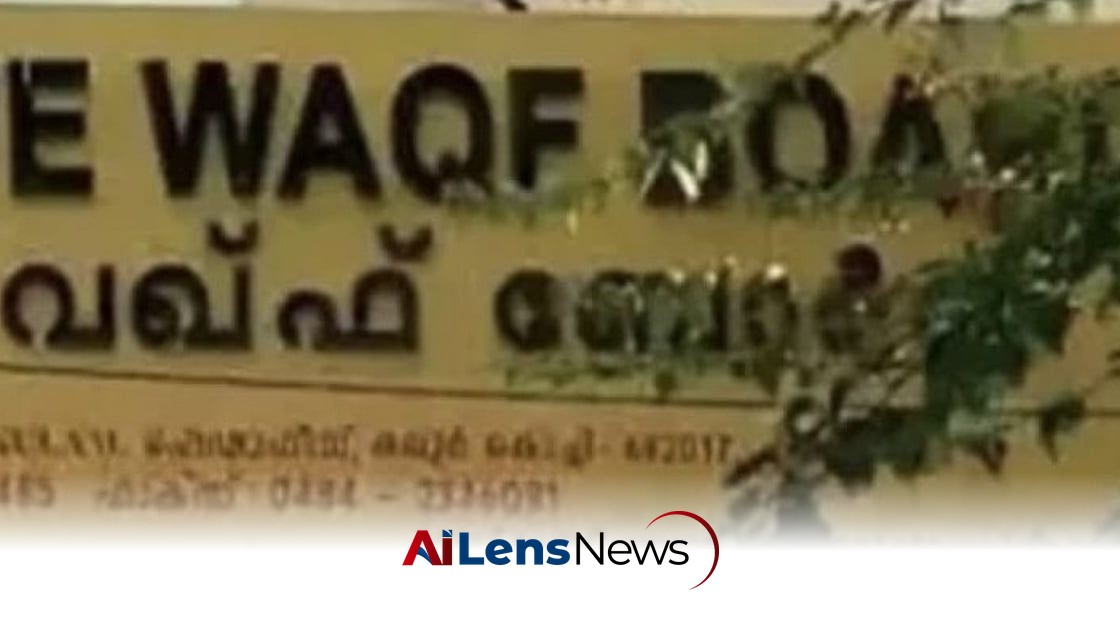


The Supreme Court has removed the Kerala High Court's supervision requirement for the Kerala State Waqf Board, urging a swift decision on the Board's constitution.
New Delhi, India Jul 22, 2026 ALN: The Supreme Court's recent decision to lift the supervision clause on the Kerala State Waqf Board has significant implications for the governance of religious endowments in India. This ruling, delivered on July 21, marks a pivotal moment in the ongoing legal and political discourse surrounding the Board's constitution and its adherence to the amended Waqf law.
The Kerala State Waqf Board, established under the Waqf Act of 1995, is responsible for the administration of Waqf properties in the state of Kerala. Waqfs are charitable endowments made by Muslims for religious or social purposes, and they play a crucial role in supporting various community initiatives, including educational institutions, mosques, and healthcare facilities. The governance of these properties is of paramount importance to the Muslim community in Kerala, which has a substantial demographic presence in the state.
The controversy surrounding the Board began when the Kerala High Court, while hearing petitions challenging its constitution, observed that the Board did not comply with the requirements set forth in the amended Waqf law. Specifically, the court noted that the Board lacked the necessary representation of two non-Muslim members and one Shia member, which is mandated by the law. This observation led to the High Court imposing restrictions on the Board's functioning, effectively curtailing its ability to make significant policy decisions or incur capital expenditure without prior permission.
One of the notable petitions challenging the Board's constitution was filed by BJP leader Shone George, who argued that the lack of non-Muslim representation undermined the Board's legitimacy and functionality. This legal challenge reflects broader political tensions in Kerala, where religious and communal identities often intersect with party politics. The BJP, a party with a national agenda that includes the promotion of Hindu interests, has been vocal in its criticism of the Waqf Board's composition, viewing it as an opportunity to assert its influence in a predominantly Muslim region.
In response to the High Court's interim order, the Kerala State Waqf Board approached the Supreme Court, arguing that the restrictions imposed were overly burdensome and effectively paralyzed its operations. The Board contended that while it acknowledged the concerns raised regarding its composition, the absence of certain members did not render it non-functional under the Waqf Act. Senior advocates representing the Board emphasized that the restrictions were imposed without adequate hearing and that the Board should be allowed to operate within the parameters of the law.
The Supreme Court's decision to delete the requirement for the Board to function under the supervision of a Joint Secretary or Additional Secretary from the state government was a significant relief for the Waqf Board. The apex court articulated that the Joint Secretary or Additional Secretary, as a member of the Board, should continue to function in that capacity without the additional oversight mandated by the High Court. However, the Supreme Court also refrained from lifting all restrictions, opting instead to direct the High Court to expedite its hearing on the matter, thereby ensuring that all parties involved had the opportunity to present their arguments.
This ruling has been welcomed by the chairperson of the Kerala State Waqf Board, KS Hamsa, who characterized it as a victory for the Board and an affirmation of its operational autonomy. Hamsa's remarks underscore the Board's commitment to fulfilling its responsibilities without undue interference from governmental authorities.
The implications of this ruling extend beyond the immediate governance of the Waqf Board. The political landscape in Kerala has been notably affected by the ongoing discussions surrounding the Waqf law and its implementation. The opposition CPI(M) has accused the Congress-led UDF government of complicity in the implementation of the amended Waqf law, despite having challenged the legislation before the Supreme Court. This accusation highlights the intricate relationship between legal developments and political maneuvering in Kerala, where religious sentiments often influence electoral dynamics.
Moreover, the Indian legal framework surrounding Waqf properties is complex and often contentious. The inclusion of non-Muslim members on Waqf Boards has been a point of contention, raising questions about representation, governance, and the secular nature of the Indian state. Proponents of diverse representation argue that it fosters inclusivity and reflects the pluralistic fabric of Indian society, while opponents contend that it undermines the integrity and purpose of Waqf institutions, which are inherently religious in nature.
The Supreme Court's directive for the High Court to expedite its hearing on the matter is crucial, as it seeks to address the legal uncertainties that have arisen from the Board's composition and the applicability of the amended Waqf law. A timely resolution is essential not only for the functioning of the Waqf Board but also for the broader implications it holds for religious governance in India.
As this situation continues to unfold, it will be important to observe how the High Court approaches the matter in its upcoming hearings. The outcomes could set precedents for the governance of Waqf properties across India, influencing similar legal challenges in other states and potentially reshaping the relationship between state authorities and religious institutions.
In conclusion, the Supreme Court's ruling to lift the supervision clause on the Kerala State Waqf Board is a significant development in the ongoing legal and political discourse surrounding Waqf governance in India. The implications of this decision extend beyond the immediate context of the Board, touching upon broader themes of representation, governance, and the intersection of religion and politics in a diverse society. As the High Court prepares to hear the case, all eyes will be on how the legal framework surrounding Waqf institutions evolves in response to these challenges.
To learn more about the latest developments in Crime & Law, stay updated with our exclusive reports and analyses on AiLensNews.

