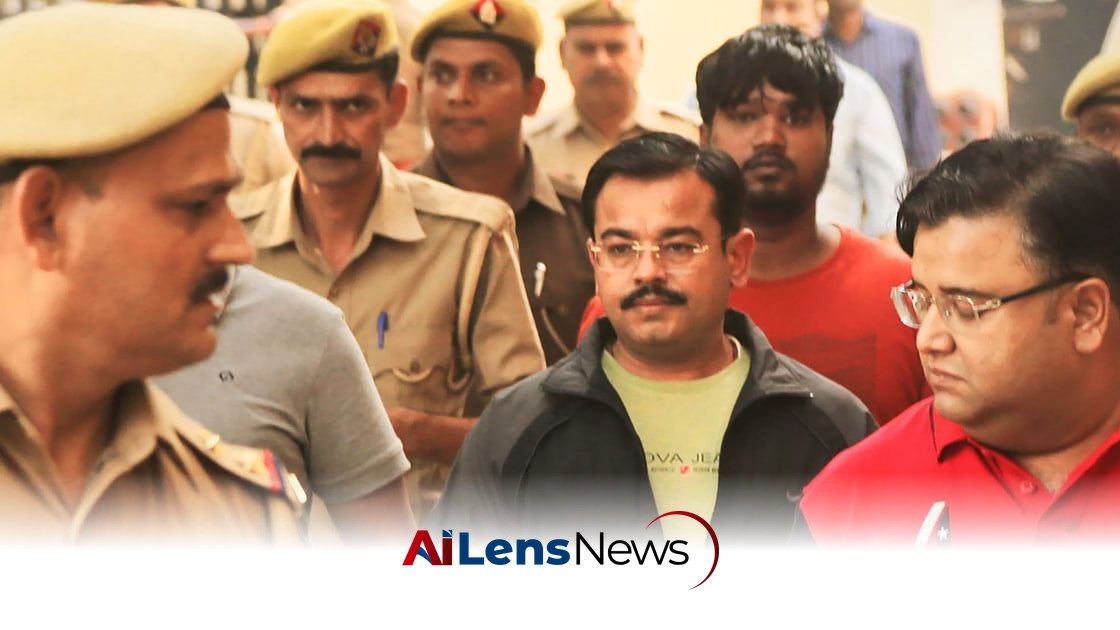


The Supreme Court has been informed that the UP Police found no evidence linking Ashish Mishra or his father to witness intimidation in the Lakhimpur Kheri case.
New Delhi, India Jul 16, 2026 ALN: New Delhi: The Supreme Court was informed on Thursday that the Uttar Pradesh Police investigation found no evidence linking Ashish Mishra, also known as Monu, or his father and former Union Minister Ajay Mishra ‘Teni’, to the alleged intimidation of witnesses in the sensitive Lakhimpur Kheri violence case.
A bench of Chief Justice of India Surya Kant and Justices Joymalya Bagchi and V Mohana was hearing a matter related to Ashish Mishra’s bail. This case has attracted significant media attention and public scrutiny due to the high-profile nature of those involved and the broader implications it holds for law enforcement and political accountability in India.
Mishra is currently out on bail granted by the apex court, which has been closely monitoring the progress of the trial. The bail was granted amid concerns over the potential misuse of power and influence by the accused, given their political connections. The Supreme Court's involvement underscores the judiciary's role in ensuring that justice is served, particularly in cases involving allegations of political interference.
The state government submitted a status report stating that the probe into the FIR alleging witness intimidation has been completed. The report concluded there was no incriminating material against the Mishras. This finding is particularly significant as it suggests that the police investigation did not uncover any evidence to support the claims made by the complainant, Baljinder Singh, who alleged that he was threatened to withdraw his testimony related to the Lakhimpur Kheri incident.
A chargesheet has been filed against one Amandeep Singh, and the competent court has taken cognizance of it. This indicates that while the investigation into the Mishras did not yield results, there are still ongoing legal proceedings against other individuals involved in the case. The complexity of the Lakhimpur Kheri incident and its aftermath reflects the challenges faced by law enforcement in handling politically sensitive cases.
The Supreme Court granted the complainant two weeks’ time to file an additional affidavit in response to the status report. This procedural step allows the complainant to present further evidence or arguments if they believe that the investigation was inadequate or that there are still grounds for concern regarding witness intimidation.
During the hearing, Ashish Mishra’s counsel argued that with the chargesheet already filed and his client having been absolved of any role, the complainant should pursue any further remedies before the magistrate’s court rather than the apex court. This argument highlights the legal strategy often employed in high-profile cases, where defense attorneys seek to limit the scope of judicial scrutiny and shift the focus to lower courts.
The bench, however, observed, “Why are you advising them?” This remark from the bench reflects the court's awareness of the sensitive nature of the case and its implications for the judicial process. It also indicates that the Supreme Court is taking a proactive approach in ensuring that all parties are afforded their rights and that justice is not delayed or obstructed.
The FIR for witness intimidation was registered by the UP Police in October last year after the Supreme Court sharply criticised the authorities for inaction on a complaint by Baljinder Singh, who alleged he was threatened into withdrawing his statement. The registration of this FIR came after significant public outcry and media coverage of the Lakhimpur Kheri incident, which had already raised questions about the effectiveness of the police and the justice system in handling cases involving powerful individuals.
The top court had then directed a senior officer to personally record the complainant’s statement. This intervention by the Supreme Court was a crucial step in ensuring that the allegations of witness intimidation were taken seriously and investigated thoroughly. It also reflects the judiciary's role in safeguarding the rights of individuals, particularly in cases where there may be a power imbalance between the parties involved.
The main case relates to the October 3, 2021, Lakhimpur Kheri incident in which eight people, including four farmers, were killed when vehicles in a convoy allegedly linked to Ashish Mishra ran over protesting farmers, triggering widespread outrage. This incident occurred during a period of intense protests by farmers against controversial agricultural laws, which had become a flashpoint for broader discontent with the government.
The Lakhimpur Kheri incident has not only highlighted issues of accountability and justice but has also brought to the forefront the challenges faced by farmers in India. The deaths of the farmers, who were protesting for their rights, sparked nationwide protests and drew attention to the plight of the agricultural community in India. The incident has since been viewed as emblematic of the struggles faced by farmers against government policies that they perceive as detrimental to their livelihoods.
The implications of the Supreme Court's recent ruling and the ongoing legal proceedings in the Lakhimpur Kheri case are far-reaching. They raise questions about the effectiveness of law enforcement in politically sensitive cases, the potential for witness intimidation, and the need for reforms in the justice system to ensure that all individuals, regardless of their political connections, are held accountable for their actions.
As the case continues to unfold, it will be crucial to monitor not only the legal outcomes but also the broader societal reactions and implications for public trust in the justice system. The handling of this case could set important precedents for how similar cases are dealt with in the future and may influence public perceptions of justice and accountability in India.
Political accountability in India has long been a contentious issue, particularly when it involves individuals with significant influence and connections. The Lakhimpur Kheri incident has highlighted the need for a robust and impartial judicial process that can withstand external pressures. The Supreme Court's oversight in this case is an attempt to ensure that the rule of law prevails, irrespective of the political affiliations of the accused.
The backdrop of the Lakhimpur Kheri incident is critical to understanding its implications. The incident occurred against the backdrop of widespread farmer protests that erupted in response to three contentious agricultural laws introduced by the government. These laws were perceived by many farmers as detrimental to their livelihoods, sparking a wave of dissent that culminated in massive protests across the country. The Lakhimpur Kheri incident, therefore, is not just a standalone case but part of a larger narrative about the rights of farmers and the government's approach to agrarian issues.
The role of the media in this case cannot be understated. Extensive coverage of the events surrounding the Lakhimpur Kheri incident has played a significant role in shaping public perception and awareness. The media's focus on the case has kept it in the public eye, ensuring that the issues of accountability and justice remain at the forefront of national discourse. This scrutiny is essential in a democracy, where the media acts as a watchdog, holding those in power accountable for their actions.
As the legal proceedings continue, it will be important for all stakeholders, including the judiciary, law enforcement, and the government, to demonstrate their commitment to upholding the principles of justice and accountability. The outcomes of this case may set important precedents for how similar cases are handled in the future, particularly those involving politically connected individuals. The need for transparency and fairness in the judicial process is paramount in maintaining public trust in the legal system.
In conclusion, the Supreme Court's recent ruling in the Ashish Mishra witness intimidation case reflects the ongoing challenges of ensuring justice in politically sensitive situations. The implications of this case extend beyond the individuals involved, resonating with broader societal issues related to accountability, power dynamics, and the rights of citizens. As the case progresses, it will serve as a litmus test for the Indian justice system's ability to navigate the complexities of political influence and uphold the rule of law.
To learn more about the latest developments in Crime & Law, stay updated with our exclusive reports and analyses on AiLensNews.

