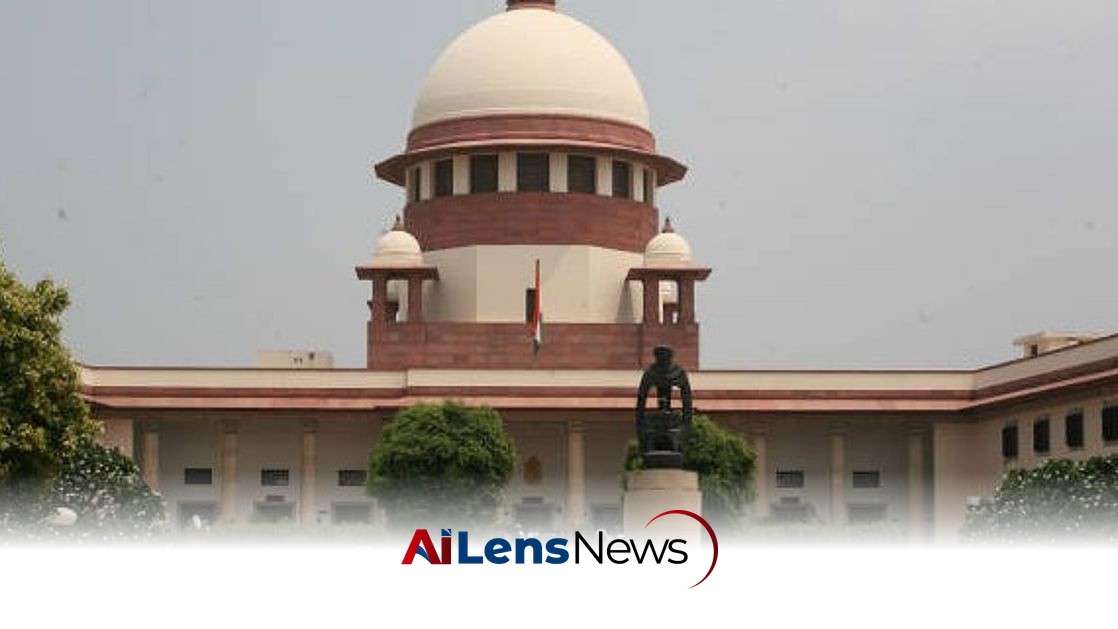


The Supreme Court has clarified that cash loans exceeding Rs 20,000 may breach tax rules but do not invalidate debts in cheque bounce cases under the Negotiable Instruments Act.
New Delhi, India Jul 19, 2026 ALN: New Delhi: The Supreme Court has ruled that a breach of cash transaction limits under the Income Tax Act does not automatically make a debt legally unenforceable in proceedings for cheque dishonour under Section 138 of the Negotiable Instruments Act. This decision has significant implications for the legal landscape surrounding financial transactions and the enforceability of debts in India.
A bench of Justices Manoj Misra and Vijay Bishnoi held that while accepting cash loans exceeding Rs 20,000 violates Section 269SS of the Income Tax Act and attracts penalty under Section 271D, such a breach does not render the underlying transaction illegal, invalid, or void. This ruling clarifies the relationship between tax regulations and the enforceability of debts, ensuring that individuals and entities cannot evade their financial obligations simply by arguing a violation of cash transaction limits.
The ruling was delivered on July 16, 2026, in a criminal appeal filed by Sri Gopalaiah, who was challenging a Karnataka High Court's 2013 order that had set aside his acquittal by a trial court in a cheque bounce case and remanded the matter for fresh adjudication. The case involved two cheques — one for Rs 8 lakh and another for Rs 50,000 — issued by Gopalaiah that were dishonoured for 'insufficient funds'.
The complainant, K Manjunath, alleged that the cheques were issued towards the discharge of a legally enforceable debt. In contrast, Gopalaiah contended that the cheques had been handed over to one Srinivas as security or for other purposes and were later misused after being passed on to the complainant. This dispute over the nature of the transaction and the purpose of the cheques became central to the legal proceedings.
The trial court had acquitted Gopalaiah, primarily on the ground that the complainant failed to produce documentary evidence to prove the advance of Rs 8.5 lakh, especially in light of the prohibition under Section 269SS of the IT Act on accepting cash loans above Rs 20,000. The trial court also noted that the accused appeared to have sufficient funds from the sale of land and did not need to borrow, which further complicated the case.
However, the Karnataka High Court, in its review, quashed the acquittal and made important observations regarding the application of the Negotiable Instruments Act. It stated that the NI Act does not require the complainant to prove financial capacity through specific averments in the complaint to trigger the presumption under Section 139. This is a crucial point, as it emphasizes that the burden of proof does not rest solely on the complainant to demonstrate the legality of the debt in question.
The High Court further clarified that Section 269SS applies to the recipient of cash and not the lender, which means that the lender's actions in providing cash loans do not automatically invalidate the debt. This interpretation is vital for understanding the nuances of cash transactions in the context of legal enforceability.
Upon dismissing Gopalaiah’s appeal, which was argued by senior advocate Anand Sanjay M Nuli, the Supreme Court upheld the High Court’s decision. The bench observed, “Once the execution of the cheque is admitted, the presumption under Sections 118(a) and 139 of the NI Act arises against the accused.” This statement reinforces the legal principle that the execution of a cheque carries with it a presumption of a legally enforceable debt, which the accused must rebut with substantial evidence.
The Supreme Court emphasized that the presumption under Section 139 — that the cheque was received in discharge of a legally enforceable debt — is rebuttable, but a mere denial by the accused is insufficient. This means that if an accused party wishes to contest the validity of the debt, they must provide cogent evidence explaining the circumstances under which the cheque was issued and came into the possession of the payee.
The bench rejected the argument that any cash transaction above Rs 20,000 is illegal and void, and therefore falls outside the definition of a "legally enforceable debt". This part of the ruling is particularly significant as it clarifies that violations of cash transaction limits do not automatically negate the existence of a debt, thereby protecting the rights of creditors in similar situations.
Moreover, the Supreme Court noted that the trial court had failed to properly appreciate the evidence led by the complainant regarding his capacity to lend and had wrongly shifted the burden of proof. This misapprehension of evidence highlights the importance of judicial scrutiny in financial disputes, particularly those involving cheque dishonours.
In conclusion, the Supreme Court directed the trial court to decide the matter afresh expeditiously, noting that the complaint pertained to the year 2006. This directive underscores the need for timely resolution of financial disputes to uphold the integrity of the legal system and ensure that justice is served without undue delay.
This ruling is expected to have far-reaching implications for future cases involving cheque dishonours and cash transactions in India. It reinforces the principle that while compliance with tax laws is crucial, violations of such laws do not inherently render financial obligations unenforceable. Thus, creditors may find greater protection in the legal system, while debtors must be prepared to substantiate their claims with solid evidence to contest the enforceability of debts.
Understanding the implications of this ruling requires a deeper look into the framework of the Income Tax Act and the Negotiable Instruments Act. The Income Tax Act establishes regulations to curb black money and ensure transparency in financial transactions. Specifically, Section 269SS prohibits the acceptance of loans or deposits in cash exceeding Rs 20,000 to discourage unaccounted money circulation. Violating this provision can lead to penalties, but as clarified by the Supreme Court, it does not invalidate the debt itself.
On the other hand, the Negotiable Instruments Act was enacted to facilitate the use of cheques and other negotiable instruments in commercial transactions. Section 138 specifically addresses the dishonour of cheques and provides a legal recourse for creditors. The interplay between these two laws is crucial for understanding the legal obligations of parties involved in financial transactions. This ruling clarifies that while tax violations may attract penalties, they do not negate the enforceability of debts arising from those transactions.
The Supreme Court's decision also emphasizes the need for clear documentation in financial transactions. In cases where debts are contested, having a well-documented trail of transactions can significantly strengthen a party's position in court. This ruling may encourage creditors to maintain meticulous records of their dealings, ensuring that they can substantiate their claims of enforceability even in the face of potential cash transaction violations.
Moreover, this judgment could lead to a shift in how financial disputes are litigated in India. Legal practitioners may need to reassess their strategies when dealing with cheque dishonour cases, particularly in light of the clarified burden of proof. The ruling reinforces the importance of presenting concrete evidence to support claims regarding the nature of debts and the legitimacy of transactions.
In summary, the Supreme Court's ruling is a landmark decision that delineates the boundaries between tax law violations and the enforceability of debts. It provides much-needed clarity to creditors and debtors alike, ensuring that financial obligations remain enforceable despite potential breaches of cash transaction regulations. The implications of this ruling will likely be felt across various sectors of the economy, influencing how financial transactions are conducted and litigated in the future.
To learn more about the latest developments in Crime & Law, stay updated with our exclusive reports and analyses on AiLensNews.

