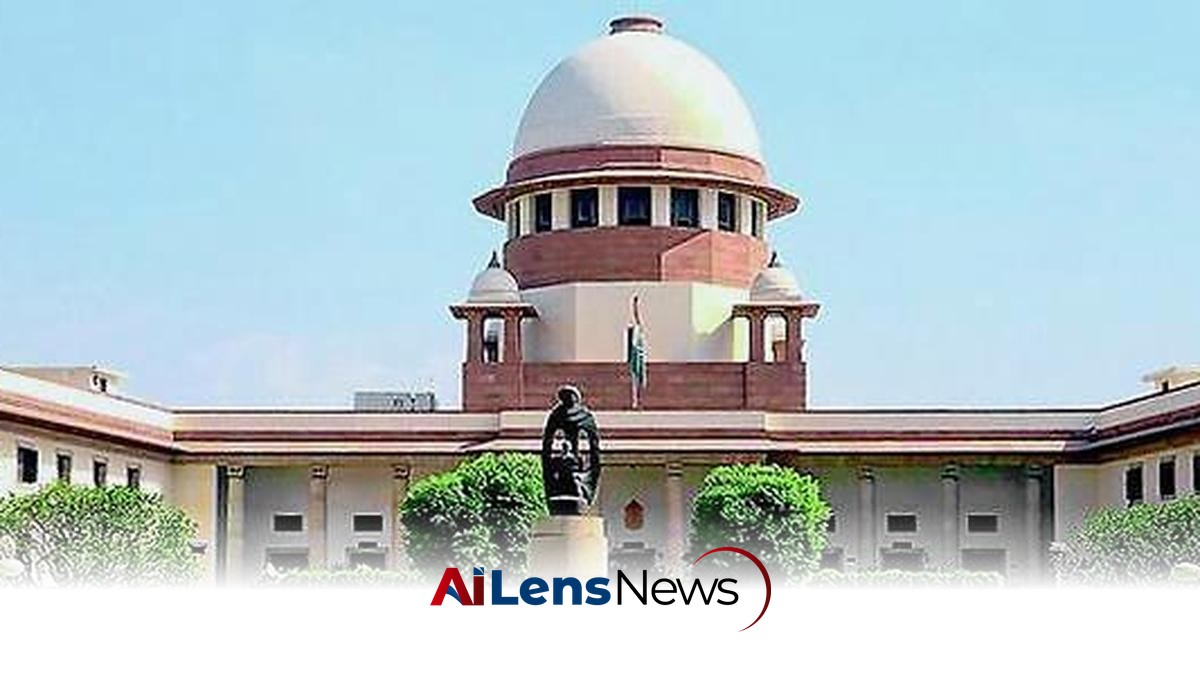


The Supreme Court of India rules that four-letter expletives are abusive but not obscene, clarifying the legal distinction between vulgarity and obscenity.
New Delhi, India Jul 20, 2026 ALN: The Supreme Court of India has recently delivered a significant judgment that clarifies the legal distinctions between abusive language and obscenity. This ruling is particularly relevant in a society where the use of strong language is often intertwined with cultural norms, social interactions, and the legal framework governing public discourse. The court's decision underscores the importance of context in interpreting language and its implications for civil society.
In its ruling, the Supreme Court reasoned that while the use of certain four-letter expletives and their variations may be deemed “abusive, unpalatable or uncivil”, they do not meet the legal threshold for being classified as ‘obscene’. This distinction is crucial, as obscenity carries heavier legal ramifications under the Indian Penal Code (IPC), specifically under Section 294(b), which addresses obscene acts and songs. The legal framework surrounding obscenity in India has historically been influenced by colonial laws, which were often stringent and reflective of the moral standards of the time.
The case that prompted this judgment arose from a land dispute between neighbors in Tamil Nadu, where a verbal altercation escalated in 2017. During this confrontation, one party repeatedly directed vulgar language at the other. The core legal question presented to the Supreme Court was whether the use of such language could warrant prosecution under the aforementioned section of the IPC. This case highlights the complexities of language in legal disputes, particularly in a country where regional languages and dialects can carry different connotations and cultural significance.
Justice Sanjay Karol, who led the bench, employed a methodical approach by referencing dictionaries such as Collins and Cambridge to define the terms central to the case. The judge noted that ‘abusive’ language is characterized as ‘extremely rude and insulting’, while ‘vulgar’ refers to words that are ‘rude and likely to upset or anger people, especially by referring to sex and the body in an unpleasant way’. This linguistic analysis was pivotal in framing the court's understanding of the terms in a legal context. The court's reliance on dictionary definitions underscores the importance of precision in legal language and the need for clear definitions in adjudicating cases involving subjective interpretations of speech.
The Supreme Court emphasized that for language to be classified as ‘obscene’, it must pass what is known as the ‘community standards test’. This test requires that the terms in question be lascivious, appeal to the prurient interests of individuals, and provoke a tendency to deprave and corrupt those who hear or read them. In this case, the court found insufficient evidence to suggest that the language used during the altercation met this stringent standard. The community standards test is a critical component of obscenity law, as it reflects the prevailing moral attitudes of society, which can vary widely across different regions and communities in India.
Furthermore, the court highlighted that for words to be deemed obscene, they must have genuinely offended others. In the instance of the 70-year-old individual involved in the dispute, Justice Karol concluded that the language used was merely abusive or vulgar, falling short of the threshold necessary to be classified as obscene. This aspect of the ruling is significant, as it suggests that personal offense alone does not suffice to establish obscenity; rather, a broader societal impact must be demonstrated.
This ruling draws upon precedents set by previous Supreme Court decisions, particularly in the case of Ranjit D. Udeshi v. State of Maharashtra, where obscenity was defined in terms of its potential to deprave and corrupt susceptible minds. The court had noted that obscene material could lead to impure and libidinous thoughts among young individuals and even those of more advanced years. Such definitions are critical in understanding how obscenity is perceived within the legal framework of India. The reliance on historical precedents indicates a continuity in judicial reasoning, while also allowing for the evolution of interpretations in response to changing social attitudes.
In another relevant case, Chandrakant Kalyandas Kakodkar versus State of Maharashtra, the court acknowledged that the concept of obscenity is not static; it varies across different countries based on the prevailing moral standards of contemporary society. Justice Karol reiterated this point, emphasizing that factors such as place, customs, traditions, and social background are essential in determining what constitutes obscenity in any given context. This acknowledgment of cultural relativism in the interpretation of obscenity is particularly pertinent in a diverse nation like India, where regional customs and languages can significantly influence perceptions of language and morality.
The distinction drawn by the Supreme Court between vulgarity and obscenity is particularly noteworthy. The court articulated that while vulgar language may evoke feelings of disgust, revulsion, or boredom, it does not necessarily deprave, debase, or corrupt societal morals in the way that obscenity does. This nuanced understanding is important for legal practitioners, lawmakers, and society at large as it informs discussions around free speech, social norms, and the limits of acceptable language. The ruling may encourage a more tolerant view towards strong language in public discourse, provided it does not cross the threshold into obscenity.
The implications of this ruling extend beyond the immediate case at hand. It sets a precedent for future cases involving allegations of obscenity and abusive language, potentially influencing how similar disputes are adjudicated in the future. As societal norms evolve, the legal system must adapt to reflect changing attitudes towards language and expression. This adaptability is essential in ensuring that the law remains relevant and responsive to the needs and values of contemporary society.
Moreover, this judgment may also have broader implications for freedom of expression in India. The balance between protecting individuals from abusive language and upholding the right to free speech is a delicate one. The court’s ruling reinforces the idea that while civility in discourse is important, not all distasteful language should be subject to legal penalties. This principle is particularly relevant in light of ongoing debates about freedom of expression in India, where various forms of speech, including political dissent and artistic expression, often come under scrutiny.
In conclusion, the Supreme Court's ruling serves as a critical reminder of the need for a careful and contextual approach to language within the legal framework. By delineating the boundaries between abusive language and obscenity, the court not only addresses the specific case at hand but also contributes to the ongoing discourse around language, morality, and legal standards in India. As society continues to grapple with issues of expression, this judgment may serve as a guiding principle for future interpretations of language in legal contexts. The ruling encourages a more nuanced understanding of language, one that recognizes the importance of context and societal norms in shaping legal interpretations and outcomes.
To learn more about the latest developments in Crime & Law, stay updated with our exclusive reports and analyses on AiLensNews.

