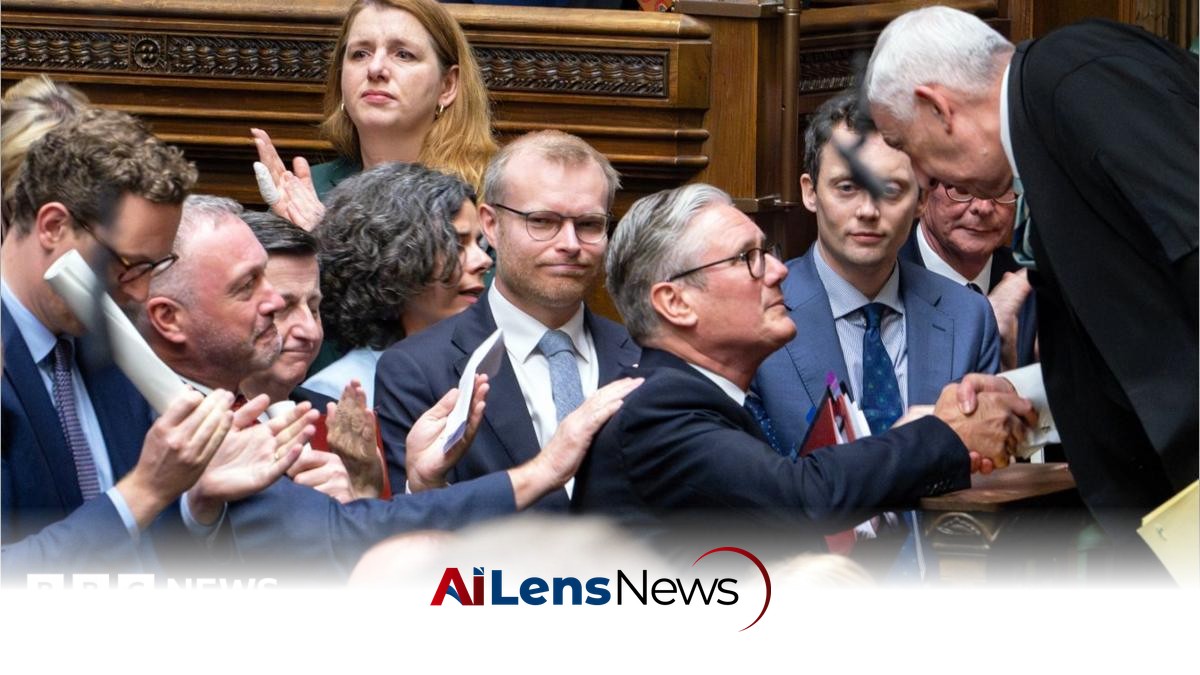


In his last Prime Minister's Questions, Sir Keir Starmer expressed pride in his achievements as MPs from all parties paid tribute and shared memories.
New Delhi, India Jul 15, 2026 ALN: Sir Keir Starmer told MPs it was the "end of my political journey" and he was "proud of everything I have achieved" at his final Prime Minister's Questions before standing down.
Starmer's tenure as Prime Minister has been marked by significant challenges and triumphs, reflecting the complexities of contemporary British politics. His leadership began with high expectations after Labour's decisive victory, which saw him taking the reins during a particularly tumultuous period for the party and the nation. His rise to leadership came after a series of political upheavals, including the fallout from the Brexit referendum and the internal divisions within the Labour Party that had surfaced during Jeremy Corbyn's leadership.
Normal political hostilities were largely set aside during the 50-minute session, as MPs on all sides paid tribute to the departing PM, traded jokes, and shared anecdotes. This kind of camaraderie, albeit temporary, highlights the respect that Starmer garnered across party lines, a rare occurrence in the often adversarial atmosphere of Westminster. The goodwill shown during this session may also reflect a collective recognition of the pressures and responsibilities that come with leading a major political party in a divided nation.
There were tears from some of Sir Keir's closest allies, with the outgoing PM thanking his staff who he said had been "prepared to walk through fire for me." This acknowledgment of his team underscores the importance of collective effort in political leadership, especially in times of crisis. Starmer's leadership style has often been characterized by his emphasis on collaboration and support for his colleagues, which has helped to foster a sense of loyalty and commitment among his staff and MPs.
As he left the chamber, he was given a standing ovation by his own MPs, as well as many on the opposition benches, while his family watched on from the gallery. The presence of family members at such a significant moment adds a personal touch to the often impersonal world of politics, reminding both the public and politicians alike of the human element behind political decisions and leadership roles.
Chancellor Rachel Reeves - who was at Sir Keir's side on the front bench as usual - appeared close to tears. Her emotional response is indicative of the close relationships that often develop within political teams, particularly when faced with the trials of leadership and governance. Such relationships can be crucial for maintaining morale and unity within a party during challenging times.
Labour MP Carolyn Harris was also overcome by emotion as she told MPs that "every day we see his decency and his courage shine through." This sentiment echoes the broader public perception of Starmer's character, which has often been framed around his integrity and commitment to public service. His approach to leadership has been seen as a stabilizing force for the Labour Party, especially after the tumultuous years that preceded his leadership.
Sir Keir is due to hand over power to Andy Burnham on Monday, after the former Greater Manchester mayor is confirmed as Labour leader at a special Labour conference on Friday. The transition of leadership is a pivotal moment for the Labour Party, as it seeks to redefine its identity and strategy moving forward. Burnham's leadership will be closely watched, particularly as he navigates the party's position in the context of a changing political landscape.
Conservative leader Kemi Badenoch refrained from attacking the outgoing PM's record, instead praising him for his work on Ukraine and his friendship with the country's president Volodymyr Zelensky. This acknowledgment of Starmer's foreign policy efforts reflects a recognition of the importance of international relations in contemporary politics. The ongoing conflict in Ukraine has been a significant issue for world leaders, and Starmer's supportive stance has resonated positively with many, even among political opponents.
However, she did aim some jibes at Labour MPs and their next leader, who was absent from the session as he has been at all the PMQs sessions since he returned to Parliament last month. The absence of Burnham from such a significant occasion raises questions about his approach to leadership and engagement with parliamentary processes. In a time when public accountability is paramount, the new leader's willingness to engage with Parliament will be scrutinized closely.
Liberal Democrat leader Sir Ed Davey said Sir Keir had worked with people across the House of Commons and described him as a "true patriot." This characterization of Starmer highlights the importance of collaboration across party lines in addressing national issues. The ability to work with opposition parties is often seen as a hallmark of effective leadership, particularly in a parliamentary system where consensus can lead to more stable governance.
Watching on were several guests of the prime minister including campaigners he had met during his time in Downing Street. This inclusion of grassroots activists and community leaders underscores the significance of public engagement in political leadership. Starmer's outreach to various community groups has been a key aspect of his approach, emphasizing the role of listening and responding to the needs of constituents.
He addressed some of them directly as he spoke, saying: "To all those in the gallery whose lives have been changed or improved by this Labour government, and all across the country who struggle to be seen or heard, you're the reason I came into politics." This statement encapsulates the motivations behind his political career and serves as a reminder of the impact that government policies can have on the lives of ordinary citizens. It also highlights the ongoing challenges faced by many in society, particularly those who feel marginalized or overlooked by the political process.
Despite being forced out by his own MPs just two years after winning a landslide election victory, Sir Keir was met with cheers from the Labour benches as he arrived in the House of Commons. The abrupt end to his leadership raises questions about the internal dynamics of the Labour Party and the challenges of maintaining unity within a diverse political organization. The cheers from his colleagues indicate a recognition of his efforts, despite the controversies that may have led to his departure.
As is often the case for a prime minister's final question session, the tone was gentler and more light-hearted than usual, with plenty of jokes about England's World Cup hopes as well as the by-election in Clacton. The lighter atmosphere serves as a reminder that even in the serious world of politics, there is space for humor and camaraderie. Such moments can help to humanize politicians and foster connections among members of Parliament.
However, it began on a sombre note with Sir Keir paying tribute to former MP Ann Widdecombe. He said it was "chilling" that during his time in Parliament three serving or former MPs had been killed. This acknowledgment of the threats facing public servants highlights the serious challenges that politicians encounter in their roles. The safety of MPs and public officials has become an increasingly pressing issue in recent years, prompting discussions about the need for enhanced security measures and support for those in public office.
Badenoch paid tribute to the former Conservative minister as a woman of "high principle" with a "wicked sense of humour." Such tributes serve to bridge the partisan divide, reminding MPs and the public alike of the shared humanity behind political rivalries. Recognizing the contributions of individuals across party lines can foster a more respectful political discourse.
The Conservative leader used her questions to ask if Burnham should take questions in the House of Commons rather than "scurrying away for the summer." This remark reflects the ongoing tensions between the major parties, particularly as they prepare for the upcoming parliamentary recess. The Commons will rise for its recess on Thursday, meaning Burnham is not likely to take questions in Parliament until September. The recess period often serves as a critical time for political parties to regroup and strategize ahead of the next parliamentary session.
Badenoch also warned Labour MPs that changing prime minister was not a "silver bullet" and that "their troubles are only just beginning." This assertion underscores the challenges that await the Labour Party, as they seek to redefine their identity and strategy under new leadership. The political landscape is constantly evolving, and the ability to adapt to these changes will be crucial for any party seeking to regain public trust and support.
The prime minister did not directly answer when Badenoch asked if he had any advice for his successor, but did promise his "wholehearted support." This response reflects the complexities of political relationships, particularly in a highly charged environment like Westminster. Offering support while remaining neutral is a delicate balance that many outgoing leaders must navigate as they transition out of their roles.
"I will give my support privately if asked for, not publicly when not asked for," he added. This statement emphasizes the importance of discretion and respect for the incoming leader's authority, a principle that can foster a smoother transition of power.
Sir Keir also thanked Badenoch for her kindness following the death of his brother and after an arson attack on his family home. This personal acknowledgment highlights the often-overlooked emotional toll that public service can take on individuals and their families. The support shown by political opponents during times of personal crisis can serve to strengthen relationships and foster a more collaborative political environment.
Prime Minister's Questions took place eight hours before the World Cup semi-final between England and Argentina - and references to the match came thick and fast. The intersection of sports and politics is a common theme in British culture, often serving as a unifying force for the public. The excitement surrounding national sporting events can provide a temporary respite from political tensions, allowing citizens to rally around a common cause.
Conservative MP Graham Stuart joked that the prime minister had been given the "red card" by "400 dodgy referees." Such humor reflects the playful banter that often characterizes PMQs, providing a lighter moment amidst the serious discussions of governance. The ability to engage in humor can help to diffuse tensions and create a more congenial atmosphere in the House of Commons.
Liberal Democrat MP Will Forster asked Sir Keir if his last act would be to declare a bank holiday if England wins the World Cup. The notion of a bank holiday in celebration of a national sporting achievement speaks to the deep cultural significance of football in British society. The prospect of such a holiday could serve as a unifying moment for the country, highlighting the role of sports in national identity.
The prime minister replied that he didn't want to "tempt fate" and suggested Forster ask him again on Sunday. This response showcases Starmer's ability to engage with light-hearted banter while maintaining the seriousness of his office. Balancing humor with the responsibilities of leadership is a skill that can enhance a politician's relatability and public appeal.
There were also several references to the by-election in Clacton, triggered by the resignation of Reform UK leader Nigel Farage. The political maneuvering surrounding by-elections often reflects broader trends in voter sentiment and party dynamics. The main parties are not taking part in the election, accusing Farage, who is re-fighting the constituency, of pulling a stunt, as he stands again in the Essex constituency. This boycott underscores the complexities of political strategy, particularly in a highly polarized environment.
Sir Keir suggested people in Clacton should "put your vote in the bin." This provocative statement reflects the contentious nature of contemporary politics, where parties often engage in strategic positioning to influence voter behavior. The refusal of major parties to participate in the by-election raises questions about the legitimacy of the electoral process and the implications for voter engagement.
Lib Dem leader Sir Ed said he could not "back joke figures with ridiculous policies" adding: "Which is why I'm supporting Count Binface." This humorous endorsement highlights the absurdity that can sometimes permeate political discourse, serving as a reminder of the need for authenticity and substance in political messaging. The use of humor in politics can resonate with the public, particularly in an environment where cynicism about politicians is prevalent.
Reform UK MP Danny Kruger hit back at the jibes, arguing that a "comedian with a dustbin on his head" was a suitable substitute for the major parties. This response reflects the contentious nature of political competition, where parties often seek to undermine each other's credibility. The dynamics surrounding this by-election may have lasting implications for party strategies and voter alignment moving forward.
Cabinet members had a whip round, organised by deputy prime minister David Lammy, to buy Sir Keir a vintage silver carriage clock as a leaving gift. This gesture underscores the camaraderie and respect among colleagues, even amidst political rivalry. Such tokens of appreciation can serve to strengthen bonds within a party and create a sense of continuity in leadership transitions.
The clock, made in the 1920s by the firm responsible for building Big Ben, was presented to Sir Keir at his final cabinet meeting on Wednesday morning. The historical significance of the clock serves as a metaphor for the passage of time and the enduring nature of political service. It symbolizes the legacy that leaders leave behind, reminding both politicians and the public of the importance of their contributions to society.
It included a plaque engraved with "Change promised, change fought for, change delivered. Thank you Keir – The Cabinet," Downing Street said. This message encapsulates the aspirations and achievements of Starmer's tenure, reflecting the challenges and successes that marked his time in office. As he steps down, the political landscape continues to evolve, with new leaders emerging and the electorate's expectations shifting. The implications of his leadership will undoubtedly resonate in the ongoing narrative of British politics.
To learn more about the latest developments in Politics, stay updated with our exclusive reports and analyses on AiLensNews.

