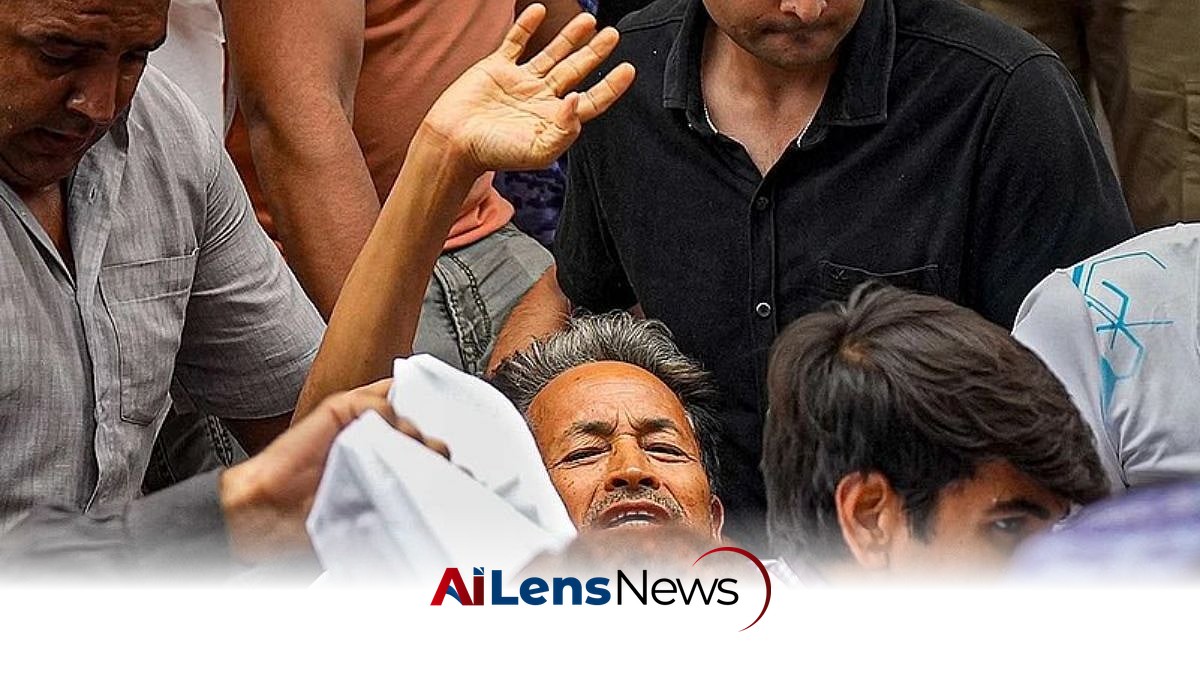


Climate activist Sonam Wangchuk has set conditions for ending his hunger strike, seeking a written assurance from the government against punitive actions towards young protesters.
New Delhi, India Jul 22, 2026 ALN: New Delhi: Climate activist and education reformer Sonam Wangchuk has appealed to the Centre to provide an unequivocal assurance that no punitive or retaliatory legal action will be taken against young protesters before he agrees to end his indefinite fast. This appeal comes amidst rising tensions surrounding the recent protests related to the education system in India, particularly in the wake of an examination paper leak that reportedly led to the tragic suicides of several students.
Wangchuk's hunger strike is an act of protest against systemic failures in the education sector, which he believes have contributed to a crisis that affects the mental health and future prospects of students across the country. The examination paper leak incident has sparked outrage among students and parents alike, leading to widespread protests across the nation. Many believe that the leak not only undermined the integrity of the examination process but also placed immense psychological pressure on students, contributing to the tragic outcomes. Wangchuk's involvement in these protests highlights his long-standing commitment to educational reform and the welfare of students, particularly in regions vulnerable to such systemic failures.
In a letter dated July 22 addressed to Union Ministers JP Nadda and Dr. Jitendra Singh, Wangchuk expressed his gratitude for their visit to him in the hospital and their plea for him to conclude his fast. During this visit, the ministers had assured him that the government would positively consider two key demands that had emerged from the protests: adequate compensation for the families of students who allegedly died by suicide following the examination paper leak, and a meaningful discussion in Parliament to ensure accountability, which includes the potential resignation of the Union Education Minister.
The examination paper leak has not only brought to light the flaws within the examination system but has also raised broader questions about the overall quality of education in India. Over the years, the education system has faced numerous challenges, including issues related to access, quality, and equity. Students from marginalized backgrounds often bear the brunt of these systemic failures, making it imperative for reform to be inclusive and comprehensive. Wangchuk's advocacy for educational reform is rooted in a desire to create a system that is fair and beneficial for all students, regardless of their background.
Referring to the 'Chalo Sansad' march held on July 20, Wangchuk noted that the protest remained peaceful despite what he described as "atrocities and disproportionate use of force" by the police. The march aimed to bring attention to the grievances of students and the need for accountability in the education sector. Wangchuk urged the government to ensure that no legal cases, harassment, or vindictive action are taken against those who participated in the demonstration, emphasizing the fundamental right to peaceful protest in a democratic society. The right to protest is a cornerstone of democratic engagement, and the ability of citizens, especially youth, to voice their concerns is essential for a healthy political discourse.
Wangchuk revealed that around 65 Members of Parliament from across political parties had written to him or visited him, urging him to end his fast and continue his work in education. This bipartisan concern reflects a growing recognition among lawmakers of the importance of addressing the issues raised by the protests and the need for a constructive dialogue regarding educational reforms. While acknowledging their appeal, Wangchuk maintained that he could not do so "at the cost of the very young people for whom this movement began." His commitment to the cause underscores the depth of the crisis facing students and the urgent need for systemic change.
He articulated that the protesters' only "offence" was raising their voices for a fair and accountable education system, and he requested a clear assurance that none of them would face retaliation. This request highlights the broader implications of the protests and the need for the government to foster an environment where students can express their concerns without fear of retribution. Wangchuk's insistence on the need for such assurances reflects a deep-seated concern for the future of democratic engagement in India, particularly among youth. The fear of repercussions can stifle dissent and discourage young people from participating in civic activities, which is detrimental to the democratic process.
"If such an assurance is given, I shall end my fast," Wangchuk wrote, adding that in its absence, he would be compelled to continue his fast indefinitely. His hunger strike is not merely a personal act of protest; it symbolizes the desperation felt by many students who believe their futures are at stake due to systemic issues within the education system. The implications of his fast extend beyond his personal health, as it serves as a rallying point for those advocating for change. The movement surrounding Wangchuk's hunger strike has the potential to galvanize public support for educational reforms, drawing attention to the pressing need for accountability and transparency in the education sector.
Wangchuk also expressed hope that there would be no further use of excessive police force against the movement. The heavy-handed response by law enforcement during the protests has drawn criticism from various quarters, including human rights organizations and civil society groups. The use of force against peaceful demonstrators raises important questions about the state’s approach to dissent and the protection of civil liberties in India. The disproportionate response to peaceful protests can lead to a breakdown of trust between the government and its citizens, further exacerbating tensions and hindering constructive dialogue.
Concluding the letter, Wangchuk stated that the future of democracy depends on how it treats young citizens who speak with "courage, hope, and conviction." This sentiment resonates with a broader discourse on the role of youth in shaping democratic processes and the importance of listening to their voices. He urged the government to respond in a manner that strengthens public faith in democratic institutions, emphasizing that the credibility of these institutions hinges on their ability to engage with and address the concerns of the younger generation. The participation of youth in democratic processes is crucial for ensuring that their perspectives and needs are adequately represented in policy-making.
The ongoing situation surrounding Wangchuk's hunger strike and the protests raises critical questions about the state of education in India, the mental health of students, and the responsiveness of the government to the needs of its citizens. As the protests continue, the demand for accountability and reform in the education sector remains at the forefront of public discourse. The outcome of this movement could have lasting implications not only for students but also for the future of democratic engagement in India. The government’s response to these protests and the issues raised will be closely watched, as it may set a precedent for how similar movements are handled in the future. The need for a robust and responsive education system is more urgent than ever, and the voices of students, as well as advocates like Wangchuk, will play a pivotal role in shaping the future of education policy in the country.
To learn more about the latest developments in Crime & Law, stay updated with our exclusive reports and analyses on AiLensNews.

