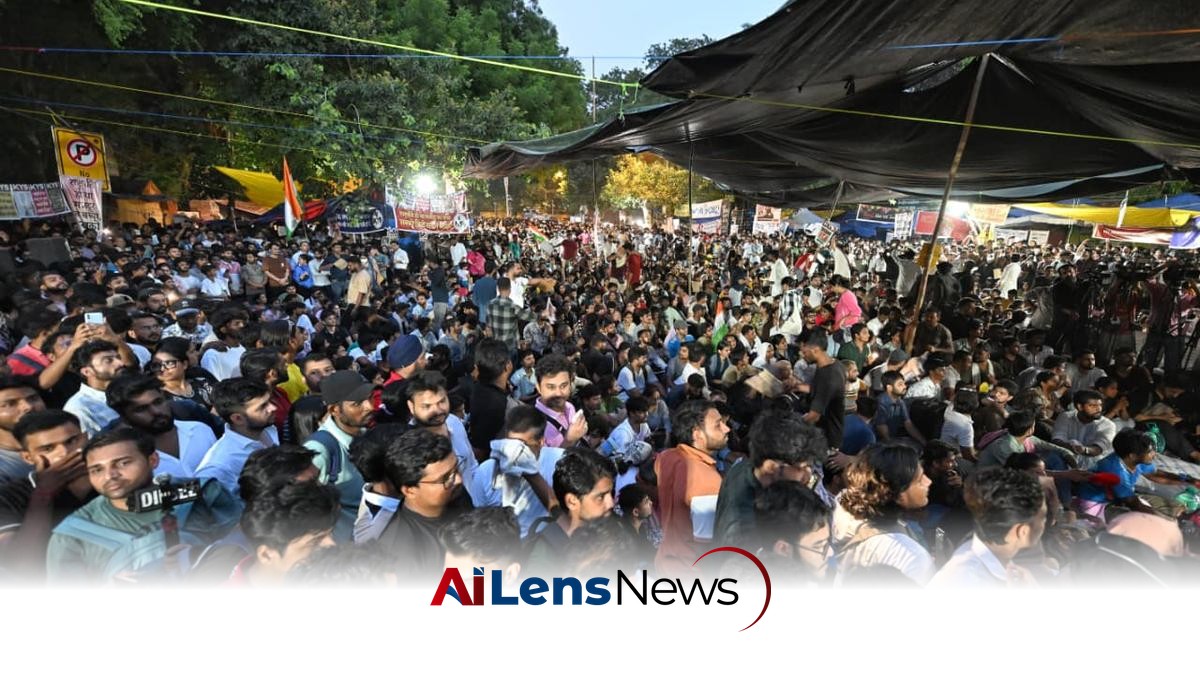


As Sonam Wangchuk's hunger strike continues in the hospital, tensions rise with calls for public support and government dialogue.
New Delhi, India Jul 19, 2026 ALN: The ongoing hunger strike led by Sonam Wangchuk, a prominent activist and engineer known for his innovative approaches to environmental sustainability and education, has reached a critical milestone as it enters its 21st day. Wangchuk's protest is part of a larger movement organized by the Cockroach Janata Party (CJP), a political satire group that has garnered significant attention for its unique blend of humor and activism. The CJP, founded by Abhijeet Dipke, has raised serious concerns about the Delhi Police's alleged intentions to suppress their ongoing protests, particularly during the night hours when visibility is low and fewer supporters are present.
The CJP's fears of a crackdown have prompted them to call for a night vigil, inviting the public to stand in solidarity with their cause. They have also reaffirmed their commitment to the upcoming ‘Chalo Sansad’ march scheduled for July 20, 2026, which aims to bring attention to various socio-political issues affecting the youth in India. The march is expected to draw a significant number of participants, reflecting the growing discontent among young people regarding government policies and their impact on future generations.
Wangchuk's hunger strike has become a focal point of this movement, symbolizing the struggle for justice and accountability in governance. His decision to continue fasting, even after being forcibly removed from the Jantar Mantar protest site, underscores his commitment to the cause. Hospital authorities have reported that Wangchuk is exhibiting signs of dehydration and metabolic abnormalities, yet he has resolutely refused medical interventions such as intravenous fluids and oral rehydration solutions. This decision has raised alarms among health professionals, with an independent expert from the All India Institute of Medical Sciences (AIIMS) stating that Wangchuk requires immediate medical intervention to prevent further deterioration of his health.
Wangchuk's wife, Gitanjali J. Angmo, has been vocal about her concerns regarding the lack of transparency in the hospital regarding her husband's treatment. She has emphasized the importance of family consent for any medical procedures, highlighting the ethical considerations surrounding patient autonomy, especially in cases of hunger strikes where individuals may refuse treatment. Angmo's advocacy for her husband's right to choose his treatment reflects broader issues of consent and autonomy in medical ethics, particularly in high-stakes situations like hunger strikes.
In the midst of these developments, veteran activist Anna Hazare has lent his voice to the cause, urging the Union government to engage in dialogue with Wangchuk. Hazare, known for his role in the anti-corruption movement in India, has called for a response to Wangchuk's demands, emphasizing that dialogue should be prioritized over confrontation. His message resonates with many who believe that open communication is essential for resolving conflicts and addressing the grievances of the populace.
The backdrop of Wangchuk's hunger strike is a complex socio-political landscape in India, characterized by growing discontent among various segments of society. The youth, in particular, have been vocal about their frustrations regarding unemployment, climate change, and the perceived inadequacies of government policies. The CJP's efforts to mobilize support through satire and humor have struck a chord with many, as they seek to challenge the status quo and advocate for systemic change.
The implications of this protest extend beyond the immediate health concerns of Wangchuk. It raises critical questions about the right to protest, the role of law enforcement in managing dissent, and the government's responsibility to address the needs and concerns of its citizens. As tensions rise, the potential for conflict between protesters and authorities looms, particularly if the government chooses to respond with forceful measures to quell the demonstrations.
Moreover, the CJP's approach to activism, using satire as a tool for political engagement, highlights a shift in how younger generations are choosing to express their dissent. This method not only attracts attention but also encourages broader participation from those who may feel disillusioned by traditional political avenues. The blending of humor with serious political discourse serves to engage a wider audience, drawing in individuals who might otherwise remain apathetic to political issues.
As the situation develops, the health of Sonam Wangchuk remains a critical concern for supporters and observers alike. His commitment to his cause, despite the risks to his health, underscores the deep-seated frustrations many feel towards the current political climate. The coming days will be crucial not only for Wangchuk and the CJP but also for the broader movement advocating for youth rights and accountability in governance. The outcome of the planned ‘Chalo Sansad’ march could significantly influence public sentiment and the government's response to ongoing protests.
In conclusion, Sonam Wangchuk's hunger strike, now in its 21st day, serves as a powerful symbol of resistance against perceived injustices. The support for his cause continues to grow, as does the urgency for the government to engage in meaningful dialogue. The implications of this protest are far-reaching, touching on issues of health, ethics, governance, and the power of youth activism in shaping the future of India.
To understand the broader context of Wangchuk's protest, it is essential to consider the historical relationship between the government and civil society in India. Over the years, numerous movements have emerged, advocating for various causes ranging from anti-corruption to environmental protection. Each movement has faced unique challenges, including governmental pushback, media scrutiny, and public perception. Wangchuk’s current hunger strike is part of a long tradition of civil disobedience that has seen activists employ non-violent methods to draw attention to critical issues.
The significance of hunger strikes in India can be traced back to the pre-independence era, where figures like Mahatma Gandhi used fasting as a tool for social change. This historical precedent lends weight to Wangchuk's actions, as he seeks to invoke the same spirit of resistance against perceived injustices. The symbolism of fasting as a form of protest resonates deeply within the Indian context, where it is often seen as a last resort to compel authorities to listen and act.
Furthermore, the role of youth in shaping political discourse cannot be overstated. With over 600 million people under the age of 25, India has one of the largest youth populations in the world. This demographic has increasingly become more politically aware and active, utilizing social media and other platforms to voice their concerns and mobilize support. The CJP's innovative approach to activism, combining satire with serious political issues, reflects this generational shift in how protests are organized and how messages are communicated.
As the hunger strike continues, it is crucial to monitor not only Wangchuk's health but also the responses from various stakeholders, including the government, civil society organizations, and the general public. The potential for dialogue and negotiation remains, but it hinges on the willingness of the authorities to engage constructively with the demands being raised. The outcome of this situation may set important precedents for future protests and the relationship between the state and its citizens.
In summary, Sonam Wangchuk's hunger strike is not merely a personal act of defiance; it is a reflection of broader socio-political dynamics in India. The implications of this protest resonate across various sectors of society, raising fundamental questions about governance, youth engagement, and the right to dissent. As the situation unfolds, it will be essential to observe how these dynamics evolve and what they mean for the future of activism in India.
To learn more about the latest developments in Society & Social Issues, stay updated with our exclusive reports and analyses on AiLensNews.

