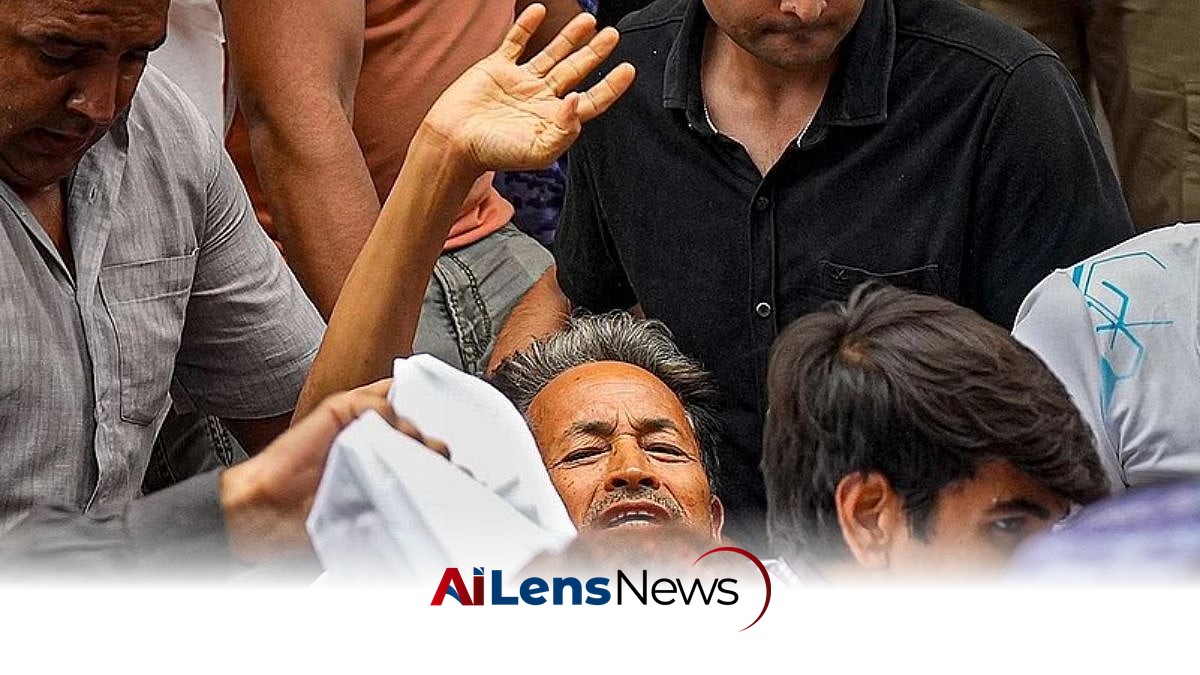


Climate activist Sonam Wangchuk enters the 23rd day of his hunger strike, urging the government to allow student leaders to meet parliamentarians or to meet them in the hospital.
New Delhi, India Jul 21, 2026 ALN: Climate activist and education reformer Sonam Wangchuk, widely recognized for his innovative work in sustainable development and education reform in the Indian Himalayas, has entered the 23rd day of his indefinite hunger strike. This protest, which he initiated, stems from deep concerns regarding the treatment of youth who have been peacefully protesting and the apparent lack of meaningful dialogue with governmental authorities. Wangchuk's commitment to this cause reflects not only his dedication to the youth of India but also highlights critical issues surrounding governance, accountability, and the role of civil society in democratic processes.
Wangchuk is currently receiving medical treatment at Safdarjung Hospital in Delhi, where he has been under observation due to the health risks associated with prolonged fasting. His health condition is a significant concern, as hunger strikes can lead to severe physical and psychological consequences, including organ failure, electrolyte imbalances, and even death. In a heartfelt message shared on social media platform X, he conveyed his determination to continue his fast until a solution is reached that allows student leaders to engage directly with parliamentarians at Sansad Bhavan, the seat of the Indian Parliament, or until he is granted permission to meet with them in the hospital. This demand underscores his belief in the importance of dialogue between the youth and their elected representatives, which he sees as vital for addressing the grievances that have led to the protests.
In his note, Wangchuk expressed profound concern over what he termed the "brutality" with which peacefully protesting youth have been treated. This sentiment resonates with many observers and advocates who argue that the right to peaceful assembly and protest is a cornerstone of democratic societies. The treatment of protesters, particularly students who are often at the forefront of social movements, raises significant questions about the balance between maintaining public order and respecting civil liberties. Wangchuk's call for accountability from the education minister reflects a broader demand for transparency and responsiveness from government officials regarding policies that affect the youth.
The protests that have sparked Wangchuk's hunger strike have been characterized by their peaceful nature, even in the face of provocations. Wangchuk commended the young protesters for their resilience and commitment to non-violence, a principle that has historically been central to many successful social movements around the world. His appeal to the government and police to facilitate a meeting between the youth and parliamentarians is an effort to shift the narrative from conflict to constructive dialogue, emphasizing the need for a platform where grievances can be aired and addressed in a civil manner.
This situation is set against a backdrop of increasing youth activism in India, where young people are becoming more vocal about their rights and the issues that impact their futures. The rising awareness and mobilization among the youth, particularly in the context of climate change, education reform, and social justice, signal a generational shift in how civic engagement is approached. Wangchuk's activism, particularly in the realms of environmental sustainability and education, has been influential in inspiring a new generation of leaders who are willing to challenge the status quo and advocate for systemic change.
The implications of Wangchuk's hunger strike extend beyond the immediate demands for dialogue. It raises important questions about the role of civil society in democratic governance and the responsibilities of elected officials to engage with their constituents. The lack of dialogue can lead to a breakdown of trust between the government and the populace, particularly among young people who may feel disenfranchised or ignored. By advocating for a meeting between student leaders and parliamentarians, Wangchuk is not only seeking to address specific grievances but is also calling for a more inclusive political process where the voices of the youth are heard and valued.
Moreover, the ongoing protests and Wangchuk's hunger strike come at a time when many governments around the world are grappling with the challenges posed by climate change, economic inequality, and social unrest. The youth, who will inherit the consequences of today's policies, are increasingly aware of these challenges and are demanding action. In this context, Wangchuk's activism serves as a reminder of the critical role that young people play in shaping public discourse and policy, particularly regarding issues that directly affect their lives and futures.
As Wangchuk continues his fast, the eyes of the nation are on both him and the government. The outcome of this situation could have lasting implications for how youth activism is perceived and addressed in India. If the government responds positively to Wangchuk's demands, it may pave the way for greater engagement between youth and policymakers, fostering a culture of dialogue that could benefit society as a whole. Conversely, a failure to engage with the youth could exacerbate tensions and lead to further unrest, highlighting the urgent need for responsive governance in an increasingly dynamic political landscape.
In conclusion, Sonam Wangchuk's hunger strike is not merely a personal act of protest; it is a significant moment in the ongoing struggle for youth representation and accountability in India. His commitment to fasting until dialogue is established reflects a deep-seated belief in the power of conversation and understanding as tools for change. As the situation develops, it will be crucial to observe how both the government and the youth respond, and what this means for the future of civic engagement in India.
Wangchuk's actions also resonate with the broader global context of youth activism. Across various nations, young people are increasingly taking to the streets to demand action on pressing issues such as climate change, racial justice, and economic inequality. The youth-led climate strikes, inspired by activists like Greta Thunberg, have shown that young voices can mobilize significant public attention and influence policy discussions. Wangchuk's hunger strike can be seen as part of this larger movement, where young activists are asserting their right to be heard and demanding accountability from those in power.
The impact of Wangchuk's hunger strike may also influence future protests and movements in India, as it highlights the potential consequences of ignoring youth concerns. Should the government choose to engage with Wangchuk and the student leaders, it could set a precedent for future interactions between youth activists and policymakers. It may encourage other young people to voice their concerns and advocate for change, knowing that their efforts could lead to constructive dialogue and potential policy shifts.
On the other hand, if the government remains unresponsive, it could lead to increased frustration among the youth, potentially resulting in more radical forms of activism. This scenario raises critical questions about the responsibilities of government officials in nurturing democratic engagement and fostering a political climate where youth feel empowered to participate in civic life.
Ultimately, Wangchuk's hunger strike is a call to action for both the government and society at large. It underscores the importance of listening to the voices of the youth and recognizing their role as active participants in shaping the future of the nation. The dialogue that Wangchuk seeks is not just about addressing specific grievances but also about building a more inclusive and responsive political system that values the contributions of all citizens, particularly those who will inherit the challenges and opportunities of tomorrow.
To learn more about the latest developments in Politics, stay updated with our exclusive reports and analyses on AiLensNews.

