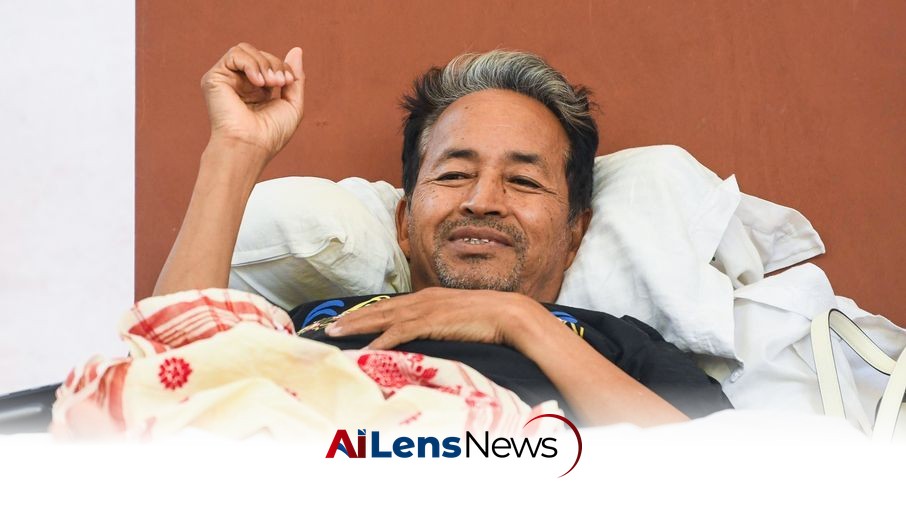


Climate activist Sonam Wangchuk was hospitalized after a 20-day hunger strike at Jantar Mantar, prompting political leaders to express solidarity and concern.
New Delhi, India Jul 18, 2026 ALN: Climate activist Sonam Wangchuk, known for his advocacy for sustainable development and education reform, was hospitalized after a 20-day hunger strike at Jantar Mantar, a prominent protest site in the Indian capital. The decision to take him to a hospital was made by the Delhi Police on Saturday morning, following concerns about his health. A significant presence of Delhi Police personnel was noted at the protest site after Wangchuk's hospitalization, indicating the seriousness of the situation.
This incident comes just two days ahead of a planned march to Parliament on July 20, which Wangchuk and his supporters had organized to further their demands. The march was intended to draw attention to issues surrounding educational reforms and the need for accountability in the administration of national examinations.
As of now, further details regarding Wangchuk's condition and the circumstances that led to his hospitalization are still being awaited. His health had been closely monitored throughout the hunger strike, with reports indicating a concerning decline in his physical condition. Late on Friday night, Abhijeet Dipke, Founding President of the Cockroach Janta Party (CJP), made allegations that Wangchuk was attacked at the protest site, raising questions about the safety and treatment of activists in the area.
Medical assessments conducted on Friday revealed that Wangchuk's weight had dropped to 56.55 kg, a decrease of 350 grams within a 24-hour period. His vital signs were concerning as well, with blood pressure recorded at 108/68, blood sugar at 70 mg/dL, and a pulse rate of 72 per minute. Dr. Satish Lamba from the Delhi Medical Association was involved in monitoring his health, emphasizing the importance of keeping track of his condition given the extended duration of the hunger strike.
Wangchuk's protest has attracted attention from various political figures, with several Opposition leaders visiting him at Jantar Mantar on Friday to express their solidarity and concern for his health. Notable figures included Aam Aadmi Party (AAP) national convenor Arvind Kejriwal, Samajwadi Party chief Akhilesh Yadav, NCP MP Supriya Sule, SP MP Dimple Yadav, Congress leader Pawan Khera, and Shiv Sena (UBT) MLA Aaditya Thackeray. Their presence underscores the political implications of Wangchuk's protest and highlights the broader concerns regarding educational policies in India.
Aaditya Thackeray, representing the UBT Sena, criticized the central government's response to Wangchuk's hunger strike, labeling it as the "most insensitive government". He accused the government of failing to adequately address the activist's demands, which have gained traction among various segments of the population, particularly students and educational reform advocates. Thackeray's remarks reflect a growing sentiment among the opposition regarding the government's handling of educational issues and the need for reform in examination processes.
Additionally, AIMIM national spokesperson Waris Pathan also called on the central government to engage in dialogue with Wangchuk and consider his demands. He urged students and parents to rally behind the activist, indicating that there is a significant public interest in the issues Wangchuk is advocating for. This appeal for solidarity illustrates the potential for grassroots mobilization around educational reform and accountability in governance.
On Thursday, the Delhi High Court took an active role in monitoring Wangchuk's health during the hunger strike. The court directed that his medical condition be clinically monitored on a daily basis, emphasizing the preciousness of life and the responsibility of government authorities to ensure the well-being of citizens. The court's intervention came in response to a public interest litigation that expressed concern over Wangchuk's deteriorating health, indicating a judicial recognition of the importance of the issues at stake.
The directions issued by the Division Bench of Chief Justice Devendra Kumar Upadhyaya and Justice Tejas Karia reflect the judiciary's commitment to protecting individual rights and ensuring that government actions are aligned with public welfare. The court mandated that any necessary medical intervention, based on the opinion of government doctors, be provided to Wangchuk, highlighting the legal and ethical responsibilities of the state in such situations.
Wangchuk, an engineer, education reformer, and climate activist from Ladakh, has been a prominent figure in advocating for sustainable practices and educational reforms in India. His hunger strike is primarily focused on demanding the resignation of Union Education Minister Dharmendra Pradhan over allegations of irregularities in national examinations, particularly concerning the NEET (National Eligibility cum Entrance Test) paper leak controversy. This issue has raised significant concerns among students and parents alike, as it directly impacts the integrity of the educational system and the future of countless aspiring medical students.
The NEET paper leak controversy has been a contentious topic in India, with accusations of corruption and mismanagement in the examination process. Wangchuk's demands for accountability resonate with a broader call for transparency and integrity in educational assessments. His protest at Jantar Mantar is not just a personal act of resistance, but rather a symbolic stand against systemic issues that many believe need urgent attention.
The implications of Wangchuk's hunger strike extend beyond his personal health and immediate demands. They highlight a growing discontent among students and the public regarding educational policies and the perceived inaction of the government in addressing these critical issues. As the planned march to Parliament approaches, the attention on Wangchuk's cause is likely to increase, potentially galvanizing support for educational reform and prompting discussions about the future of examination processes in India.
In conclusion, Sonam Wangchuk's hospitalization after a prolonged hunger strike underscores the urgency of the issues he is advocating for, as well as the broader implications for educational reform in India. The response from political leaders, the judiciary, and the public will likely shape the discourse surrounding these issues in the coming days, as stakeholders grapple with the complexities of governance, accountability, and the right to protest.
To learn more about the latest developments in Health & Public Safety, stay updated with our exclusive reports and analyses on AiLensNews.

