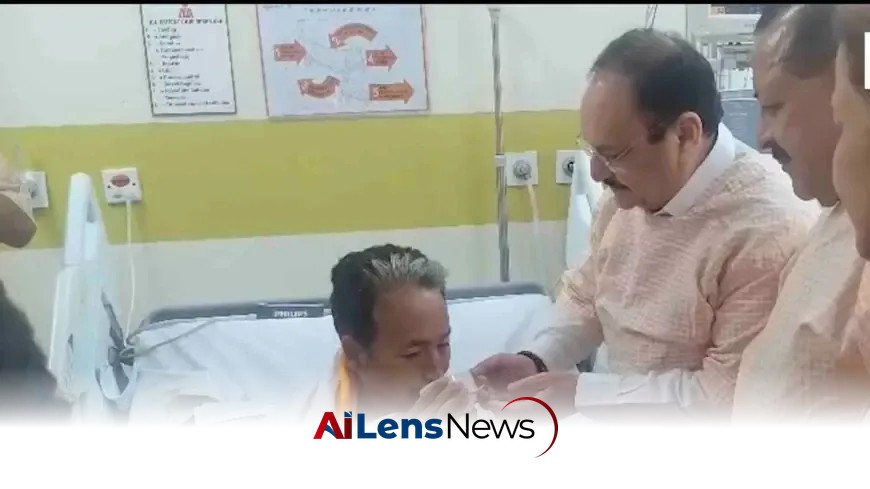


Activist Sonam Wangchuk concluded his 26-day hunger strike following Prime Minister Modi's pledge to take stringent actions against examination paper leaks.
New Delhi, India Jul 24, 2026 ALN: Gurugram: Activist Sonam Wangchuk broke his indefinite hunger strike late on Thursday at Medanta Hospital in Gurugram, where he had been admitted amid deteriorating health. His decision to end the 26-day fast came after significant developments, notably Prime Minister Narendra Modi’s commitment to take stringent action against examination paper leaks, which have been a major concern for students and the public alike.
Wangchuk's hunger strike was a part of a larger protest movement that emerged as a response to widespread allegations of corruption and irregularities in competitive examinations in India. These issues have sparked outrage among students and their families, particularly regarding high-stakes exams like NEET-UG, which is critical for aspiring medical students. The stakes are high, as the outcomes of these exams can significantly alter the educational and career trajectories of countless young individuals.
The culmination of Wangchuk's fast followed a visit from Union Ministers JP Nadda and Dr. Jitendra Singh, who provided written assurances regarding the government's intentions to address the grievances expressed by the protesters. In a post on X, Wangchuk mentioned, “Just now in the presence of Union Ministers Sh. JP Nadda, Dr. Jitendra Singh and the senior leaders of Apex Body of Leh Ladakh I finally broke my fast after 26 days.” He highlighted the importance of the support he received from various political leaders, stating that 65 members of parliament from different parties had either visited him or signed letters urging him to end his fast. This political backing reflects the significant traction the protest has gained across party lines, indicating a shared concern for the integrity of the examination system.
The conditions that led to Wangchuk's decision to break his fast included commitments from the government to withdraw cases against non-violent student protesters and to consider compensation for families of students adversely affected by the ongoing crisis, including those who have tragically taken their own lives. These commitments were seen as crucial steps toward addressing the immediate concerns of the protesters, who have been vocal about the mental health crisis exacerbated by the pressures of competitive examinations.
Prime Minister Modi's involvement in the situation marked a pivotal moment in the protest. In a video message, he emphasized that preventing paper leaks is a “national responsibility” and a “grave sin,” indicating the government's recognition of the severity of the issue. Modi announced that the Union Cabinet would discuss tougher measures, including the establishment of fast-track courts and stricter punishments for those involved in examination fraud, during its upcoming meeting. This proactive stance from the government signals a potential shift in how such issues will be addressed in the future, aiming to restore public trust in the examination process.
In a follow-up message on X, Modi expressed his concern for Wangchuk's health, urging him to adhere to medical advice and regain his strength. This personal touch from the Prime Minister may resonate with the public, as it demonstrates a level of empathy towards the struggles faced by activists and students alike.
The protests, led by a coalition known as the Cockroach Janta Party (CJP), began on June 20 and have centered on demands for accountability regarding the alleged irregularities in competitive exams, systemic education reforms, and the resignation of Union Education Minister Dharmendra Pradhan. The CJP has become a rallying point for students and activists who are frustrated by what they perceive as systemic failures within the educational framework. Their demands extend beyond immediate reforms to encompass a broader vision for educational equity and transparency.
Wangchuk has emerged as a prominent figure in this movement, leveraging his platform to amplify calls for justice for affected students. His activism is rooted in a deep concern for the future of education in India, and he has been vocal about the need for comprehensive reforms that address not only the symptoms of the current crisis but also its underlying causes. The ministers’ intervention and PM Modi’s announcements appear to have addressed key concerns, paving the way for de-escalation while the broader movement continues to press for lasting reforms in India’s examination system.
The ongoing protests and Wangchuk's hunger strike have highlighted the urgent need for reform within India's education system. The government’s acknowledgment of the issues surrounding examination integrity and the mental health of students is a step in the right direction, but the true test will be the implementation of these reforms and whether they can restore faith in a system that many believe is failing them.
In conclusion, while Wangchuk's hunger strike has ended, the fight for educational justice in India continues. The commitment made by the government is a positive development, but it is essential for all stakeholders to remain engaged and vigilant in the pursuit of a fair and transparent examination system that serves the interests of all students. The coming weeks and months will be crucial as the government takes steps to fulfill its promises and as the student-led movement continues to advocate for the changes that are so desperately needed.
To better understand the context of this situation, it is essential to recognize the broader implications of examination integrity in India. The examination system is often viewed as a gatekeeper to higher education and professional opportunities. However, allegations of corruption, including paper leaks and favoritism, have eroded trust in this system. Students invest significant time, effort, and resources into preparing for these exams, and when integrity is compromised, it not only affects individual futures but also undermines the entire educational framework.
The mental health crisis among students is another critical aspect of this situation. The pressure to succeed in competitive exams can lead to anxiety, depression, and in extreme cases, tragic outcomes such as suicide. The government’s acknowledgment of this issue is a vital step toward creating a supportive environment for students, but it must be accompanied by concrete actions that address the root causes of stress and mental health challenges.
Furthermore, the involvement of political leaders from various parties in supporting Wangchuk's cause indicates a growing recognition of the need for collaborative efforts to reform the education system. This cross-party support may serve as a catalyst for more comprehensive discussions around educational policies and reforms, potentially leading to a more equitable system that benefits all students.
As the government outlines its plans to combat examination fraud and improve mental health support for students, it will be crucial for civil society organizations, educators, and student groups to remain engaged in the process. Their input can help ensure that reforms are not only effective but also inclusive, addressing the diverse needs of students from different backgrounds and regions.
In summary, while Sonam Wangchuk's decision to end his hunger strike marks a significant moment in the ongoing struggle for educational justice in India, it is essential for all stakeholders to remain vigilant and proactive in advocating for meaningful reforms. The government’s commitments are a step forward, but the true measure of success will be in their implementation and the tangible changes they bring to the lives of students across the country.
To learn more about the latest developments in Crime & Law, stay updated with our exclusive reports and analyses on AiLensNews.

