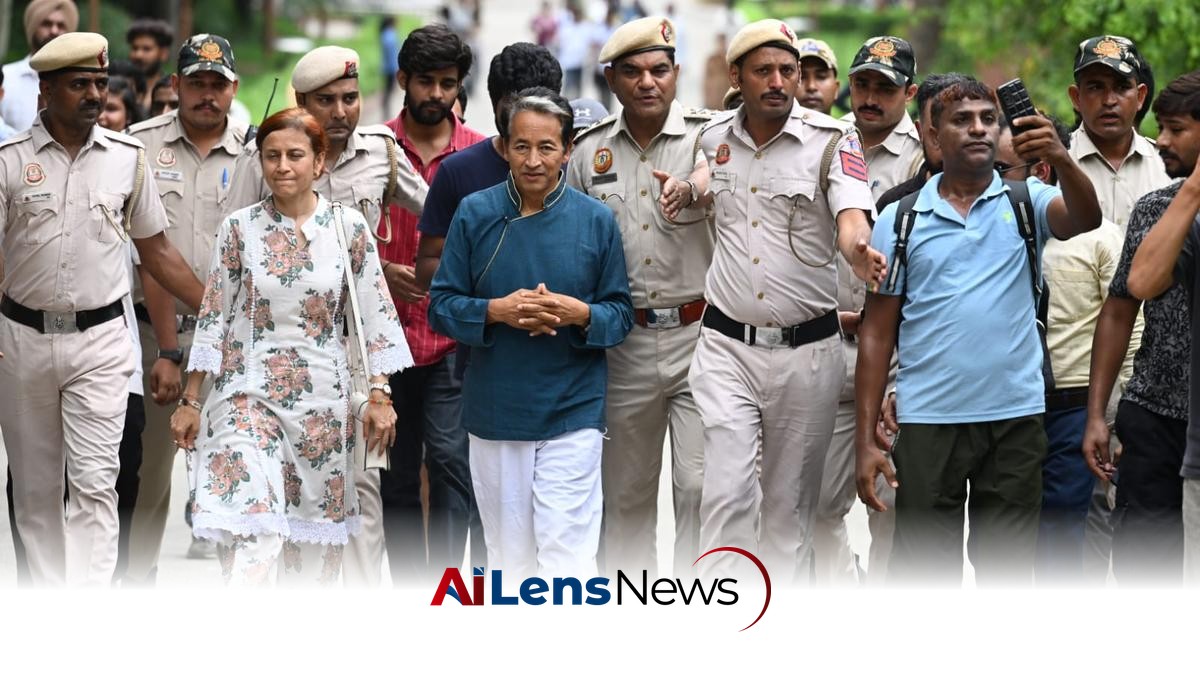


Climate activist Sonam Wangchuk has been discharged from Medanta Hospital after six days of treatment and plans to honor Mahatma Gandhi at Raj Ghat.
New Delhi, India Jul 27, 2026 ALN: Climate activist and educator Sonam Wangchuk was discharged from Medanta Hospital in Gurugram on July 27, 2026, after a six-day stay. Accompanied by his wife, Gitanjali Angmo, Wangchuk expressed his gratitude on social media, announcing, "I’m being discharged from the hospital." His discharge marks a significant moment not only for him personally but also for the broader climate movement in India, where he has been a prominent figure advocating for urgent climate action.
The hospital confirmed that Wangchuk was treated under an integrated protocol involving internal medicine and critical care, stating he was stable at the time of discharge. This level of care reflects the seriousness of his condition during the fasting period, which was part of his protest against governmental inaction on climate issues. Wangchuk's health had become a focal point of concern during his indefinite fast, as many supporters and followers were closely monitoring his well-being. The fast was not merely a personal act of sacrifice but a strategic move aimed at drawing attention to the pressing climate crises faced by the Himalayan region.
In his post on X, Wangchuk shared his plans after leaving the hospital: "Today, after leaving from here and before heading back home to Ladakh, I will go to Raj Ghat to pay my respects to Bapu (Mahatma Gandhi)." This gesture underscores his commitment to non-violent protest and the philosophical underpinnings of his activism, which are deeply influenced by Gandhi's principles. Raj Ghat, the memorial dedicated to Mahatma Gandhi in Delhi, serves as a symbolic site for many activists who wish to honor his legacy of peace and social justice. Wangchuk’s tribute at Raj Ghat reflects his alignment with Gandhian ideals, showcasing the importance of peaceful resistance in the face of governmental indifference.
Wangchuk had been on an indefinite fast for 26 days, starting on June 28, as part of an agitation for climate action. His fast was intended to draw attention to the urgent need for climate policies that address the unique challenges faced by the Himalayan region, which is particularly vulnerable to climate change impacts such as glacial melting and extreme weather events. The fast was a culmination of his long-standing advocacy for sustainable practices and environmental conservation, particularly in Ladakh, where he has been instrumental in promoting traditional ecological knowledge alongside modern scientific approaches. His activism is rooted in the belief that local communities possess valuable insights into sustainable living that can complement contemporary scientific methods.
On July 18, Wangchuk was forcibly moved to Safdarjung Hospital, where he described feeling detained. This incident raised questions about the government's response to peaceful protests and the rights of individuals to express dissent, particularly in the context of climate activism. Following a directive from the Delhi High Court, he was subsequently transferred to Medanta Hospital, highlighting the legal complexities involved in his situation. The court's intervention reflects a recognition of Wangchuk's rights as a citizen to peacefully protest and advocate for change, a fundamental aspect of democratic society. This legal battle illustrates the tensions between state authority and individual rights, particularly in the context of environmental activism, which is often met with resistance from governmental bodies.
Upon his discharge, Wangchuk expressed his appreciation for the medical staff, stating, "Thank you all and BIG THANK YOU to the wonderful team of doctors and staff at Medanta Hospital Gurgaon." This acknowledgment not only reflects his gratitude but also emphasizes the importance of healthcare professionals in supporting activists, particularly those who engage in extreme forms of protest, such as fasting. His experience in the hospital serves as a reminder of the physical toll that activism can take and the need for adequate health support for individuals engaged in such efforts. The intersection of health and activism is critical, as many activists often overlook their well-being in the pursuit of their causes, sometimes leading to severe health consequences.
His commitment to climate activism continues as he returns to Ladakh, where he aims to further his efforts in environmental conservation. Wangchuk's work in Ladakh includes initiatives such as the "Ice Stupa" project, which aims to create artificial glaciers to store water and combat water scarcity in the region. His innovative approaches have garnered inter attention and have inspired many to consider sustainable solutions to environmental challenges. The Ice Stupa project exemplifies how local knowledge and modern technology can be synergized to address pressing environmental issues, particularly in water-scarce regions like Ladakh, where traditional water management systems are being threatened by climate change.
The implications of Wangchuk's activism extend beyond his immediate community. His efforts resonate with a global audience increasingly aware of climate change's far-reaching impacts. As climate-related disasters become more frequent and severe, the need for urgent action is underscored by activists like Wangchuk, who advocate for a collective response to environmental degradation. The global climate crisis demands that individuals and communities come together to address the systemic issues contributing to environmental harm. Wangchuk's work serves as a model for how localized efforts can contribute to global movements for sustainability and justice.
In recent years, the Indian government has faced criticism for its handling of climate issues, with activists calling for more robust policies to address the challenges posed by climate change. Wangchuk's actions serve as a catalyst for dialogue and action, pushing for reforms that prioritize environmental sustainability and social equity. His return to Ladakh is expected to reinvigorate local efforts to address these pressing issues, as he continues to engage with communities and stakeholders to promote sustainable practices. The dialogue around climate action in India is increasingly urgent, as the impacts of climate change are felt across various sectors, including agriculture, health, and economic stability. Wangchuk's advocacy is crucial in ensuring that these conversations include the voices of marginalized communities who are often most affected by environmental policies.
Moreover, Wangchuk's case highlights the broader struggle for environmental justice, particularly in regions like the Himalayas, where indigenous communities are often disproportionately affected by climate change. His advocacy emphasizes the need for inclusive policies that consider the voices and experiences of those most impacted by environmental degradation. As he moves forward, Wangchuk's work will likely focus on building coalitions among various stakeholders, including local communities, government entities, and inter organizations, to foster collaborative approaches to climate resilience. The importance of intersectionality in climate activism cannot be overstated, as environmental issues are often intertwined with social justice, economic inequality, and cultural preservation.
In conclusion, Sonam Wangchuk's discharge from the hospital and subsequent tribute at Raj Ghat encapsulate the ongoing struggle for climate action and the personal sacrifices made by activists in pursuit of a sustainable future. His journey serves as an inspiration for many, reinforcing the idea that individual actions can contribute to collective change. As he continues his work in Ladakh and beyond, the implications of his activism will undoubtedly resonate within the broader context of global climate movements, emphasizing the urgent need for concerted efforts to address one of the most pressing challenges of our time. Wangchuk's determination and innovative spirit exemplify the resilience required to tackle climate change, and his story is a testament to the power of grassroots activism in shaping a more sustainable and equitable future.
To learn more about the latest developments in Crime & Law, stay updated with our exclusive reports and analyses on AiLensNews.

