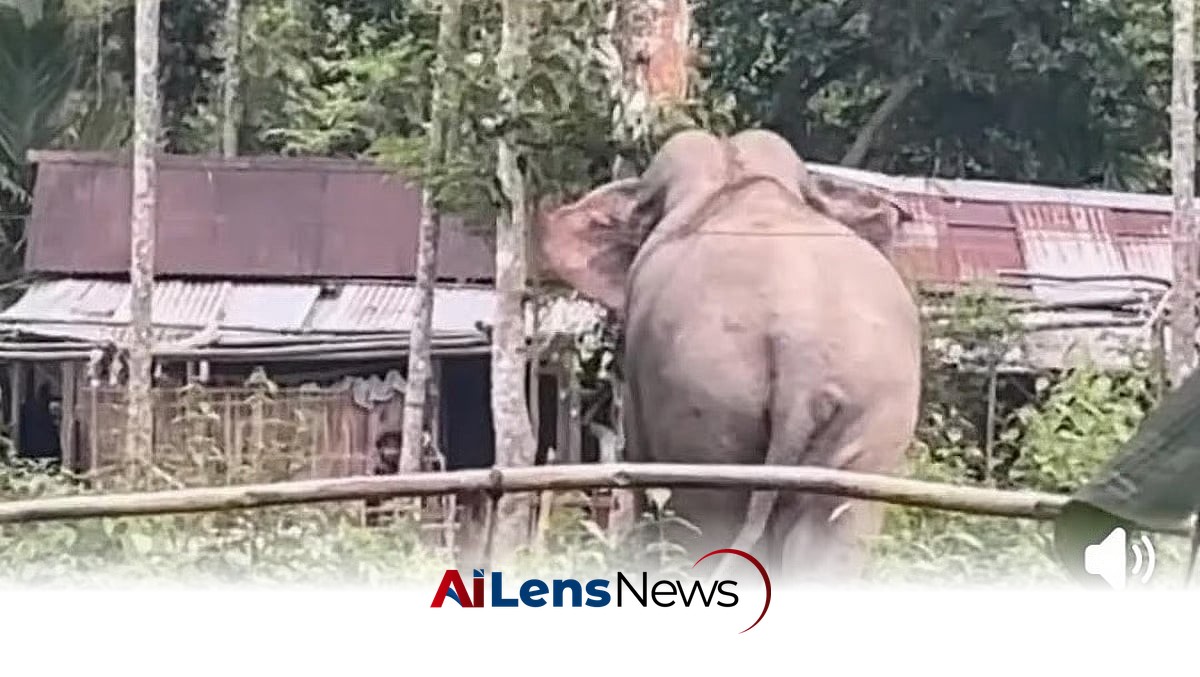


A 56-year-old woman was killed by a wild elephant in Tinsukia, Assam, highlighting the increasing human-elephant conflict exacerbated by flooding.
Gangtok, India Jul 22, 2026 ALN: Guwahati: Today, a 56-year-old woman was trampled to death by a wild elephant that is believed to have strayed from the flood-affected Dibru-Saikhowa National Park into a nearby human village in Tinsukia district, highlighting the growing human-elephant conflict during the monsoon season.
The victim has been identified as Chanju Urang, a widow and resident of Na Bormura Miripathar Dhola village under the Saikhowa Forest Range of the Doomdooma Forest Division. She was attacked at around 4.30 am while carrying out her routine morning chores in the courtyard of her home.
As per her family members, the lone elephant suddenly entered the courtyard and charged at Urang before anyone could react. Despite desperate attempts by her relatives to save her, the elephant fatally trampled her before fleeing into the nearby area.
A family member said Urang had stepped outside before dawn as part of her daily routine when the attack occurred, leaving little time for anyone to come to her rescue. She is survived by her daughter and granddaughter.
Soon after the incident, a team from the Forest Department and personnel from Dhola Police Station reached the spot. The body was later sent to Tinsukia Medical College and Hospital for a post-mortem examination.
Forest officers said preliminary investigations suggest that the elephant had wandered out of Dibru-Saikhowa National Park after large parts of its habitat were inundated by floodwaters. They believe the animal moved towards nearby villages in search of higher ground and safer shelter.
The Forest Department has assured that the process of providing compensation to the victim's family will begin once the necessary legal formalities are completed.
The incident has triggered fear among local people, who said wild elephants have been entering nearby villages more frequently since floodwaters submerged parts of the national park. Local leaders have urged the forest team to strengthen measures to mitigate human-wildlife conflict.
Human-elephant conflict is not a new phenomenon in India, particularly in regions where human settlements encroach upon the natural habitats of elephants. With the increasing population and urbanization, elephants often find themselves in situations where they venture into human territories in search of food, water, and shelter. This conflict tends to escalate during the monsoon season when heavy rains lead to flooding, forcing elephants to migrate from their natural habitats.
The Dibru-Saikhowa National Park, where the elephant is believed to have originated, is known for its rich biodiversity and serves as a crucial habitat for various wildlife species, including the endangered one-horned rhinoceros, tigers, and several bird species. However, the park is also prone to flooding during the monsoon season, which can disrupt the natural behavior of the wildlife within it.
In the past, various strategies have been employed to minimize human-elephant conflict, including the establishment of elephant corridors that facilitate safe passage for elephants between their habitats and surrounding areas. These corridors are vital for the conservation of elephant populations, as they allow for natural migration and reduce the likelihood of elephants entering human settlements.
Experts have emphasized the importance of legal protection for these corridors to ensure that elephants can move freely without coming into conflict with humans. The increasing frequency of human-elephant encounters, as evidenced by recent incidents, underscores the urgent need for effective management strategies that prioritize both human safety and wildlife conservation.
In response to the tragic incident involving Chanju Urang, local authorities and conservationists are calling for immediate action to strengthen the existing measures aimed at preventing such occurrences in the future. This includes enhancing community awareness programs about the behavior of elephants, the importance of maintaining safe distances from wild animals, and the need for early warning systems that can alert residents to the presence of elephants in the vicinity.
Additionally, there is a growing recognition of the need for community-based approaches that involve local populations in conservation efforts. By engaging communities in wildlife management, it is possible to foster a sense of stewardship and responsibility towards wildlife, which can help reduce conflicts. Initiatives such as compensation schemes for victims of wildlife attacks, as well as support for sustainable livelihoods that do not encroach upon wildlife habitats, are essential components of such strategies.
The tragic loss of Chanju Urang serves as a stark reminder of the complex relationship between humans and wildlife in India. As urban areas continue to expand and encroach upon natural habitats, the need for thoughtful and proactive measures to mitigate human-wildlife conflict becomes increasingly critical. The government, conservation organizations, and local communities must work collaboratively to ensure a safer coexistence between humans and elephants, thereby protecting both lives and the rich biodiversity that characterizes regions like Tinsukia.
As the Forest Department begins the process of compensating Urang's family, it is hoped that this incident will galvanize further discussions and actions aimed at preventing similar tragedies in the future. The need for comprehensive policies that address the root causes of human-elephant conflict cannot be overstated, and it is imperative that all stakeholders remain vigilant and committed to finding sustainable solutions.
In conclusion, while the immediate focus is on the aftermath of this tragic event, it also presents an opportunity for reflection and action regarding the ongoing challenges posed by human-elephant interactions. The balance between human safety and wildlife conservation is delicate, and it requires ongoing commitment, innovative thinking, and a collaborative approach to navigate the complexities of coexistence in an ever-changing environment.
To learn more about the latest developments in Crime & Law, stay updated with our exclusive reports and analyses on AiLensNews.

