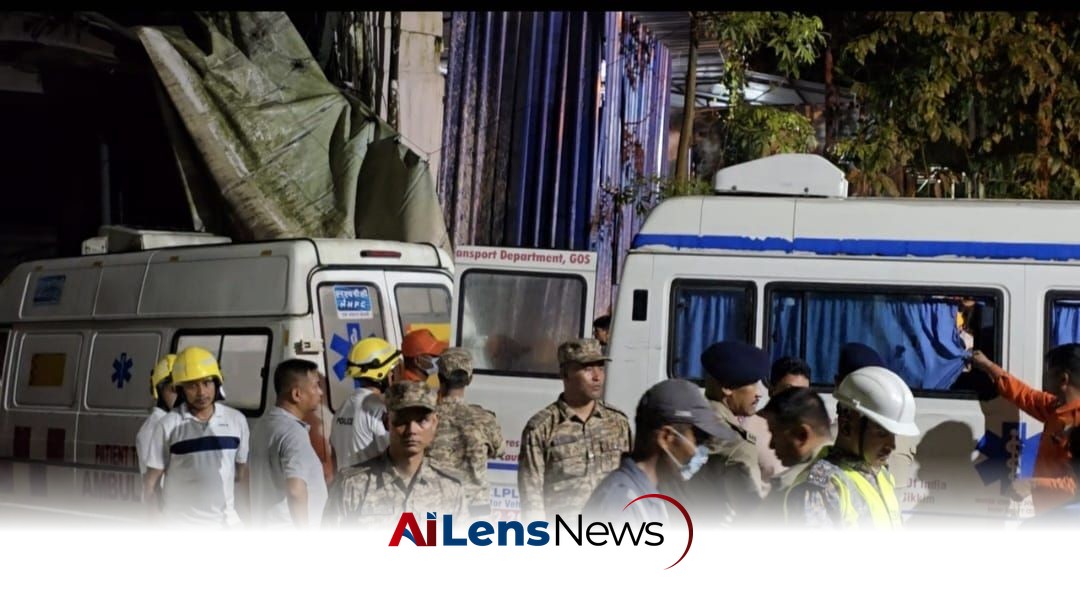


Rescue operations continue at the Samardung tunnel where a landslide has left 27 workers trapped, with one body recovered amid hazardous conditions.
Gangtok, India Jul 21, 2026 ALN: Gangtok: One body was recovered on Monday evening from the site of a landslide inside the under-construction Samardung tunnel in South , where a methane gas leak has severely hampered rescue operations. The identity of the deceased has not yet been established, raising concerns for the families of the workers involved.
The body was recovered by the National Disaster Response Force (NDRF) and shifted by ambulance for further procedures, marking a somber moment in an already tragic situation. The recovery operation underscores the urgency and danger faced by rescue teams in the aftermath of the landslide.
Rescue operations are continuing at the Samardung tunnel in Mamring, where an estimated 27 people are feared trapped following a landslide that allegedly triggered a methane gas leak on Monday afternoon. The incident occurred at around 3:09 pm inside the tunnel, which is being constructed by Patel Engineering for the Teesta Stage VI Hydroelectric Project, a significant infrastructure initiative aimed at enhancing the region's energy production capabilities.
The Teesta Stage VI Hydroelectric Project is part of a broader effort to harness the hydropower potential of the Teesta River, which flows through and West Bengal. As part of India's ambitious renewable energy targets, projects like these are crucial for reducing dependence on fossil fuels and meeting the growing energy demands of the region. However, the construction of such projects often involves significant risks, particularly in geologically unstable areas like , which is prone to landslides and seismic activity.
According to initial reports, the landslide blocked the tunnel passage, trapping workers inside. Rescue efforts have been complicated by a high concentration of methane gas, which is highly flammable and poses serious health risks, making it extremely hazardous for personnel to reach the affected section. Methane gas is a byproduct of organic matter decomposition and can accumulate in confined spaces, particularly in underground environments like tunnels.
Rescue operations are being carried out by the NDRF, State Disaster Response Force (SDRF), local police, and Fire and Emergency Services. Authorities have also regulated traffic movement in the area to facilitate the rescue mission, indicating the scale and urgency of the operation. The involvement of multiple agencies highlights the collaborative effort required in emergency response situations, especially in challenging terrains.
Namchi District Collector Anupa Tamling reported that district authorities immediately alerted NDRF teams from Siliguri and Pakyong, along with the SDRF, soon after receiving information about the incident. “The incident took place at around 3:09 pm. While we were on our way to Samardung, we had already informed the NDRF teams at Siliguri and Pakyong as well as the SDRF. Fire and Emergency Services personnel along with police officials attempted twice to enter the tunnel without protective gear, but due to the difficult conditions inside they were unable to rescue the trapped workers,” she said.
Tamling emphasized the challenges posed by the high concentration of methane gas inside the tunnel, which made rescue operations extremely challenging. The first NDRF team that entered the tunnel had to evacuate Fire and Emergency Services personnel who had gone in during the initial rescue attempts. A second NDRF team later entered the tunnel, and rescue operations are continuing.
Officials reported that the methane concentration inside the tunnel was so high that rescuers were unable to reach the location where the trapped workers are believed to be. Rescue personnel had to retreat before making contact with those inside because of the hazardous conditions, underscoring the dangers faced by those attempting to save their colleagues.
Authorities are yet to determine the cause of the landslide, which remains a critical aspect of the investigation. “As of now, we are unable to understand the reason behind the landslide. According to workers who managed to come out, they heard a huge blast-like sound from inside the tunnel and immediately ran out. There are workers who remain trapped inside,” Tamling said, reflecting the confusion and fear surrounding the incident.
She stated that the number of people trapped remains provisional. “So far, around 19 workers are believed to have been trapped initially. Subsequently, three personnel from Patel Engineering entered the tunnel to carry out rescue operations, but two of them also became trapped, taking the total from Patel Engineering to 21. In addition, six personnel from NHPC are also believed to be inside, bringing the estimated number to 27. The actual figure could be more or less. Until the NDRF reaches the exact location where the workers are trapped, we cannot confirm the situation inside,” she said.
The District Collector reiterated that the administration’s immediate priority is to rescue those trapped inside. “Our first priority is to rescue the people inside,” she said, emphasizing the urgency of the situation. The administration is likely to face scrutiny regarding safety protocols and emergency preparedness in light of this incident.
Sources indicated that members of an initial rescue team experienced dizziness and breathing difficulties while attempting to enter the tunnel due to the methane gas. They were brought out safely and shifted to a nearby hospital for treatment, highlighting the health risks faced by rescue workers in such hazardous environments.
The Samardung tunnel is part of the under-construction Teesta Stage VI Hydroelectric Project near Rangpo, which aims to generate significant hydropower for the region. However, incidents like these raise questions about the safety measures in place for workers on such projects. Rescue teams equipped with specialized protective equipment continue to battle hazardous conditions inside the tunnel, while officials remain unable to confirm the condition of those trapped.
This incident serves as a stark reminder of the inherent dangers associated with construction and infrastructure projects, particularly in regions prone to geological instability. As rescue operations continue, the focus remains on ensuring the safety of both the trapped workers and the rescue personnel involved in this critical operation. The outcome of this situation will likely have lasting implications for safety regulations and emergency response protocols in similar projects across the country.
To learn more about the latest developments in Crime & Law, stay updated with our exclusive reports and analyses on AiLensNews.

