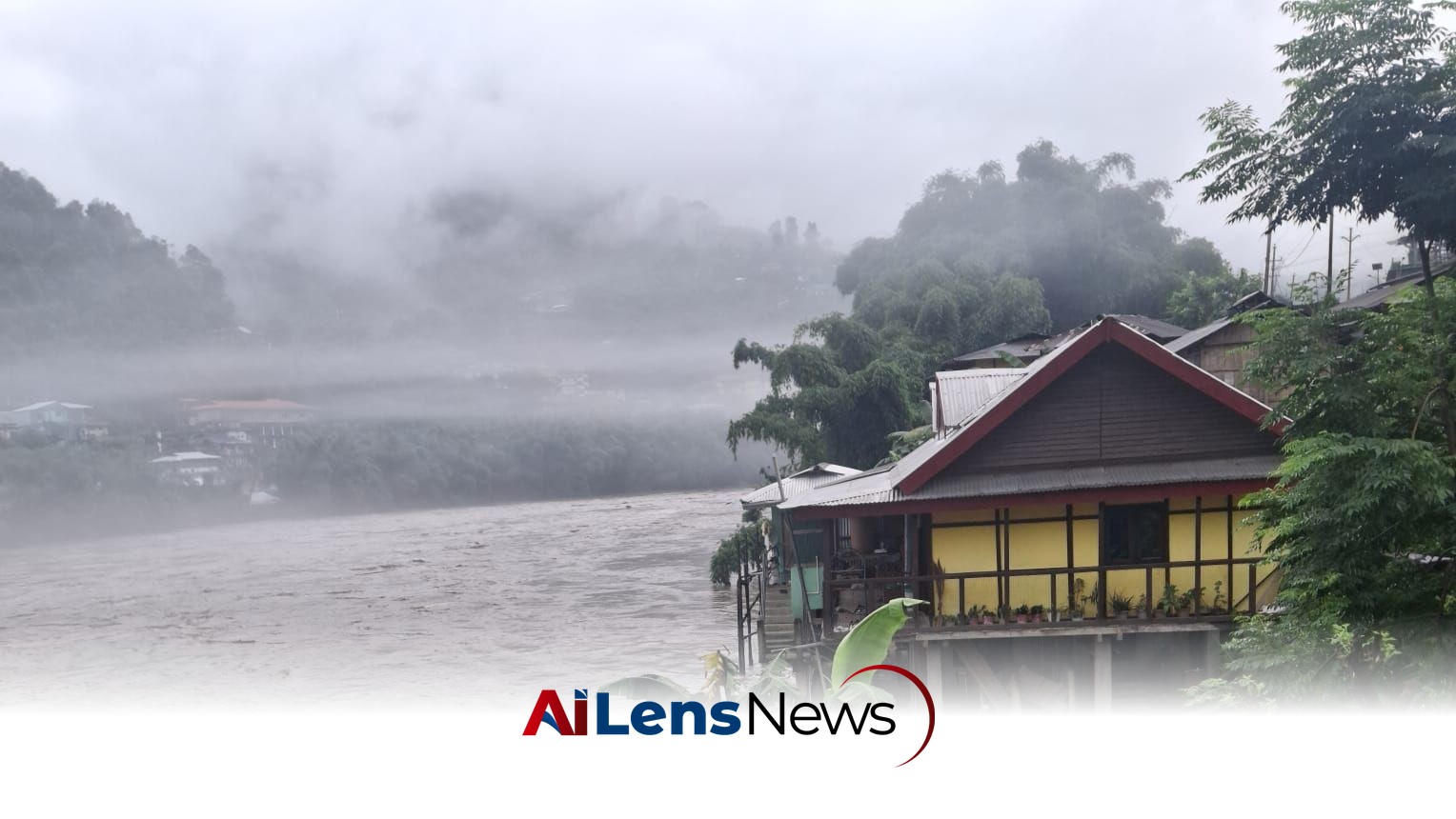


Continuous monsoon rains have led to catastrophic flash floods in Kurung Kumey, Arunachal Pradesh, damaging infrastructure and homes.
Gangtok, India Jul 13, 2026 ALN: Dibrugarh: Flash floods triggered by continuous monsoon rainfall caused widespread destruction in Arunachal Pradesh’s Kurung Kumey district on Monday morning, washing away churches, bridges, and damaging homes, while a portion of National Highway-13 was also washed away in Pakke-Kessang district.
According to officials, St. Thomas Church in Parsi Parlo was completely swept away by raging floodwaters after a cloudburst over the Kumey River led to a sudden rise in water levels. A Baptist church in the area was also destroyed. The impact of these floods on local communities is profound, as places of worship often serve not only as spiritual centers but also as community gathering spots, making their loss particularly devastating for residents.
At least three districts—Kurung Kumey, Kamle, and Pakke-Kessang—have been affected by flash floods since early Monday following the cloudburst. This phenomenon occurs when a large amount of rain falls in a short period, overwhelming local drainage systems and leading to rapid flooding. The geographical characteristics of Arunachal Pradesh, with its hilly terrain and dense forests, often exacerbate the effects of such weather events, leading to significant runoff and erosion.
The flooding inundated residential areas and public infrastructure in Parsi Parlo and nearby localities. The local government has reported that many homes were partially submerged, and essential services have been disrupted. Residents are facing challenges in accessing basic necessities such as food, clean water, and medical care.
Due to heavy rainfall in the upper reaches of the Kumey River during the early hours, widespread flash flooding caused significant damage in Parsi Parlo Circle and Damin Sub-Division of Kurung Kumey district, an official said. The extent of the damage has raised concerns about the long-term implications for these communities, especially as they attempt to recover from such a catastrophic event.
According to the official, the bridge connecting Huri to Damin was washed away, severing road connectivity. The Inspection Bungalow (IB) at Parsi Parlo was flooded, while two residential houses sustained partial damage. Infrastructure like bridges and roads are critical in remote areas, where they provide essential access for emergency services and supply routes. The destruction of such infrastructure can hinder recovery efforts and isolate communities.
The bridge connecting Pagam village was also washed away, further disrupting transportation and access to remote areas. The loss of these vital links not only affects daily life but also complicates the delivery of aid and support to those in need. Emergency responders often rely on these routes to reach affected populations, and their destruction can delay relief efforts.
The incident has severely affected transportation, public infrastructure, and residential properties, the official added. The local government is mobilizing resources to assess the damage and initiate recovery plans. However, the scale of the disaster presents significant challenges, particularly in terms of logistics and resource allocation.
The district administration is in constant touch with paramilitary forces, police, local residents, and other stakeholders to assess the damage and coordinate relief efforts. Effective communication and coordination are crucial in disaster response scenarios, as they ensure that aid reaches those who need it most efficiently and effectively.
Officials said this was the third cloudburst-related incident reported in Arunachal Pradesh in the past month. This raises questions about the increasing frequency and intensity of such weather events, which may be linked to broader climatic changes. The region has been experiencing erratic weather patterns, and the implications of these changes could have lasting effects on local ecosystems and communities.
Road connectivity to an Indo-Tibetan Border Police (ITBP) camp has also been disrupted following the collapse of a bridge. The ITBP plays a crucial role in maintaining security in border areas, and disruptions to their operations can have implications for national security and border management. The loss of infrastructure not only affects local communities but can also have wider ramifications for regional stability.
Meanwhile, a portion of the Seppa–Itanagar stretch of NH-13 near Pakro village in Pakke-Kessang district was washed away due to heavy rainfall, disrupting vehicular movement on the key highway. National Highway-13 is a crucial artery for transport and trade in the region, and its disruption can have cascading effects on local economies. The loss of access can lead to shortages of goods and increased prices, further burdening already vulnerable populations.
The situation in Kurung Kumey district is a stark reminder of the vulnerability of certain regions to extreme weather events. As climate change continues to influence weather patterns globally, areas like Arunachal Pradesh may face increased risks of flooding and other natural disasters. This highlights the need for improved infrastructure, better disaster preparedness, and more robust response mechanisms to mitigate the impact of such events in the future.
In the aftermath of the floods, local authorities and NGOs will likely play a critical role in providing immediate relief to affected families. The process of recovery will require not only immediate aid but also long-term planning to rebuild homes and infrastructure. Community resilience will be tested in the coming weeks and months as residents work to restore their lives in the wake of this disaster.
As the region grapples with the aftermath of the floods, the broader implications for disaster management and climate adaptation strategies will be a focal point for policymakers. There is a pressing need for investment in resilient infrastructure and community education on disaster preparedness to better equip local populations to handle future events.
To learn more about the latest developments in Health & Public Safety, stay updated with our exclusive reports and analyses on AiLensNews.

