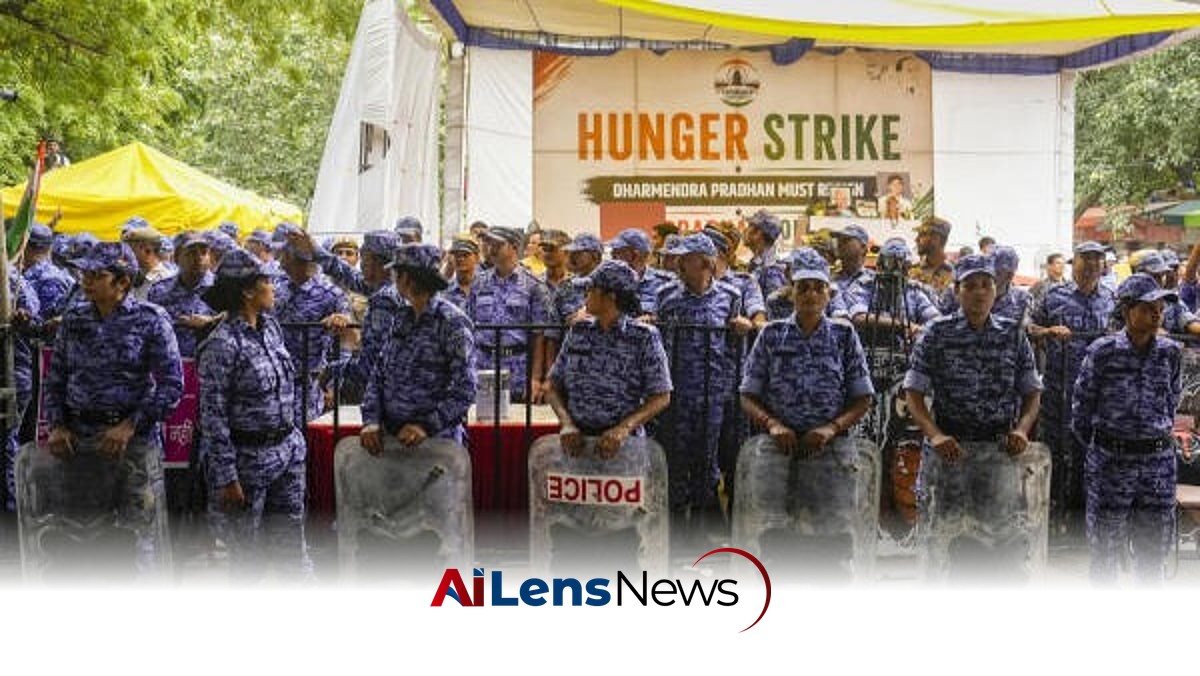


Security measures were heightened in New Delhi after activist Sonam Wangchuk was hospitalized due to health issues stemming from a hunger strike.
New Delhi, India Jul 18, 2026 ALN: New Delhi: Security was stepped up in and around Jantar Mantar and across parts of the New Delhi district on Saturday after activist Sonam Wangchuk, whose health deteriorated during a 20-day hunger strike, was shifted to a hospital following a brief commotion during the exercise, police said.
Sonam Wangchuk, a prominent environmentalist and education reformist, is known for his activism focused on the issues of climate change, water conservation, and sustainable development. His hunger strike, which lasted for 20 days, was aimed at drawing attention to the pressing environmental challenges faced by the Himalayan region, particularly in Ladakh, where he hails from. Wangchuk has been a vocal advocate for the preservation of the fragile ecosystem of the Himalayas and has emphasized the need for sustainable practices to combat the adverse effects of climate change.
Heavy deployment of Delhi Police personnel and paramilitary forces has been made at Jantar Mantar and nearby areas to maintain law and order and prevent any untoward incident, they said. Jantar Mantar, a historic site and a popular venue for protests in the heart of New Delhi, has been a focal point for various social and political movements over the years. The site has seen numerous demonstrations addressing issues ranging from social justice to environmental concerns.
Barricades have been erected and security personnel positioned at key points to regulate the movement of protesters and visitors. The increased security measures come in response to the potential for unrest following Wangchuk's hospitalization, as his supporters and fellow activists gathered at the site to express their concern and solidarity.
Deputy Commissioner of Police (New Delhi) Sachin Sharma told PTI that Wangchuk was shifted to a hospital in accordance with the Delhi High Court's order after his health deteriorated. The court's involvement underscores the legal and procedural frameworks that govern demonstrations and the responsibilities of law enforcement in ensuring the safety of individuals engaged in protests.
"Following the directions of the High Court and according to the health conditions and medical advice, we have taken Sonam Wangchuk to appropriate government hospital which was much needed medical intervention and under medical supervision," he said. This statement highlights the delicate balance between the right to protest and the need for medical care, particularly in cases where individuals may jeopardize their health for their cause.
In a statement, Delhi Police said Wangchuk was hospitalized for essential medical care on the advice of medical experts. The decision to hospitalize him reflects the serious implications of prolonged fasting and the potential health risks associated with such actions. Hunger strikes are often employed as a form of non-violent protest, but they can lead to severe health consequences if not monitored closely.
AAP slams Delhi Police for shifting Sonam Wangchuk to hospital, using force on protesters
"As per orders of the Hon'ble High Court and on expert medical advice, due to the deteriorating health condition of Sh. Sonam Wangchuk, he has been shifted to the hospital for essential medical care," the statement said. The involvement of the High Court in this matter brings to light the judiciary's role in mediating between the rights of protesters and the responsibilities of the state to ensure public safety.
Police said some protesters attempted to obstruct the exercise while the high court's directions were being implemented, leading to a brief commotion. The tension at Jantar Mantar reflects the passionate commitment of Wangchuk’s supporters to his cause, as well as the challenges faced by law enforcement in managing public demonstrations. Protests, especially those involving high-profile activists, can quickly escalate, necessitating a careful approach to crowd control and security.
"The protestors tried to create obstruction, in which slight commotion ensued; however, police exercised maximum restraint and undertook the exercise safely," the statement said. The emphasis on restraint by the police is significant, especially in the context of past incidents where protests have turned violent. The authorities’ decision to prioritize de-escalation signals an awareness of the broader implications of police action on public sentiment and the potential for backlash against perceived heavy-handedness.
Police said adequate security arrangements had been put in place across the New Delhi district as a precautionary measure. These measures are indicative of the heightened sensitivity surrounding public gatherings, particularly those that involve health crises or controversial figures. The presence of additional security forces can serve both as a deterrent to potential unrest and as a reassurance to the public regarding their safety during such events.
They also appealed to the protesters to cooperate with the authorities, saying, "We request the protestors at Jantar Mantar to peacefully vacate the place at the earliest." This appeal highlights the ongoing tension between the right to protest and the need to maintain public order. It also reflects the authorities' efforts to manage the situation without resorting to force, which could further inflame tensions.
The implications of Wangchuk's hospitalization extend beyond the immediate situation at Jantar Mantar. His activism and the issues he champions resonate deeply with many in India, particularly in the context of climate change and environmental degradation. As the effects of climate change become increasingly visible, activism surrounding these issues is likely to grow, potentially leading to more protests and demonstrations in the future. The government's response to such movements will be crucial in shaping public perception and trust in its commitment to addressing environmental challenges.
Moreover, Wangchuk's situation raises important questions about the role of civil disobedience in advocating for change. Hunger strikes, while a traditional form of protest, can lead to serious health consequences, and the ethical implications of such actions are often debated. The balance between individual rights and the collective responsibility to ensure health and safety is a complex issue that will continue to be relevant in discussions about activism and protest in India.
In conclusion, the increased security measures at Jantar Mantar following Sonam Wangchuk's hospitalization reflect the broader dynamics of protest in India, where activism, health, and state response intersect. As the situation develops, it will be essential to monitor both the health of Wangchuk and the reactions of his supporters, as well as the authorities' handling of the ongoing protests. The events at Jantar Mantar may serve as a pivotal moment in the ongoing dialogue about environmental activism and the rights of individuals to advocate for change in a democratic society.
To learn more about the latest developments in Health & Public Safety, stay updated with our exclusive reports and analyses on AiLensNews.

