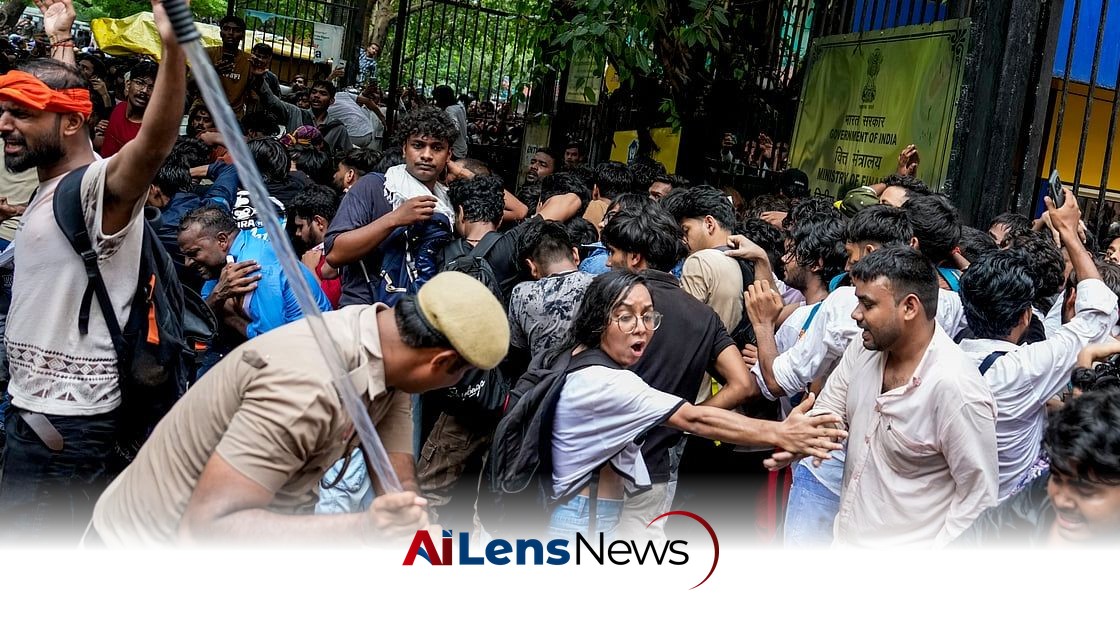


The Supreme Court Bar Association has urged the Prime Minister to investigate police actions against peaceful protesters during the July 20 march, citing excessive force and injuries.
New Delhi, India Jul 22, 2026 ALN: The Supreme Court Bar Association (SCBA), under the leadership of its president Vikas Singh, has made a notable request for a judicial inquiry into the police actions that took place during protests on July 20 at Jantar Mantar, New Delhi. This request has emerged in the context of allegations of excessive force being used by police against demonstrators who were largely peaceful, comprising students, lawyers, and medical personnel. These protests were primarily organized to voice grievances over the management of national examinations, specifically the NEET paper leak issue, which has raised significant questions about the integrity of the examination process in India.
The protests on July 20 were a response to an ongoing crisis that has plagued the educational sector in India, particularly concerning the conduct of competitive examinations. The NEET (National Eligibility cum Entrance Test) is a critical examination for aspiring medical students, and the recent allegations of paper leaks have sparked outrage among students and their families. The integrity of such examinations is paramount, as they determine the future of countless students. The SCBA's call for a judicial inquiry is not merely a reaction to police violence but also a demand for accountability regarding the systemic issues affecting the educational framework in the country.
In his communication to Prime Minister Narendra Modi and Union Home Minister Amit Shah, Singh expressed his grave concern over what he described as a "dual administrative collapse." This phrase encapsulates the dual failures of both law enforcement and the educational administrative systems. The violent police response to peaceful protests signifies a troubling trend where the rights of citizens to assemble and express dissent are being undermined. Furthermore, the systemic failures in ensuring fair conduct of national examinations contribute to a growing sense of disillusionment among students, who feel that their futures are being jeopardized by a lack of transparency and accountability.
Eyewitness accounts and media reports have painted a chaotic picture of the protests, with numerous allegations of police brutality. Protesters reported that police officers engaged in unprovoked assaults, utilizing lathi-charges indiscriminately, deploying tear gas, and dismantling hunger strikes. Such actions not only raise questions about the appropriateness of police responses but also highlight the need for a review of protocols governing crowd control and the treatment of peaceful demonstrators. The presence of journalists and medical personnel during the protests further complicates the narrative, as reports suggest that these individuals were also targeted by police, raising ethical concerns regarding the treatment of those providing aid and coverage during civil unrest.
One particularly troubling aspect of Singh's allegations is the claim that police officers were operating without mandatory name badges, which are intended to ensure accountability in law enforcement. The absence of identification makes it exceedingly difficult to hold specific individuals accountable for their actions during the protests. This lack of transparency in law enforcement practices can erode public trust and confidence in the police, further exacerbating tensions between law enforcement and the communities they serve.
Singh's letter also draws attention to specific instances of police brutality that have garnered public outrage. Reports of male officers lathi-charging female protesters and minors, including a 16-year-old student who was allegedly injured during the protests, highlight the need for greater protections for vulnerable populations during civil unrest. Such actions are seen as violations of fundamental rights guaranteed under Articles 19 and 21 of the Indian Constitution, which protect the right to freedom of speech and expression, as well as the right to life and personal liberty. These constitutional protections are foundational to India's democracy, and any infringement upon them warrants serious scrutiny and corrective action.
In addition to concerns regarding police conduct, Singh emphasized the targeting of non-protesting medical teams during the protests. Eyewitness testimonies and video evidence reportedly show police intentionally attacking healthcare personnel who were providing first aid to injured protesters. This raises alarming ethical questions about the treatment of medical professionals in the line of duty. The implications for public health and safety during protests cannot be overstated; if medical personnel are unable to provide assistance without fear of reprisal, the safety of all individuals involved in such events is jeopardized.
Singh has contextualized the protests within a broader narrative of systemic failures in the educational sector, particularly regarding the conduct of examinations. The recurring incidents of paper leaks in national and state-level examinations have contributed to a growing sense of despair among students and have eroded their confidence in public institutions. The NEET examination, among others, has been marred by allegations of irregularities, leading to public outcry and demands for accountability. The SCBA's call for a judicial inquiry is not only a reaction to recent events but also a demand for comprehensive reform in how educational examinations are managed and overseen.
In light of these concerns, Singh has urged the central government to establish a time-bound judicial commission, led by a sitting or retired Supreme Court judge, to conduct a thorough inquiry into the police actions during the protests. He has also called for the immediate suspension of the Delhi Police commissioner to ensure an impartial investigation. Furthermore, Singh has demanded the registration of FIRs against officials who may be responsible for the use of excessive force, as well as accountability measures directed at the Ministry of Education for its repeated failures in maintaining the integrity of competitive examinations.
The protests on July 20 saw thousands of students demanding the resignation of Education Minister Dharmendra Pradhan, specifically in response to the NEET paper leak and the broader issues of examination irregularities. As students attempted to march towards Parliament, they faced a heavy-handed response from law enforcement, who deployed tear gas and batons to disperse the crowd. This violent confrontation has sparked widespread condemnation and calls for reform within both the police force and the educational system.
The implications of these events extend beyond the immediate concerns of police violence and student protests. They reflect a growing discontent among the youth regarding the governance of educational institutions and the perceived failure of the state to protect their rights. The SCBA's call for a judicial inquiry may serve as a catalyst for broader discussions about police accountability, the integrity of public examinations, and the need for systemic reform in how protests are managed in India. This situation underscores the importance of ensuring that the voices of students and other marginalized groups are heard and respected, as their participation is essential for the health of India's democracy.
As the situation continues to unfold, it is critical for all stakeholders—including the government, law enforcement agencies, and civil society—to engage in constructive dialogue aimed at addressing the root causes of unrest. The need for accountability, transparency, and reform has never been more pressing, and the outcomes of these discussions will have lasting implications for the future of governance, civil rights, and the educational landscape in India.
To learn more about the latest developments in Crime & Law, stay updated with our exclusive reports and analyses on AiLensNews.

