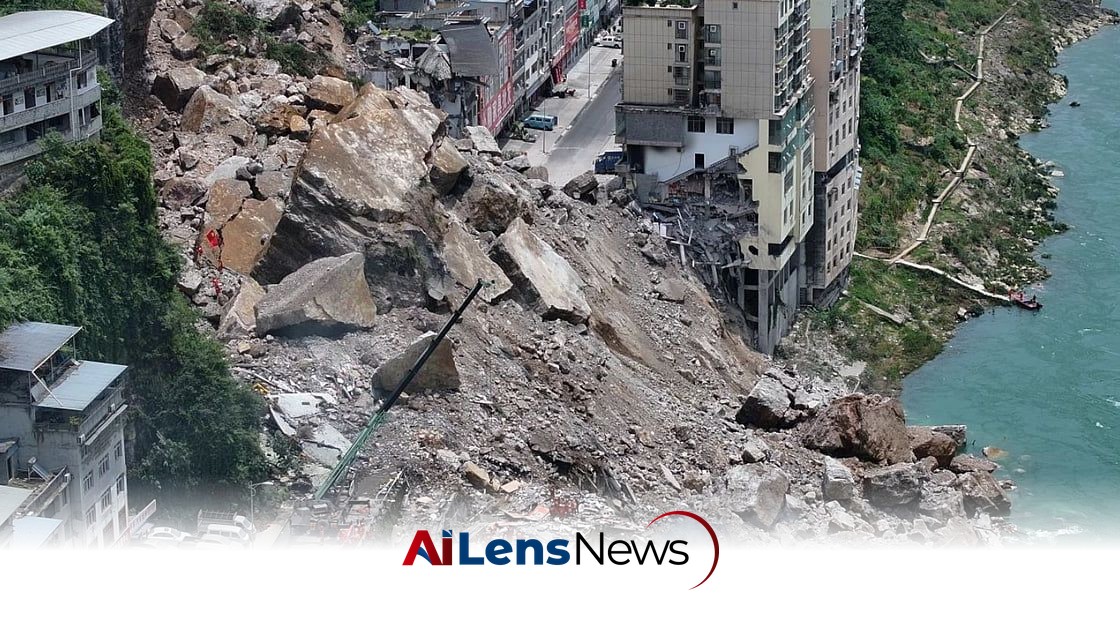


Rescue teams in Chongqing, China, are working tirelessly to find survivors after a landslide killed at least eight people and left 34 missing.
New Delhi, India Jul 18, 2026 ALN: CHONGQING (CHINA): Rescue crews on Saturday raced to find survivors from a landslide in the southwestern Chinese city of Chongqing that killed at least eight people and left 34 missing. The incident has drawn significant attention due to its severity and the ongoing efforts to locate those unaccounted for.
The landslide occurred in Pengshui County on Friday morning on the outer edge of the Chongqing municipality, when massive amounts of rocks and soil washed down a slope, burying more than 10 residential buildings, state broadcaster CCTV reported. The scale of the landslide is indicative of the geological vulnerabilities that can arise in regions characterized by steep terrain and heavy rainfall. Such geological features are common in southwestern China, where the interplay of natural elements often leads to disasters.
In the immediate aftermath of the landslide, ten people were rescued but subsequently sent to the hospital for treatment, while more than 1,100 individuals have been relocated to safer areas. This evacuation underscores the urgent need for safety protocols in areas prone to natural disasters, particularly in light of the increasing frequency of severe weather events attributed to climate change. The relocation efforts reflect a broader strategy that aims to protect vulnerable populations from the dangers posed by natural calamities.
Photos and videos from the scene provided by the Associated Press depicted the aftermath of the disaster, revealing that one of the fallen rocks appeared to be larger than a multi-storey building. The imagery of ruins scattered across the steep terrain paints a stark picture of the devastation. One of the damaged buildings had its top part crushed, and a car was seen half-buried near another building, highlighting the immediate impact on local residents and their properties. These visuals serve as a grim reminder of the power of nature and the precariousness of human settlements in such regions.
The landslide was reported to contain approximately 18,000 cubic meters of rocks and debris, with the largest single rock measuring around 3,000 cubic meters, according to Wang Chuanjun, head of Planning and Natural Resources in Pengshui County. This significant volume of material poses challenges not only for rescue operations but also for future assessments of the area's geological stability. The sheer size of the debris complicates the logistics of recovery efforts and raises concerns about the potential for further landslides in the wake of such a massive geological shift.
CCTV reported that persistent rain hit Pengshui from Friday night to Saturday morning, with 19.2 centimeters (nearly 8 inches) of rainfall recorded at a local weather station. Such heavy rainfall can saturate the soil, leading to increased risk of landslides, particularly in regions with steep topography and loose soil. The unstable weather conditions made the rescue operation more challenging, as teams had to navigate not only the physical dangers of the site but also the ongoing risk of further landslides. The combination of heavy rainfall and unstable geological conditions creates a perfect storm for landslide events, highlighting the need for effective monitoring systems in these areas.
As the rain eased slightly, rescue teams were able to enter the site to conduct on-the-ground inspections of the collapsed buildings and riverbank areas. The conditions remained perilous, as the risk of additional landslides loomed. While rescue operations were being carried out on one side of the massive rocks, teams would later need to look beneath the rocks, where they may face the risk of injury from the boulders becoming unstable and sliding further. This aspect of the rescue operation underscores the inherent dangers faced by emergency responders in disaster scenarios, as they work under conditions that can change rapidly and unpredictably.
Reports indicated that once the search around the rocks is complete, officers would drill into the boulders and fill the holes with explosives to break them apart, a method that illustrates the complexities of debris removal in such scenarios. This approach requires careful planning and execution to minimize the risk to rescue personnel and ensure that any potential survivors are not inadvertently harmed. The use of explosives in rescue operations is a last resort and necessitates a high level of expertise to balance the urgency of the situation with the safety of those involved.
In response to the disaster, China's National Development and Reform Commission allocated a relief fund of 30 million yuan (approximately USD 4.4 million) to support the restoration of infrastructure and public services facilities following the landslide. This financial assistance is critical for the affected communities, as it will help to address immediate needs such as temporary housing, medical care, and the restoration of essential services. The allocation of funds is a vital step in the recovery process, allowing local authorities to mobilize resources quickly and effectively to support those impacted by the disaster.
The rain-triggered landslide occurred near a section of the Wujiang River, which cuts through karst mountains peppered with small towns and terraces. The geological features of the region, characterized by limestone formations and steep slopes, contribute to the susceptibility of landslides, especially during periods of heavy rainfall. Understanding the geological context is essential for developing effective prevention and response strategies in the future. The region's unique topography not only affects the likelihood of landslides but also influences the types of construction and land use practices that can be safely employed.
Pengshui County is located in the southeast part of Chongqing, bordering the provinces of Hubei and Guizhou. This geographic positioning adds another layer of complexity to the response efforts, as coordination among local, regional, and national agencies is necessary to effectively manage the crisis. The integration of resources and expertise across different levels of government is crucial for ensuring that affected communities receive the support they need. Effective disaster response requires collaboration and communication among various stakeholders, including government agencies, non-governmental organizations, and local communities.
The implications of this landslide extend beyond the immediate rescue operations and recovery efforts. It raises important questions about the preparedness of communities in landslide-prone areas and the effectiveness of current building regulations and environmental management practices. As climate change continues to influence weather patterns, leading to more extreme rainfall events, regions like Chongqing may need to reassess their vulnerability to such disasters and implement more robust risk mitigation strategies. This necessitates a holistic approach that encompasses not only immediate response efforts but also long-term planning and infrastructure development to enhance community resilience.
In conclusion, the landslide in Chongqing represents a tragic event that has resulted in loss of life and significant disruption for many families. The ongoing rescue efforts highlight the resilience of communities in the face of disaster, as well as the critical need for comprehensive planning and response measures to address the challenges posed by natural disasters in vulnerable regions. The situation remains fluid, and updates from rescue teams will be closely monitored as the search for survivors continues. As the world grapples with the impacts of climate change and its associated risks, this incident serves as a poignant reminder of the urgent need for proactive measures to protect communities from the increasing threat of natural disasters.
To learn more about the latest developments in Local & Regional, stay updated with our exclusive reports and analyses on AiLensNews.

