

Rahul Gandhi condemns the government's denial of pellet gun use during protests, demanding accountability for violence against students.
New Delhi, India Jul 25, 2026 ALN: Rahul Gandhi, the Leader of the Opposition in the Lok Sabha, has leveled serious accusations against the Indian government, claiming that officials have misled the public regarding the use of pellet guns against protesters during recent demonstrations. This statement was made following Gandhi's meeting with Sahil Lachob, a young man who sustained significant injuries from pellet gun fire during police actions on July 20. The incident has sparked widespread outrage and raised questions about the government's approach to handling civil protests.
In a press conference conducted via Instagram, a platform that has increasingly become a medium for political discourse among younger demographics, Gandhi did not hold back in his criticism. He specifically targeted Education Minister Dharmendra Pradhan, branding him a “criminal education minister” and a symbol of the deteriorating education system in India. This accusation reflects a broader sentiment among many critics who argue that the current administration has failed to address critical issues within the educational sector, including access, quality, and safety for students.
The controversy surrounding the alleged use of pellet guns has intensified, particularly as the Delhi Police have denied any involvement in such actions against the protesters. In contrast, the Central Reserve Police Force (CRPF) has stated that it is in the process of “verifying” reports concerning the deployment of pellet guns during the protests. This discrepancy between the government’s statements and the experiences of individuals like Sahil has fueled public distrust and anger, leading to calls for accountability and transparency.
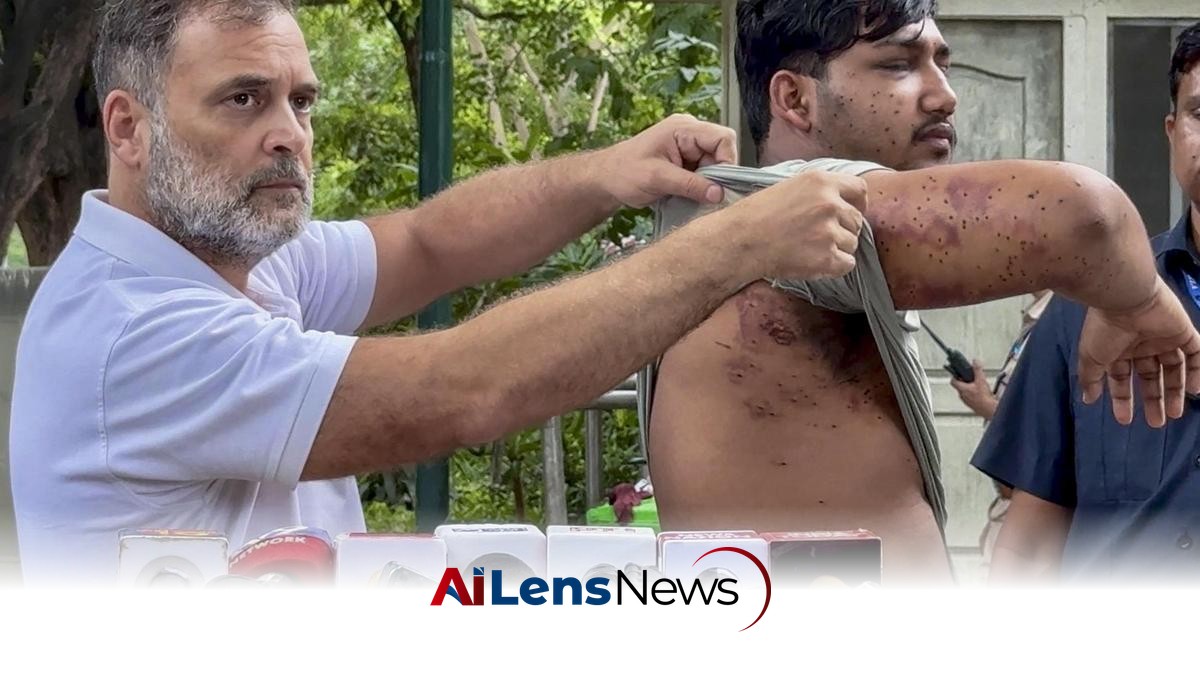
During the press conference, Gandhi stood alongside Sahil outside the residence of Congress Parliamentary Party chairperson Sonia Gandhi, emphasizing the personal impact of the government’s actions. He stated, “The government says ‘no’. My brother was struck by a pellet gun while he was peacefully protesting with a Tricolour in hand.” This statement underscores the emotional weight of the issue, as Gandhi invoked the image of peaceful protest, a fundamental democratic right, being met with violence.
In a poignant display, Gandhi revealed Sahil’s injuries, which included visible wounds on his torso and significant damage to his right eye, leading to impaired vision. The physical toll of such injuries serves as a stark reminder of the potential consequences of state violence against citizens exercising their right to protest. Gandhi emphasized, “This is the future of our country. Thousands of youth have been shot at with pellet guns and beaten during lathi-charges. They were protesting peacefully.” This statement resonates with many young people in India who feel that their voices are being suppressed.
Gandhi further elaborated on Sahil's situation, noting that the young man had been preparing for a police recruitment examination, an opportunity that has now been jeopardized due to the violent crackdown on protesters. The mention of a paper leak related to the examination adds another layer of complexity to the situation, highlighting systemic issues within the recruitment process and raising concerns about fairness and integrity in public service opportunities. “His parents spent their hard-earned money to give him this opportunity. The government has attacked our future,” Gandhi lamented, framing the issue not just as an individual tragedy but as a broader societal problem that affects the aspirations of countless young Indians.
In light of these events, Gandhi has called for justice for Sahil and all those affected by the violence against students during the protests. He has demanded accountability for those responsible for the alleged use of pellet guns and other forms of brutality. In a direct appeal to Prime Minister Narendra Modi, Gandhi stated, “Stop assaulting and threatening our students,” accusing the government of actively suppressing a peaceful movement that seeks to address legitimate grievances among the youth. This call to action reflects a growing sentiment among opposition leaders and civil society advocates who are increasingly vocal about the need for government accountability.
Sahil, who has already undergone surgery to remove pellets from his eye, is currently awaiting further medical procedures. His journey through the healthcare system has been fraught with challenges, as he was initially treated at Lady Hardinge Medical College before being transferred to Safdarjung Hospital and subsequently to the AIIMS Trauma Centre. His case exemplifies the human cost of political unrest and the urgent need for comprehensive medical and psychological support for victims of state violence.
The use of pellet guns in crowd control has been a contentious issue in India, particularly in regions like Jammu and Kashmir, where such measures have been employed frequently. Critics argue that the use of such weapons is disproportionate and can lead to severe injuries or even fatalities, raising ethical concerns about the methods employed by law enforcement to manage protests. The current government's stance on the use of such tactics has drawn ire from human rights organizations, which advocate for the protection of civilians and the right to peaceful assembly.
As the debate continues, it becomes increasingly clear that the implications of this incident extend beyond the immediate injuries suffered by Sahil and others. It raises critical questions about the state’s responsibility to protect its citizens, the ethical implications of using force against peaceful protesters, and the broader societal impacts of governmental repression. The public's reaction to these events may influence future policies regarding law enforcement and civil rights in India, as well as the political landscape leading up to upcoming elections.
In this climate of unrest and dissatisfaction, the opposition parties, led by figures like Rahul Gandhi, are likely to leverage these incidents to galvanize support and push for reforms. The ongoing dialogue around the treatment of protesters, the state of education, and the rights of youth will remain pivotal as India navigates its complex socio-political landscape. The outcome of this situation may very well shape the future of civil liberties and the relationship between the government and its citizens in the years to come.
To learn more about the latest developments in Crime & Law, stay updated with our exclusive reports and analyses on AiLensNews.

