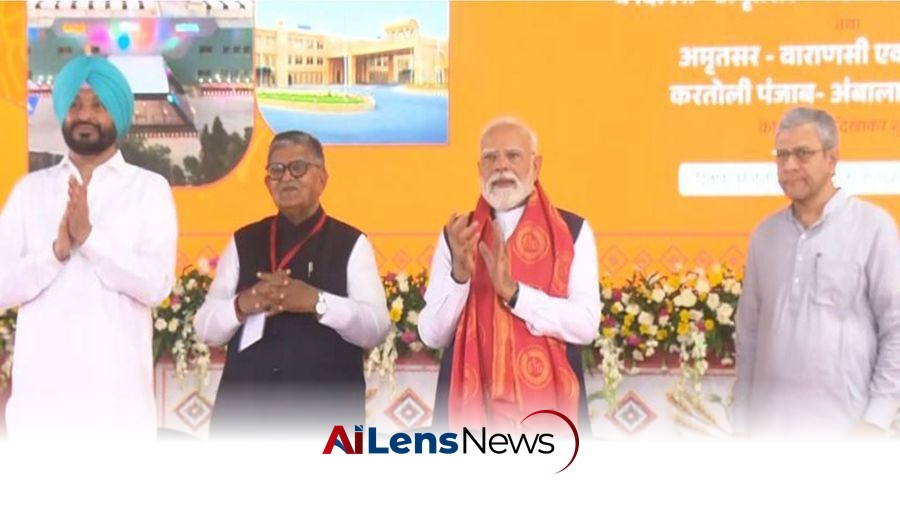


Prime Minister Narendra Modi inaugurated and laid the foundation stone for significant rail and road infrastructure projects in Jalandhar, Punjab, enhancing connectivity and local heritage.
Chandigarh, India Jul 17, 2026 ALN: Jalandhar (Punjab), July 17: Prime Minister Narendra Modi on Friday inaugurated and laid the foundation stone of rail and road infrastructure projects worth over ₹5,470 crores in Jalandhar. This initiative is part of a broader strategy to enhance transportation networks across India, aiming to stimulate economic growth and improve connectivity for millions of citizens. The emphasis on infrastructure development is particularly critical in a nation like India, where diverse geographical landscapes and a large population necessitate robust transport systems to support economic activities and social integration.
The Prime Minister inaugurated 75 redeveloped railway stations, including Jalandhar Cantt, under the Amrit Bharat Station Scheme. This scheme is a pivotal element in the Indian government's efforts to modernize the railway infrastructure, which is vital for the country’s connectivity and economic development. The inauguration of these 75 Amrit Stations across 20 states marks another significant milestone under this ambitious initiative, which is recognized as one of the world's largest station redevelopment programmes. The initiative not only aims to enhance the aesthetic appeal and functionality of railway stations but also to ensure that they meet the growing needs of an increasing passenger base.
Developed at a cost of about ₹1,570 crores, these stations have been transformed into modern, passenger-friendly facilities. The redevelopment process has been guided by the principle of 'Virasat Bhi, Vikas Bhi', which translates to 'Heritage and Development'. This approach ensures that the new designs incorporate elements reflecting local culture, heritage, and architecture, thereby preserving the historical significance while catering to modern passenger needs. This dual focus on heritage and development is crucial in a country like India, where historical landmarks often coexist with the need for modern infrastructure. The integration of local art and architecture into the station designs is expected to create a sense of pride and ownership among the local population.
The Prime Minister also inaugurated the Daulatpur Chowk-Kartoli new rail line, constructed at a cost of about ₹830 crores as part of the Nangal Dam-Talwara-Mukerian New Rail Line Project. This new rail line is expected to significantly strengthen rail connectivity between Punjab and Himachal Pradesh, which are two states with rich cultural and historical backgrounds. The improved connectivity will benefit the districts of Hoshiarpur and Una, facilitating not just daily commuting but also tourism and trade. The establishment of this rail line is particularly significant as it can potentially open up new economic corridors, allowing for better movement of goods and people between these two states, which are known for their agricultural and cultural wealth.
One of the key advantages of the new rail line is its ability to provide access to important religious destinations such as Shri Anandpur Sahib and Maa Chintpurni Temple. These sites are significant pilgrimage locations for many people, and the enhanced rail connectivity will make it easier for devotees to visit these places. Furthermore, the new line will enhance access to remote areas, providing passengers with a faster, safer, and more reliable mode of transportation, which is crucial for rural development and economic integration. The increased accessibility to religious sites can also boost local economies through tourism, as more pilgrims are likely to visit and contribute to the local businesses.
In addition to the rail projects, Prime Minister Modi flagged off the Kartoli-Ambala train service, which aims to improve connectivity across Punjab, Haryana, and Himachal Pradesh. This service is expected to facilitate smoother travel for passengers and enhance trade opportunities between these regions, contributing to regional economic development. The introduction of new train services is aligned with the government's broader vision of improving the railway network and making it more responsive to the needs of the populace, thereby encouraging the use of rail transport as a preferred mode of travel.
Furthermore, the Prime Minister flagged off the Amritsar (Chheharta)-Varanasi train service, establishing a direct rail link between two of India's most revered spiritual and cultural centres. This connection is particularly significant as it allows for easier pilgrimage travel between the Golden Temple in Amritsar and the Kashi Vishwanath Temple in Varanasi, thereby promoting spiritual tourism and cultural exchange. Such direct links are expected to enhance the flow of visitors between these iconic sites, fostering greater understanding and appreciation of India's diverse cultural heritage.
To further bolster the road infrastructure in the state, the Prime Minister inaugurated and laid the foundation stone of National Highway projects worth over ₹3,070 crores. The development of road infrastructure is crucial for economic growth, as it facilitates the movement of goods and people, thereby enhancing trade and accessibility. The improvement of road networks is particularly vital in a country where a significant portion of freight transport is conducted via road, making it essential for the efficiency of supply chains and logistics.
Among the inaugurated projects is the 30.9-km-long Package-6 of the four-lane greenfield Delhi-Amritsar-Katra Expressway. This expressway is expected to facilitate easier and faster travel, particularly for heavy vehicles, which will not only reduce travel time but also contribute to lower fuel consumption and vehicle operating costs. This is particularly important in a country like India, where road transport is a primary mode of travel and freight movement. The reduction in travel time can significantly enhance the efficiency of businesses that rely on timely deliveries, thus supporting economic growth.
Additionally, the Prime Minister laid the foundation stone for the development of the 25.2-km-long six-lane greenfield Southern Ludhiana Bypass. This project is designed to reduce travel distance and time between Ludhiana and Bathinda, two major economic hubs in Punjab. Improved connectivity between these cities will enhance trade, commerce, and economic activities, contributing to the overall development of the region. The bypass is expected to alleviate congestion in urban areas, allowing for smoother traffic flow and improved safety for all road users.
The implications of these infrastructure projects extend beyond mere transportation improvements. Enhanced connectivity can lead to increased economic opportunities, job creation, and better access to services for the local population. Moreover, by integrating remote areas into the broader economic framework, these projects can help reduce regional disparities and promote inclusive growth. Improved transport infrastructure is often linked to better educational and healthcare outcomes, as it allows for easier access to these essential services.
As the Indian government continues to focus on infrastructure development, these projects reflect a commitment to modernizing the country's transport systems, which is essential for sustaining economic growth and improving the quality of life for citizens. The investments in rail and road infrastructure are expected to yield long-term benefits, fostering a more connected and economically vibrant India. This commitment to infrastructure development is also aligned with global trends, where countries are increasingly recognizing the importance of robust transport networks in driving economic resilience and competitiveness.
To learn more about the latest developments in Local & Regional, stay updated with our exclusive reports and analyses on AiLensNews.

