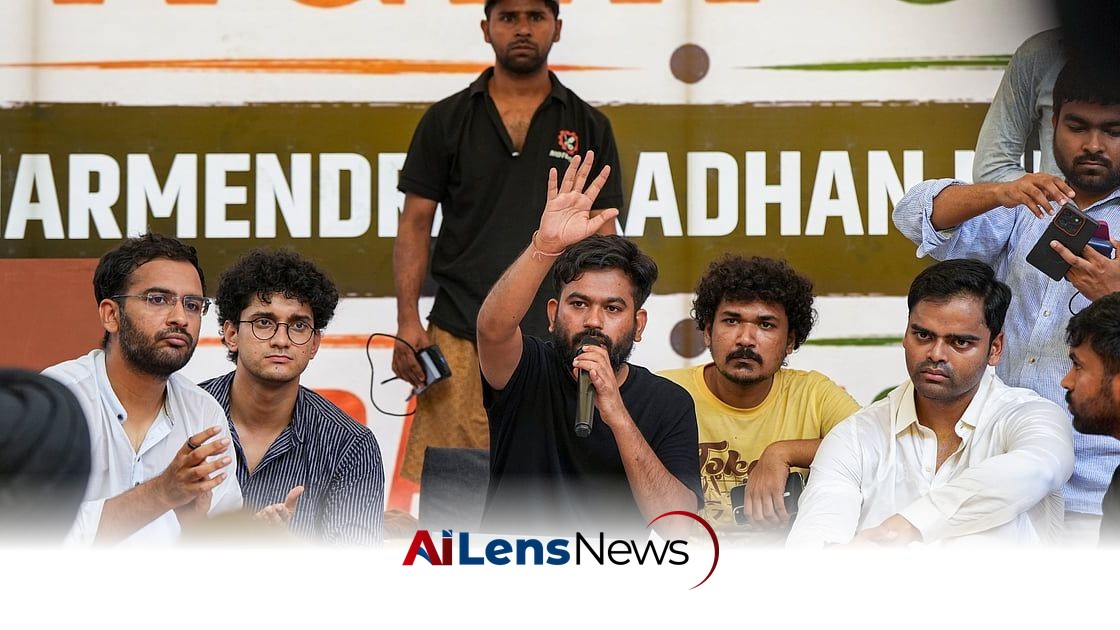


Despite the removal of climate activist Sonam Wangchuk, protesters at Jantar Mantar continue to push for examination reforms and accountability in the NEET-UG process.
New Delhi, India Jul 18, 2026 ALN: The protest led by the Cockroach Janta Party (CJP) at Delhi's Jantar Mantar showed no signs of losing momentum on Saturday despite the absence of climate activist Sonam Wangchuk, who was forcibly removed from the site by Delhi Police early in the morning. This incident has sparked widespread outrage among protesters and supporters, highlighting the ongoing tensions between civil society groups and the government regarding issues of climate change and educational reforms.
The entire stretch of Jantar Mantar remained heavily barricaded at both ends, restricting vehicular movement after Wangchuk's removal from the site. Protesters asserted that the movement has only grown stronger in the face of governmental repression, while organizers reiterated that -- 'Sansad Chalo' -- the planned march to Parliament on July 20 will go ahead as scheduled. The determination of the protesters reflects a broader sentiment among many youth and student groups in India who feel marginalized by current policies and are demanding accountability from their leaders.
The protesters have been demanding sweeping examination reforms, accountability over the alleged irregularities in the NEET-UG examination, and the resignation of Union Education Minister Dharmendra Pradhan. The NEET-UG examination, which stands for the National Eligibility cum Entrance Test for Undergraduate courses, has been a contentious issue, with many alleging that the examination process is fraught with irregularities and corruption. As a result, students and their families have been directly impacted by these issues, leading to heightened frustrations and calls for change.
On the 28th day of the protest, which began on June 20, CJP chief Abhijeet Dipke launched an indefinite hunger strike over Wangchuk's removal, further intensifying the agitation. This act of protest underscores the lengths to which activists are willing to go to make their voices heard. As the situation escalated, protesters also demanded Prime Minister Narendra Modi's resignation, reflecting a growing discontent with the central government's handling of various issues ranging from education to climate policy.
Dipke was later targeted with an ink-like liquid attack by an unidentified woman. The incident briefly disrupted the program as supporters rushed towards the stage, triggering commotion. The woman's identity and the motive behind the act were not immediately known; however, police confirmed that she has been detained. This incident raises concerns about the safety of public protests and the potential for violence, which can detract from the core messages of peaceful demonstrations.
Meanwhile, organizers reported that the health of three student activists who are already on an indefinite fast had deteriorated as their protest entered its 21st day. They alleged that Delhi Police attempted to detain the fasting students from the protest site, an action that has drawn significant criticism from various civil rights groups. The deterioration of health among the fasting activists highlights the physical toll that such protests can take on individuals, particularly when they are engaged in extreme forms of protest like hunger strikes.
Speaking at Jantar Mantar, activist and Swaraj India founder Yogendra Yadav stated that the government's action against Wangchuk had failed to weaken the movement. Yadav's comments reflect a sentiment shared by many in the protest, who believe that attempts to suppress dissent will ultimately backfire. He articulated this perspective by stating, "The government thought that by picking up Wangchuk ji, the protest would fizzle out but technically, andolan ki hawa nahi nikli, sarkar ki hawa nikal gayi (the protest hasn't run out of steam; the government has). The government may break the protest but the plan for the march on July 20 is fixed." This assertion speaks to the resilience of the movement and the commitment of its participants to continue advocating for their demands.
Echoing this sentiment, Saurav Das, chief spokesperson of the CJP, emphasized that there would be no change in the program. "Call is already given for the July 20 protest. No backtracking at any cost," Das declared. This steadfastness among the organizers indicates a well-coordinated effort to maintain momentum and ensure that the protest remains visible and impactful in the public eye.
Meanwhile, Congress leader Rahul Gandhi criticized the Centre over Wangchuk's removal from the protest site. Breaking his silence on the issue, the Lok Sabha Leader of the Opposition accused the Narendra Modi government of suppressing peaceful dissent. Writing on X, Gandhi stated that the core principles of the Modi government were "Asatya" (falsehood) and "Hinsa" (violence), describing Wangchuk's removal while he was observing a non-violent hunger strike as "wrong." This political condemnation from a senior opposition figure adds another layer of complexity to the situation, as it highlights the intersection of civil rights activism and political opposition in India today.
Hundreds of students, families, civil society members, and political supporters continued to gather at the site. The diverse composition of the protestors, including television personalities and former DUSU President Ronak Khatri of the NSUI, reflects the broad-based support for the movement. This convergence of different groups underscores the urgency of the issues at stake and the collective desire for change among various segments of society.
Meanwhile, supporters were seen making announcements inside Delhi Metro trains on Saturday, urging commuters to join the 'Sansad Chalo' march on July 20. This grassroots mobilization effort demonstrates the organizers’ commitment to reaching a wider audience and ensuring that the protest gains traction beyond Jantar Mantar. A YouTuber, Vidhushi, announced on Instagram that she would sponsor train tickets for five students from across India who wished to travel to Jantar Mantar on July 20 but were unable to do so because of the cost. This act of solidarity illustrates the community spirit among supporters and the lengths to which individuals are willing to go to ensure that everyone can participate in the movement.
CJP chief Dipke urged supporters to arrive on the night of July 19 to avoid possible restrictions by Delhi Police on the day of the march. This strategic planning highlights the organizers’ awareness of potential governmental pushback and their desire to ensure maximum participation in the protest. Organizers also claimed they had received three lakh missed calls on their helpline to register attendance for the July 20 protest, indicating a high level of engagement and interest in the planned demonstration.
To learn more about the latest developments in Politics, stay updated with our exclusive reports and analyses on AiLensNews.

