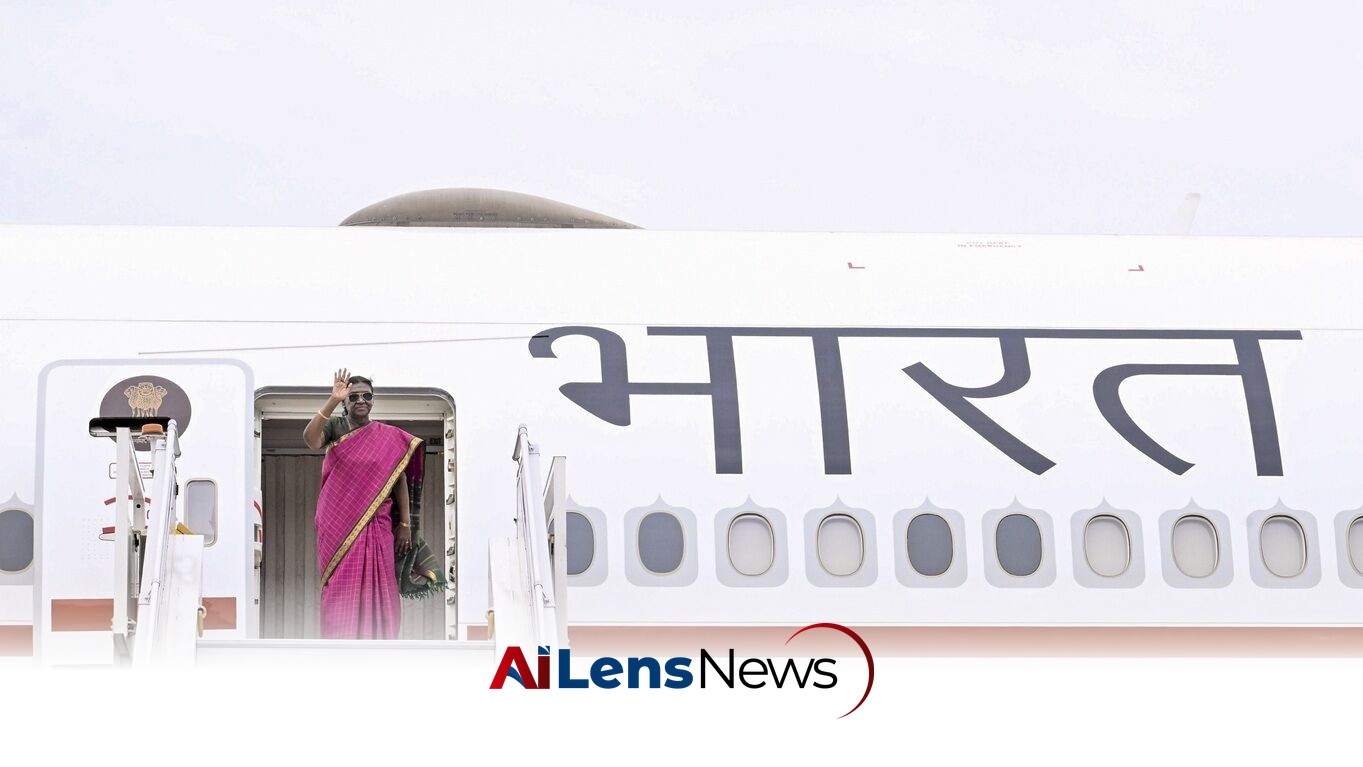


President Droupadi Murmu begins her first official visits to Moldova and North Macedonia, aiming to strengthen India's ties in Central and Eastern Europe.
New Delhi, India Jul 19, 2026 ALN: President Droupadi Murmu has embarked on a significant three-nation state visit to Moldova, North Macedonia, and Romania, marking a pivotal moment in India's diplomatic relations with these countries. This tour aims to enhance India's engagement across various sectors, including trade, technology, and cultural exchanges.
The Ministry of External Affairs (MEA) highlighted that this visit underscores India's growing involvement in Central and Eastern Europe, reaffirming its commitment to fostering partnerships within the region. MEA Secretary (West) Sibi George emphasized that the tour complements India's broader engagement with Europe and its strategic partnership with the European Union.
India's diplomatic relations with Eastern Europe have evolved significantly over the past few decades, moving from a primarily ideological alignment during the Cold War to a more multifaceted partnership that includes economic, cultural, and security dimensions. The countries of Moldova, North Macedonia, and Romania have emerged as important partners for India as it seeks to expand its influence in the region, which has traditionally been dominated by Western powers.
The first leg of the tour commences in Moldova, where Murmu will make history as the first Indian President to visit the Eastern European nation. This visit is particularly significant given Moldova's strategic position between Romania and Ukraine and its ongoing efforts to strengthen ties with the European Union. During her stay, she will engage in delegation-level talks with Moldovan President Maia Sandu and meet Igor Grosu, the President of the Parliament of the Republic of Moldova.
The MEA stated, "India and Moldova enjoy warm and friendly relations. This visit will mark a significant historical milestone and elevate bilateral ties to a broad-based partnership." The historical context of India-Moldova relations dates back to the early 1990s, following Moldova's independence from the Soviet Union. Since then, both nations have sought to develop mutual cooperation in various fields, including education, culture, and trade.
Following Moldova, President Murmu will travel to North Macedonia from July 21 to 22, also making her the first Indian President to visit this country. North Macedonia, which recently changed its name from the former Yugoslav Republic of Macedonia, has been working to establish itself as a stable and prosperous nation in the Balkans. At the invitation of North Macedonian President Gordana Siljanovska-Davkova, Murmu will hold bilateral discussions with the President, meet Prime Minister Hristijan Mickoski, and address the Assembly of North Macedonia.
In recent years, North Macedonia has sought to strengthen its international ties, particularly with countries like India that are seen as emerging powers. Additionally, she will participate in the India-North Macedonia Business Forum, focusing on enhancing economic cooperation in key sectors such as agriculture, pharmaceuticals, science and technology, and IT services. This forum represents an opportunity for Indian businesses to explore new markets and for North Macedonia to attract investment from one of the world's largest economies.
The final leg of her tour will take place in Romania from July 23 to 25, at the invitation of Romanian President Nicușor Dan. This visit marks the first by an Indian President to Romania in over three decades, underscoring the importance of revitalizing diplomatic ties between the two nations. Romania, as a member of the European Union and NATO, plays a crucial role in regional stability and security, and strengthening relations with India could pave the way for enhanced cooperation in various areas.
During her time in Romania, Murmu will meet with President Dan, interim Prime Minister Ilie Bolojan, and other key political figures, including the President of the Senate and the President of the Chamber of Deputies. These meetings will provide an opportunity to discuss bilateral issues, regional security, and potential collaborations in sectors such as defense and technology.
Moreover, she will address the India-Romania Business Forum and engage with members of the Indian community residing in Romania. The Indian diaspora in Romania has been an essential bridge between the two nations, contributing to cultural exchanges and economic ties. The engagement with the Indian community is expected to highlight the contributions of Indians in Romania and explore ways to strengthen these connections further.
The MEA also noted that Moldova, North Macedonia, and Romania have all condemned the Pahalgam terror attack in Jammu and Kashmir last year, expressing strong support for India in its ongoing fight against terrorism. This shared stance against terrorism underscores the importance of international cooperation in addressing security challenges. The acknowledgment of India's efforts in combating terrorism can enhance India's standing in the region and foster deeper political and security partnerships.
In conclusion, President Murmu's three-nation tour represents a significant step in India's diplomatic outreach to Central and Eastern Europe. By engaging with Moldova, North Macedonia, and Romania, India aims to strengthen its ties with these nations and promote mutual interests in trade, technology, and cultural exchanges. The outcomes of this visit could have lasting implications for India's foreign policy and its role in the evolving geopolitical landscape of Europe.
To understand the broader significance of this visit, it is essential to consider the historical context of India's relations with Eastern Europe. During the Cold War, India maintained a non-aligned stance, which allowed it to build relationships with various countries, including those in Eastern Europe. However, after the dissolution of the Soviet Union, many Eastern European nations underwent significant political and economic transformations, leading to a reevaluation of their foreign policies and international partnerships.
In recent years, India has recognized the strategic importance of Central and Eastern Europe as it seeks to diversify its diplomatic engagements beyond traditional partners. The region has been increasingly viewed as a potential market for Indian goods and services, as well as a source of investment and collaboration in technology and innovation. The growing ties with countries like Moldova, North Macedonia, and Romania reflect India's efforts to enhance its global footprint and assert its role as a responsible stakeholder in international affairs.
The economic potential of these nations cannot be understated. Moldova, for instance, has been working to align itself more closely with the European Union, seeking to strengthen its economy and governance structures. North Macedonia's aspirations to join the EU and NATO further highlight its commitment to stability and growth, making it an attractive partner for India. Romania, with its established position within the EU and NATO, offers significant opportunities for collaboration in defense, energy, and technology sectors.
Moreover, the cultural connections between India and these nations provide a strong foundation for building lasting partnerships. The Indian diaspora in Romania, for example, has been instrumental in fostering cultural exchanges and promoting mutual understanding. These ties can be further leveraged to enhance people-to-people connections, which are vital for the long-term sustainability of diplomatic relationships.
As President Murmu engages with leaders and stakeholders in these countries, the discussions are expected to focus on enhancing trade and investment, addressing shared security concerns, and promoting cultural exchanges. The outcomes of these discussions will likely shape the future trajectory of India's relations with Central and Eastern Europe, paving the way for deeper cooperation in various sectors.
In summary, President Murmu's visit to Moldova, North Macedonia, and Romania is not just a ceremonial engagement; it represents a strategic initiative aimed at bolstering India's presence in a region that is increasingly relevant in the global geopolitical landscape. The visit underscores India's commitment to fostering partnerships based on mutual respect, shared values, and common interests, which are essential for addressing the complex challenges of the 21st century.
To learn more about the latest developments in World News & International Affairs, stay updated with our exclusive reports and analyses on AiLensNews.

