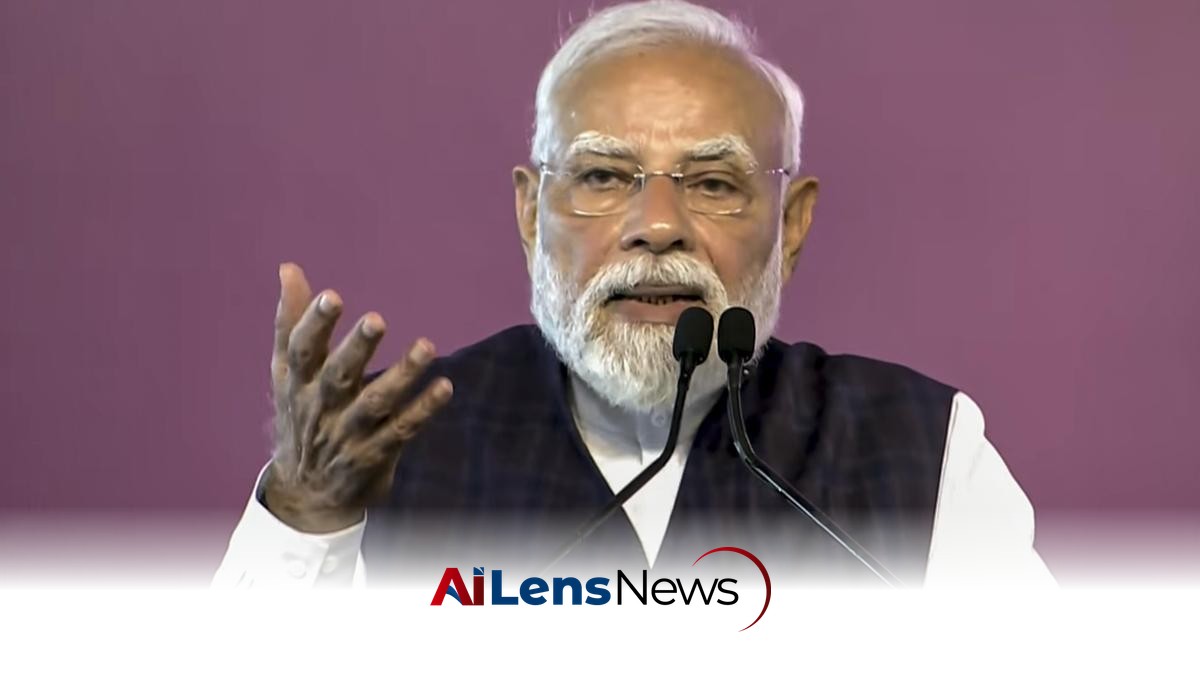


In his latest 'Mann Ki Baat', PM Modi emphasizes India's emergence as a trusted global defence partner and celebrates advancements in defence and space technology.
New Delhi, India Jul 26, 2026 ALN: Prime Minister Narendra Modi on Sunday asserted that India is emerging as a trusted global defence partner, highlighting the nation's ongoing efforts to strengthen its defence capabilities. This statement reflects a broader strategy that the Indian government has adopted in recent years, focusing on enhancing the country's military strength and establishing India as a key player in the global defence landscape.
During his monthly radio broadcast 'Mann Ki Baat', Modi paid tribute to the Indian soldiers who fought valiantly in the Kargil war, noting their extraordinary courage despite harsh weather conditions and enemy challenges during the 1999 conflict with Pakistan. The Kargil war, which lasted from May to July 1999, saw India and Pakistan engaged in a high-altitude conflict in the Kargil district of Jammu and Kashmir, and it was a significant moment in India’s military history. The sacrifices made by the soldiers during this war have been commemorated annually on July 26, known as Kargil Vijay Diwas, a day that fills the nation with pride and remembrance.
"Kargil Vijay Diwas fills us with pride. This day reminds us of the extraordinary courage of our brave soldiers," he remarked. Modi's recognition of the contributions of soldiers serves not only as a tribute but also as a reminder of the strategic challenges that India faces in its northern borders, particularly with Pakistan and China. These challenges have prompted a reevaluation of India's defence policies and military preparedness.
Modi emphasized that India is consistently reaching new heights in both defence production and exports. He stated, "India is emerging as a trusted global defence partner and the country continues to strengthen its defence capabilities." This assertion aligns with India's broader ambitions to become a self-reliant nation in defence manufacturing, a goal encapsulated in the 'Atmanirbhar Bharat' initiative, which aims to reduce dependency on foreign arms imports and promote indigenous manufacturing.
He recalled his recent visit to Indonesia at the beginning of July, where a significant agreement was made regarding the BrahMos and Astra missiles. The BrahMos missile, a joint venture between India and Russia, is one of the fastest cruise missiles in the world and has been a cornerstone of India's strategic deterrence capabilities. The Astra missile, on the other hand, is an air-to-air missile designed for use by the Indian Air Force and Navy. Such agreements not only enhance India's defence capabilities but also strengthen diplomatic ties with other nations, showcasing India's role as a reliable partner in regional security.
Additionally, he mentioned that the Defence Research and Development Organisation (DRDO) successfully tested the Pinaka Long Range Guided Rocket this month. The Pinaka system is a multi-barrel rocket launcher that has significantly increased the artillery capabilities of the Indian Army. Modi remarked, "Behind this success is the collective hard work of our scientists and engineers. Just two to three days ago, DRDO successfully tested the Kusha missile as well," he added. These advancements in missile technology reflect India's commitment to modernizing its military arsenal and enhancing its operational readiness.
In the context of India's defence sector, the government's push for indigenous defence manufacturing is seen as a strategic imperative. The focus on developing advanced weapon systems domestically is not only aimed at bolstering security but also at positioning India as a competitive player in the global arms market. The Indian government has implemented various policies to encourage private sector participation in defence manufacturing, which has historically been dominated by state-owned enterprises.
Modi expressed that every citizen feels immense pride following the successful launch of Vikram-1 on July 19, 2026, marking a historic moment in India's space sector. The Vikram-1 rocket is notable for being the first rocket developed by the private sector in India, representing a significant milestone in the country's space exploration efforts. This launch is part of a broader trend of increasing private sector involvement in India's space program, which has traditionally been led by the Indian Space Research Organisation (ISRO).
He stated, "This is India's first rocket developed by the private sector. Our young innovators have achieved what was once hard even to imagine. They demonstrated incredible skill, passion, and patience." The success of Vikram-1 not only showcases the capabilities of Indian engineers and scientists but also reflects the growing importance of the private sector in driving innovation and technological advancement in the country.
Furthermore, he noted, "From the successful launch of Vikram-1 to India's impressive performance in inter-science Olympiads, the country continues to make its mark in science and innovation." This statement highlights the government's emphasis on fostering a culture of scientific inquiry and innovation among the youth, which is crucial for sustaining India's growth as a knowledge-driven economy. The performance of Indian students in inter science competitions has been commendable, often ranking among the top in the world, which further reinforces India's potential as a leader in scientific research and development.
As India continues to strengthen its position as a global defence partner, the implications of these developments are significant. Enhanced defence capabilities can lead to greater regional stability and security, particularly in the Indo-Pacific region, where geopolitical tensions have been on the rise. India's growing military prowess may also serve to deter potential adversaries and reassure allies, contributing to a more balanced power dynamic in the region.
In conclusion, Prime Minister Modi's remarks during his 'Mann Ki Baat' broadcast reflect a strategic vision for India's defence and technological advancements. By commemorating the sacrifices of past soldiers while simultaneously highlighting modern achievements in defence and space, Modi is promoting a narrative of strength, resilience, and innovation. As India seeks to establish itself as a trusted global defence partner, the nation's focus on self-reliance in defence manufacturing and scientific research will be crucial in shaping its future role on the world stage.
To learn more about the latest developments in Politics, stay updated with our exclusive reports and analyses on AiLensNews.

