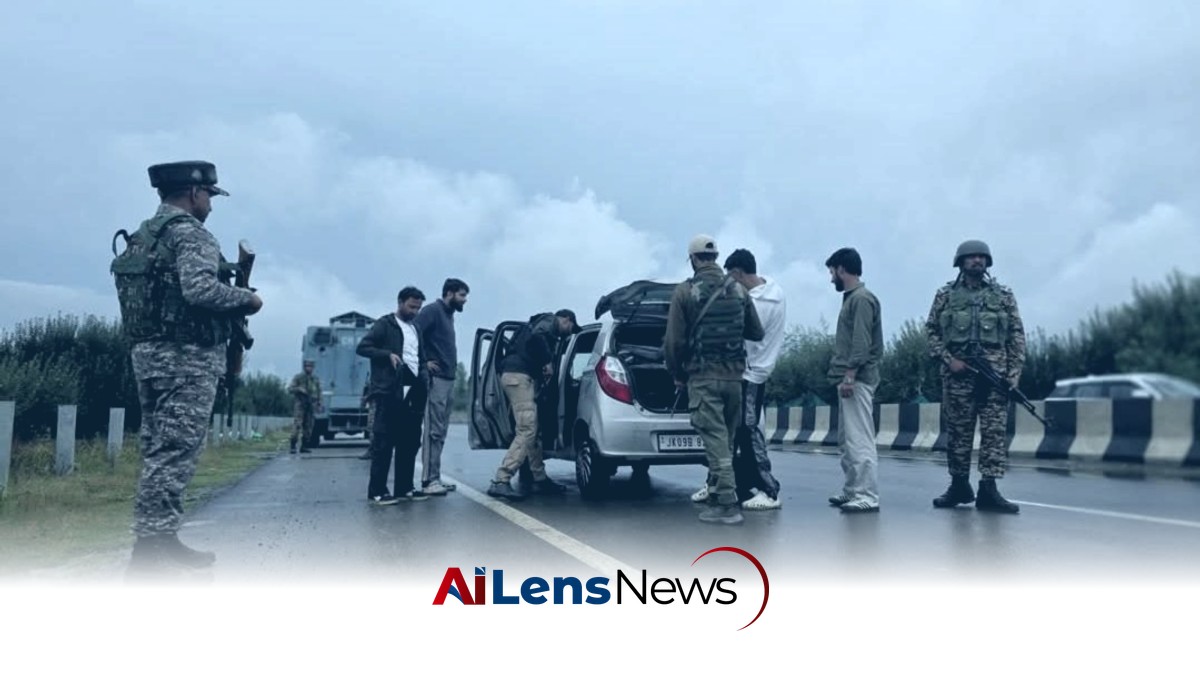


In a major counter-terror operation, security forces detained over 2,500 suspected OGWs across Kashmir following a deadly attack in Anantnag.
New Delhi, India Jul 23, 2026 ALN: In the wake of a deadly terrorist attack in Anantnag, security forces in Jammu and Kashmir have launched one of the most extensive counter-terror operations in recent history, detaining over 2,500 individuals suspected of being Over Ground Workers (OGWs) across the region. This operation underscores the ongoing challenges faced by security forces in Kashmir, a region that has experienced prolonged conflict and violence. The complexities of the situation in Kashmir are rooted in a history of territorial disputes, political strife, and ethnic tensions, making the region a focal point of security concerns for both India and Pakistan.
The coordinated effort was spearheaded by the Jammu and Kashmir Police, with substantial support from various security agencies. Following actionable intelligence regarding the existence of terror support networks, the operation was initiated to dismantle these networks that are believed to provide essential resources to terrorist organizations. The recent spike in violence, particularly the Anantnag attack, has heightened the urgency for the authorities to act decisively against these networks.
Simultaneous raids were executed across multiple districts, including Srinagar, Anantnag, Baramulla, Budgam, Shopian, Ganderbal, Kupwara, Handwara, Sopore, Bandipora, and Kulgam, among others. This widespread approach highlights the seriousness with which authorities are treating the threat posed by these networks. The scale of the operation reflects a strategic pivot towards a more aggressive stance against perceived threats in the region, indicating a shift in policy aimed at preemptively addressing potential security challenges.
A police spokesperson stated that the operation's primary goal is to identify and dismantle networks allegedly involved in providing logistical support, transportation, shelter, communication, and financial assistance to terrorist groups. The scale of the operation reflects the authorities' concerns regarding the resurgence of violence in the region, especially in light of recent attacks that have heightened tensions. This proactive approach is part of a broader strategy to ensure that the security apparatus is not merely reactive but is capable of anticipating and mitigating threats before they escalate into violent confrontations.
In Srinagar alone, nearly 700 suspected OGWs were detained, while Budgam saw more than 200 individuals taken into preventive custody. Ganderbal reported over 100 detentions during the coordinated raids. The cumulative effect of these operations has resulted in a total of over 2,500 detentions throughout the Valley, a clear indication of the extensive reach of the security forces' efforts. This extensive operation is indicative of the authorities' recognition of the need to tackle the root causes of terrorism and militancy in the region, which often involve local support networks.
The individuals detained are currently undergoing questioning in accordance with legal protocols to determine their involvement in activities that may threaten the security of the Union Territory. The police have characterized this operation as intelligence-driven and preventive in nature, aimed at preemptively addressing potential threats before they can manifest into acts of violence. This approach underscores a commitment to employing intelligence-led policing strategies, which aim to utilize data and information to guide law enforcement actions more effectively.
In Budgam, the police reported that those detained included not only suspected OGWs but also miscreants and individuals associated with the Jammu and Kashmir National Front (JKNOP), as well as persons involved in narcotics-related offenses. This multifaceted approach indicates a broader strategy to address various forms of criminal activity that may contribute to instability in the region. By targeting a range of individuals involved in different forms of illegal activity, the authorities aim to disrupt the interconnected networks that facilitate both terrorism and crime.
Alongside the raids, security measures have been significantly bolstered throughout Kashmir. Additional forces have been deployed to vulnerable locations, vehicle checks have been intensified, and special checkpoints (nakas) have been established on key roads. Area domination patrols have been increased, and frisking operations have been stepped up across the Valley to enhance security and deter any potential disturbances. These measures are designed not only to prevent terrorist activities but also to reassure the local population that their safety is a priority for the authorities.
A senior police officer emphasized that these intelligence-based operations will persist in close coordination with security and intelligence agencies. The objective remains to eliminate the terror support ecosystem that has historically plagued the region and to prevent any attempts to disrupt the fragile peace that has been established. This commitment to sustained operations reflects a recognition of the need for ongoing vigilance in a region where the threat of violence can resurface rapidly.
Police have reiterated their commitment to maintaining law and order, preserving communal harmony, and ensuring the safety of all citizens. The spokesperson indicated that further legal action would be taken based on the evidence gathered during the ongoing investigation and verification process, signaling a commitment to accountability and due process. The legal framework governing such operations is critical, as it helps to ensure that actions taken by security forces are within the bounds of the law and respect the rights of individuals.
The implications of this operation are significant for the security landscape in Kashmir. The detention of suspected OGWs is a critical component of the broader strategy to combat terrorism and maintain stability in a region that has been marred by conflict for decades. The OGWs are often seen as crucial links between terrorist organizations and the local population, providing essential support that enables terrorist activities. By targeting these individuals, security forces aim to disrupt the infrastructure that supports terrorism, thereby reducing the operational capabilities of militant groups.
Historically, the term "Over Ground Workers" refers to individuals who operate in a supportive capacity for militant groups without directly engaging in violent acts themselves. They may assist in recruitment, logistics, or intelligence gathering, thereby facilitating the operational capabilities of these groups. By dismantling these networks, authorities hope to weaken the overall framework that allows militancy to thrive in the region.
The recent uptick in violence in Kashmir, including the Anantnag attack, has raised alarms among security officials and the local populace. Such incidents not only result in loss of life but also exacerbate existing tensions and fears within the community. The government's response, characterized by these large-scale detentions, reflects a proactive stance in addressing these threats head-on. However, it also necessitates a careful consideration of the broader social implications of such actions, particularly in a region with a history of conflict and mistrust towards security forces.
However, such operations also raise questions regarding civil liberties and the potential for misuse of power. Critics may argue that mass detentions can lead to human rights violations and alienate communities, potentially fueling further unrest. It is crucial for the authorities to balance security measures with respect for individual rights to ensure long-term stability and trust within the populace. The challenge lies in ensuring that security operations do not inadvertently create a cycle of violence and retaliation, which could undermine the very peace that these operations seek to establish.
As the situation evolves, the effectiveness of this operation will be closely monitored, both by local stakeholders and international observers. The ongoing dialogue about security, rights, and governance in Kashmir remains complex, and the actions taken by the authorities will likely have lasting implications for the region's future. The path forward will require a nuanced understanding of the socio-political dynamics at play, as well as a commitment to fostering dialogue and reconciliation among all stakeholders involved in the region's ongoing struggle for peace and stability.
To learn more about the latest developments in Crime & Law, stay updated with our exclusive reports and analyses on AiLensNews.

