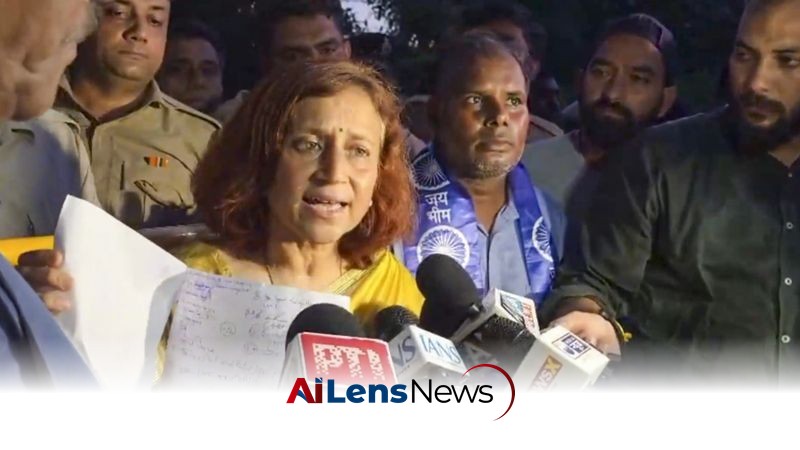


Tensions escalated in Gurugram as opposition leaders, including AAP MP Sanjay Singh, were denied access to climate activist Sonam Wangchuk at Medanta Hospital.
New Delhi, India Jul 22, 2026 ALN: Tensions flared in Gurugram on Wednesday evening when AAP MP Sanjay Singh, accompanied by 15 opposition MPs, attempted to meet climate activist Sonam Wangchuk at Medanta Hospital. The group was met with a heavy police presence, which prevented them from entering the hospital premises. This confrontation has brought to light the ongoing struggles faced by activists in India, particularly those advocating for urgent climate action.
The opposition leaders expressed their frustration over the denial of permission to visit Wangchuk, who has been a prominent figure in advocating for climate issues in India. Sanjay Singh articulated that the refusal to allow them to meet Wangchuk was an attempt to silence dissenting voices. This sentiment resonates with a broader concern among many in Indian society regarding the shrinking space for dissent and the increasing restrictions placed on activists and opposition leaders.
As the situation escalated, police barricaded the entrance to the hospital, leading to a standoff between the opposition leaders and law enforcement. The MPs argued that their visit was crucial to discuss pressing environmental concerns with Wangchuk, who has been hospitalized for health issues. This incident raises questions about the rights of elected officials to meet with constituents and activists, especially in matters of public interest such as climate change.
Wangchuk has gained national attention for his innovative approaches to climate change, including advocating for sustainable practices in agriculture and water conservation. His work often includes promoting traditional knowledge systems and integrating them with modern scientific practices to create a more sustainable future. His hospitalization has raised concerns among his supporters, who fear that his absence from the public eye could hinder ongoing climate activism. Wangchuk's influence has been significant; he is known for his role in the Ladakh region, where he has been instrumental in promoting eco-friendly practices and sustainable development.
The incident has sparked a debate about the rights of elected officials to meet with constituents and activists, especially in matters of public interest such as climate change. The opposition parties have vowed to continue their efforts to engage with Wangchuk and raise awareness about environmental issues, which are becoming increasingly critical in the context of global climate change. The Indian government has faced criticism for its environmental policies, which some argue are not sufficient to address the pressing challenges posed by climate change.
In a statement to the media, Singh criticized the government for its handling of the situation, claiming that it reflects a broader trend of suppressing voices that challenge the status quo. He called for greater transparency and accountability from the authorities regarding environmental policies. This call for accountability is echoed by many environmental activists who argue that the government must take more robust action to combat climate change and protect vulnerable communities affected by environmental degradation.
As the standoff continued, opposition leaders urged their supporters to remain peaceful and committed to their cause, emphasizing the importance of collective action in the face of governmental resistance. This incident is not an isolated event; it is part of a larger pattern of confrontations between activists and authorities in India. The government's approach to dissent has been a contentious issue, with many arguing that it stifles necessary dialogue on critical issues such as climate change, social justice, and human rights.
This incident highlights the ongoing tensions between the government and opposition parties in India, particularly regarding environmental policies and the treatment of activists. The implications of this confrontation could be far-reaching, as it may galvanize further opposition to government policies perceived as harmful to the environment and public health. The outcome of this confrontation remains to be seen as both sides prepare for further developments.
In the broader context, India's commitment to addressing climate change has been under scrutiny, especially in light of its obligations under international agreements such as the Paris Agreement. The country faces significant challenges, including balancing economic growth with environmental sustainability. Activists like Wangchuk play a crucial role in advocating for the necessary changes to ensure a sustainable future for India, and their treatment by authorities can influence public perception and activism.
The political ramifications of this incident could also affect upcoming elections, as environmental issues become increasingly important to voters. With climate change impacting agriculture, water resources, and public health, voters may prioritize candidates who demonstrate a commitment to sustainability and environmental justice. The opposition's efforts to engage with Wangchuk and raise awareness about these issues could resonate with constituents who feel that their environmental concerns are not being adequately addressed by the current government.
As the situation continues to unfold, it will be essential to monitor how both the government and opposition respond to the public's calls for greater accountability and action on climate change. The role of civil society and grassroots movements in advocating for environmental justice will be critical in shaping the future of activism in India. This incident serves as a reminder of the challenges faced by those who dare to speak out against government policies and the importance of protecting the rights of activists and opposition leaders in a democratic society.
In recent years, India has witnessed a surge in environmental activism, with various groups and individuals stepping up to address the urgent challenges posed by climate change. This has included protests, awareness campaigns, and initiatives aimed at promoting sustainable practices across different sectors. However, this activism has often been met with resistance from authorities, leading to confrontations similar to the one witnessed in Gurugram.
Activists argue that the government's reluctance to engage with dissenting voices undermines democratic principles and stifles necessary dialogue on pressing issues. The situation surrounding Wangchuk's hospitalization and the subsequent police response underscores the precarious position of activists in India, where the right to protest and advocate for change is increasingly being challenged.
The role of social media in amplifying the voices of activists cannot be overlooked. In the digital age, platforms like Twitter and Instagram have become vital tools for activists to mobilize support, share information, and raise awareness about environmental issues. This incident, along with the ongoing efforts of opposition leaders, is likely to be widely discussed and shared across these platforms, potentially increasing public scrutiny of the government's actions.
Moreover, the implications of this confrontation extend beyond the immediate context of climate activism. It reflects broader societal tensions regarding governance, accountability, and the role of civil society in India. As citizens increasingly demand transparency and responsiveness from their leaders, the government's approach to dissent and activism will be a critical factor in shaping public trust and engagement in the democratic process.
In conclusion, the clash between opposition leaders and police in Gurugram highlights significant issues surrounding the treatment of activists and the rights of elected officials to engage with constituents. As India grapples with the urgent challenges of climate change, the role of activists like Sonam Wangchuk becomes even more critical. The outcome of this incident may serve as a bellwether for the future of activism and environmental policy in India, as citizens and leaders alike navigate the complex interplay of governance, dissent, and accountability in a rapidly changing world.
To learn more about the latest developments in Politics, stay updated with our exclusive reports and analyses on AiLensNews.

