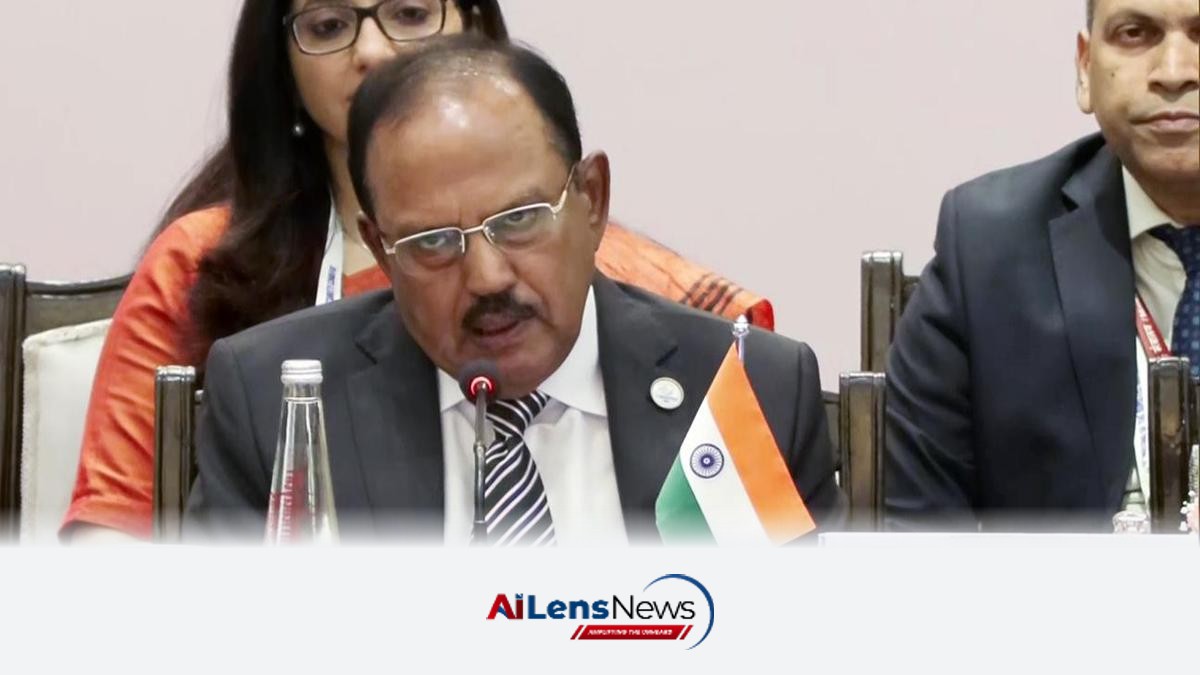



Ajit Doval meets Chinese Foreign Minister Wang Yi in Beijing to discuss boundary issues ahead of the BRICS Summit.
New Delhi, India Aug 25, 2026 ALN: Security Advisor Ajit Doval arrived in Beijing on Monday (August 24, 2026) ahead of the 25th round of talks between the Special Representatives (SRs) of India and China on the boundary question. This round of discussions is particularly significant as it marks a continued effort to address longstanding territorial disputes between the two nations, which have historically been fraught with tension and conflict.
Mr. Doval is scheduled to meet with Politburo member and Chinese Foreign Minister Wang Yi on Tuesday (August 25, 2026), who serves as his counterpart in these discussions. In addition to his meeting with Wang Yi, Doval will also call on Chinese Vice-President Han Zheng, as confirmed by the Ministry of External Affairs (MEA) of India. These high-level meetings underscore the importance both countries place on resolving their differences through diplomatic channels.
The Chinese Foreign Ministry has articulated that the forthcoming talks will involve “in-depth communication on the boundary question.” Spokesperson Lin Jian emphasized that the discussions between the Special Representatives of China and India serve as the main channel for negotiations on the boundary issue and are a crucial platform for communication on mutual interests. This highlights a commitment from both sides to engage in dialogue rather than resorting to military confrontation, which has been a concern in the past.
Lin Jian further noted that the two sides would also discuss bilateral relations and regional issues, indicating that the agenda will extend beyond just the boundary question. The complexities of the India-China relationship encompass various dimensions, including trade, security, and regional stability, which are all critical to both nations' strategic interests.
This visit by Ajit Doval comes ahead of the expected trip to India by Chinese President Xi Jinping for the BRICS Summit on September 12, presenting both nations with a timely opportunity to assess their relationship. The BRICS Summit, which includes Brazil, Russia, India, China, and South Africa, is an important multilateral forum where leaders can discuss global economic and political issues. The presence of Xi Jinping in India could serve as a catalyst for further engagement and dialogue on contentious issues, including the border dispute.
Ties between India and China have gradually normalized following the October 2024 meeting between Prime Minister Narendra Modi and President Xi in Kazan, Russia. This meeting was pivotal in setting a tone for future engagements and was seen as a step towards de-escalating tensions that had surged in previous years, particularly after the violent clashes along the Line of Actual Control (LAC) in 2020. The normalization of ties is crucial not only for the two countries but also for regional stability in South Asia and beyond.
Earlier this month, both countries reviewed the situation along the Line of Actual Control (LAC) during a meeting under the Working Mechanism for Consultation and Coordination (WMCC) on border affairs. During this meeting, officials engaged in detailed discussions on boundary delimitation, border management, mechanism-building, and trans-border cooperation. The WMCC serves as a platform for both countries to address border issues and is an essential mechanism for maintaining peace and stability along the disputed border.
At the previous round of SR talks in August 2025, India and China agreed to establish an Expert Group under the WMCC to explore Early Harvest in boundary delimitation in the India-China border areas. This initiative indicates a proactive approach by both nations to not only address immediate concerns but also to lay the groundwork for long-term solutions to their border disputes. The establishment of such a group reflects a recognition that technical and expert-driven dialogue can facilitate progress in areas that have historically been contentious.
The boundary question between India and China is rooted in historical claims and has been a source of conflict since the two nations fought a brief war in 1962. The LAC, which serves as the de facto border, is not clearly demarcated, leading to frequent skirmishes and standoffs. Both countries have invested heavily in military infrastructure along the border, which has raised concerns about a potential escalation of conflicts.
In recent years, both nations have made efforts to stabilize their relationship through various diplomatic channels. The role of Special Representatives in these talks is crucial, as they are tasked with navigating the complexities of the relationship while seeking to find common ground on contentious issues. The upcoming discussions in Beijing are expected to build on the progress made in previous rounds and further clarify the positions of both countries regarding their border disputes.
As the geopolitical landscape in Asia continues to evolve, the relationship between India and China will remain a focal point for regional security and cooperation. The outcomes of the talks led by Doval in Beijing could have significant implications not only for bilateral relations but also for broader regional dynamics, particularly in the context of China's growing influence and India's strategic partnerships with other nations. The inter community will be closely watching these developments, as they could set the tone for future interactions between two of the world's most populous countries.
To learn more about the latest developments in World News & International Affairs, stay updated with our exclusive reports and analyses on AILensNews.

