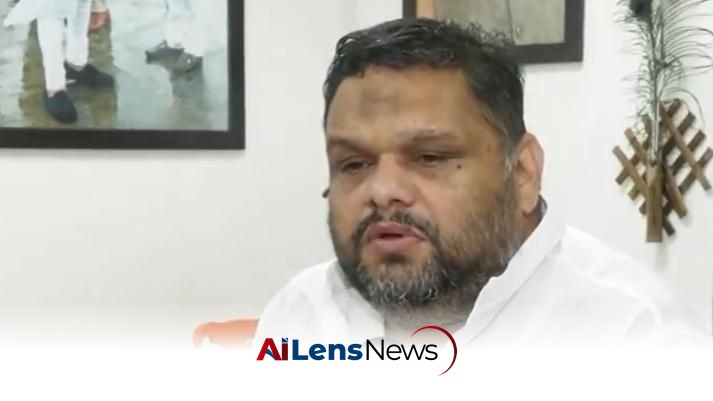


The NHRC has taken action regarding allegations of religious discrimination in a Hyderabad school, prompting responses from political leaders and community advocates.
New Delhi, India Jul 17, 2026 ALN: New Delhi: The National Human Rights Commission (NHRC) has issued a notice to the Telangana government over allegations that a school in Hyderabad discriminated against students on religious grounds by allegedly asking Hindu students to recite the Kalma and assigning Islamic prayers as homework. This incident has sparked a significant debate about religious freedom, educational policies, and the secular framework of India's constitution.
The NHRC's intervention comes in response to a complaint filed by the Seva Nyaya Utthan Foundation, an organization dedicated to promoting justice and equality. NHRC member Priyank Kanoongo stated that the commission took cognizance of the allegations, which suggest a serious violation of Article 28(3) of the Indian Constitution. This article prohibits the teaching of religion in educational institutions wholly maintained out of state funds, thereby ensuring a secular education system. The commission's notice to the Telangana government underscores the gravity of the situation and the potential implications for the rights of students in schools across the country.
The controversy has drawn attention not only to the specific incident but also to broader issues surrounding religious education in India. In a country characterized by its rich tapestry of cultures and religions, the balance between respecting individual beliefs and maintaining a secular educational environment is often a contentious issue. The NHRC's involvement highlights the need for vigilance in upholding constitutional rights, particularly in educational settings where young minds are impressionable.
Reacting to the controversy, senior Congress leader V Hanumantha Rao condemned the alleged incident, emphasizing that religious practices should not be imposed in educational institutions. Rao's comments reflect a widespread concern among political leaders and citizens alike regarding the preservation of secularism in schools. "There is a Muslim teacher who is forcing children to recite the Kalma. This is a religious matter, and forcing children like this is not correct. The government must take this issue very seriously. This is a secular country. Everyone has the right to practice their religion in their own homes, but not inside an educational institution," Rao stated. His remarks resonate with the sentiments of many who advocate for a clear separation of religion and state, particularly in the context of public education.
In light of the allegations, Rao welcomed the suspension of the teacher involved and urged the Telangana government to ensure strict action in similar cases. He expressed gratitude towards the Home Department and the police for their prompt response, indicating a recognition of the potential for such incidents to escalate into larger societal issues. "I congratulate the Home Department and the police for immediately taking action and suspending the teacher. I request Chief Minister Revanth Reddy and the Home Minister to ensure such incidents are not tolerated in any school, as they could create law-and-order problems," he added. This call for accountability reflects a growing demand for transparency and justice in educational institutions, especially when it comes to matters of religious sensitivity.
Meanwhile, Advocate and BJP leader Karuna Sagar has raised questions about the police's initial handling of the situation. He alleged that the police attempted to suppress the matter and only registered an FIR after the NHRC intervened. Sagar's concerns highlight a potential failure in law enforcement's duty to protect citizens' rights and address grievances appropriately. He questioned the appropriateness of assigning religious texts like the Kalma and Surah Al-Fatihah as homework to a six-year-old child, emphasizing the need for clarity regarding educational content within the framework of secular education.
"When a group of us went to question the police regarding their attempt to close the case, which we viewed as a conspiracy, and to ask why an FIR had not been registered, the police department refused to answer. Instead, acting high-handedly, they arrested many of us and detained us at various police stations. When I learned that the child's family was considering withdrawing their complaint due to police pressure, I personally filed a complaint against the school. I want to ask just one question: Is it right or wrong for a school to assign homework or activities requiring a 6-year-old child to learn the Kalma and Surah Al-Fatihah? Does the Quran feature in the SSC syllabus according to police department guidelines?" Sagar's queries reflect a broader concern about the role of law enforcement in protecting the rights of students and ensuring that educational institutions adhere to the principles of secularism.
The incident has also raised important questions about the nature of educational curricula in India. While religious education can play a role in cultural understanding and respect for diverse beliefs, it must be approached with sensitivity and caution, particularly in public schools. The assignment of religious texts as homework can blur the lines between education and indoctrination, leading to potential conflicts among students from different backgrounds. As such, it is crucial for educational authorities to establish clear guidelines that respect the secular nature of public education while allowing for the respectful exploration of various cultural and religious traditions.
The implications of this incident extend beyond the immediate controversy, as it serves as a reminder of the ongoing challenges faced in maintaining a secular educational framework in a diverse society. The NHRC's notice to the Telangana government may pave the way for further scrutiny of educational practices across the country, potentially leading to reforms that reinforce the principles of secularism and equality in schools.
As the situation unfolds, it will be essential for all stakeholders, including government officials, educators, and parents, to engage in constructive dialogue about the role of religion in education. The goal should be to foster an environment that respects individual beliefs while ensuring that all students receive an education free from discrimination or coercion. The outcome of this case may set important precedents for how similar issues are handled in the future, highlighting the need for vigilance in protecting the rights of students and upholding the secular values enshrined in the Indian Constitution.
To learn more about the latest developments in Society & Social Issues, stay updated with our exclusive reports and analyses on AiLensNews.

