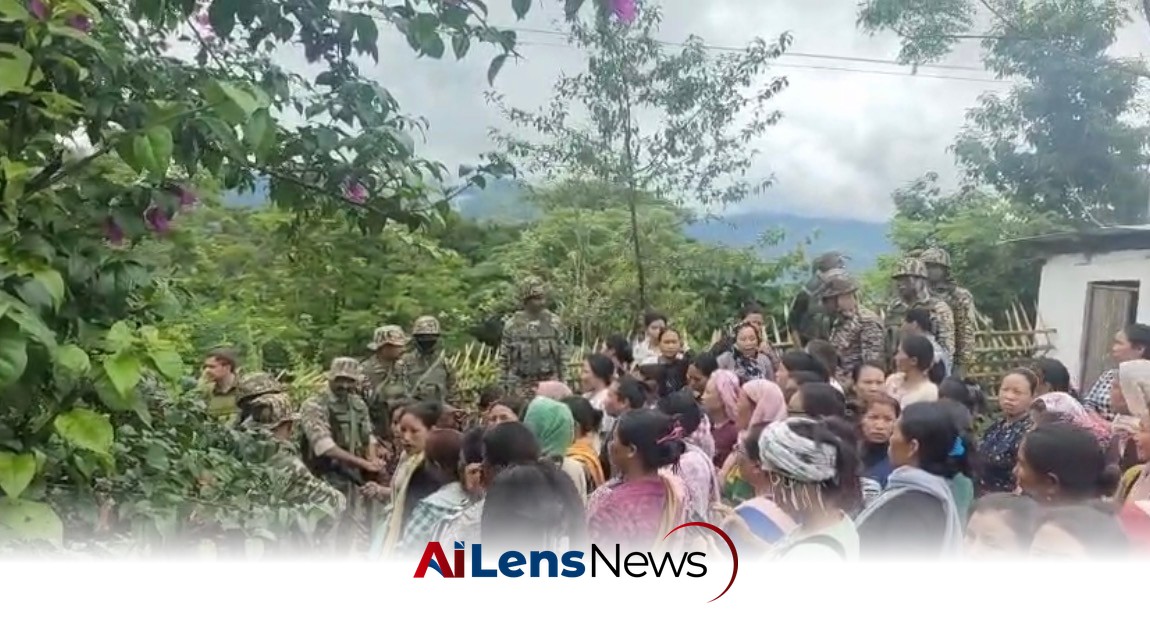


Tensions have erupted in Noney district, Manipur, after a CRPF CoBRA unit operation near a Naga Volunteer Group camp led to reports of firing and a subsequent shutdown by local communities.
Kohima, India Jul 29, 2026 ALN: Noney: Fresh tensions have been reported in Manipur’s Noney district following a Central Reserve Police Force (CRPF) CoBRA unit operation near Bitiang village, where a training camp of the Naga Volunteer Group (NVG) is reportedly located, on Wednesday morning.
According to local sources, firing was reported from the area. However, the exact details of the exchange of fire, including whether there were any injuries or casualties, were not immediately clear at the time of filing this report. The situation has raised significant concern among local residents and observers, as armed confrontations in the region have historically led to escalated violence and instability.
Soon after reports of the combing operation emerged, women from the area reportedly gathered in large numbers and intervened, preventing the security forces from proceeding further towards the camp. This grassroots mobilization reflects the community's deep-seated concerns over security operations and their impact on local populations, especially in regions where ethnic tensions have long persisted.
Meanwhile, following reports of the alleged operation, the Working Committee of the Joint Tribe Council (JTC), Manipur, announced an immediate and indefinite shutdown across areas inhabited by the Inpui, Liangmai, Rongmei and Zeme communities in Noney district. The shutdown is a significant form of protest, aiming to draw attention to the grievances of these communities regarding state actions and security operations.
In a statement, the JTC-Manipur alleged that the CRPF’s CoBRA unit, “in collusion with ZUF-J”, launched an operation against the Naga Volunteer Group (NVG) at Bitiang village at around 6 am on July 29. The council claimed that the NVG members were targeted while guarding their ancestral land. This assertion underscores the complex dynamics of land rights, ethnicity, and identity in the region, where various groups assert their claims over territory and self-determination.
In response, the Working Committee of the JTC-Manipur said it had decided to impose an immediate and indefinite shutdown of all national highways, railway lines and national projects passing through the territories of the Inpui, Liangmai, Rongmei and Zeme communities. This action indicates the seriousness of the community's demands and their willingness to disrupt normalcy to seek redress for their grievances.
However, the council said essential services, including medical services, educational institutions, the Public Health Engineering Department (PHED), electricity and telecommunication services, would remain exempt from the shutdown. This exemption aims to ensure that critical services continue to operate while still expressing dissent against the government’s actions.
The shutdown will remain in force until the Government of India takes what the council described as “decisive and meaningful action” to arrest those responsible for the killings, halt security operations against Naga villages and restore justice, the statement said. The call for decisive action reflects a broader demand for accountability and justice in a region that has witnessed numerous instances of violence and human rights abuses.
The JTC-Manipur also referred to the abduction and killing of six Naga civilians, including two pastors, from Leilon Vaiphei village in Kangpokpi district on May 13. This incident has been a flashpoint for tensions in the region, raising questions about the safety of civilians and the conduct of security forces in operations against insurgent groups. The JTC’s reference to this incident highlights the ongoing cycle of violence and the community's perception that the state has failed to protect its citizens.
The council alleged that instead of ensuring justice for the victims, the government had shielded those responsible and failed to address the concerns of the Naga community. This sentiment is not uncommon in regions affected by conflict, where communities often feel marginalized and neglected by state authorities, leading to a breakdown in trust and further entrenchment of grievances.
The JTC-Manipur further stated that it would continue its agitation until justice is delivered to the victims. This determination reflects a broader struggle for recognition and rights among various ethnic groups in Manipur, where historical injustices and ongoing conflicts continue to shape the socio-political landscape.
Manipur, located in northeastern India, has a history of ethnic strife and conflict involving various groups, including the Nagas, Kukis, and Meiteis, among others. The region's complex demographics, coupled with issues of identity, land, and autonomy, have contributed to persistent unrest. The presence of multiple armed groups, each advocating for different political aspirations, complicates the situation further.
The CRPF’s CoBRA unit, which specializes in anti-insurgency operations, has been deployed in various parts of India, including Manipur, to combat insurgent activities. However, operations like the one in Noney district have often been met with resistance from local populations, who may view such actions as infringements on their rights and sovereignty.
The implications of the recent tensions in Noney district extend beyond immediate local concerns. They reflect broader issues of governance, representation, and the relationship between the state and ethnic communities in Manipur. As protests and shutdowns continue, the potential for escalation remains high, necessitating careful navigation by both community leaders and government officials to avoid further violence and to foster dialogue.
In conclusion, the situation in Noney district serves as a microcosm of the larger challenges facing Manipur and similar regions across India. The interplay of ethnic identity, historical grievances, and state response will continue to shape the dynamics of conflict and resolution in the area. Stakeholders from all sides must engage in constructive dialogue to address the underlying issues and work towards a peaceful resolution that respects the rights and aspirations of all communities involved.
To learn more about the latest developments in Crime & Law, stay updated with our exclusive reports and analyses on AiLensNews.

