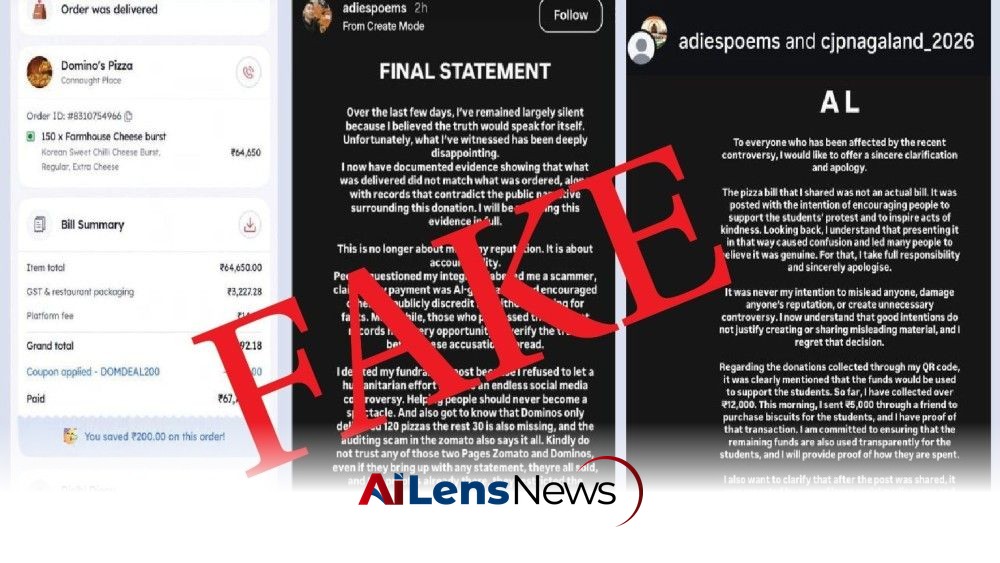


A pizza donation for protestors in New Delhi has sparked controversy over its authenticity, with conflicting claims about the order and fundraising efforts.
Kohima, India Jul 24, 2026 ALN: The recent incident involving a supposed pizza donation for protestors of the Citizens for Justice and Peace (CJP) in New Delhi has ignited a significant controversy, raising questions about integrity, transparency, and the ethics of fundraising in the context of social movements. The situation began with a social media post that claimed an individual had ordered a substantial amount of pizza, totaling over Rs 67,000, to support the protestors at Jantar Mantar, a prominent site for public demonstrations in India.
This claim quickly gained traction, capturing the attention of various news outlets and social media users alike. The original post not only detailed the alleged order but also included a QR code for donations, inviting the public to contribute to what was framed as a charitable cause. In a time when many individuals are keen to support social justice movements, the post appeared to resonate with a wide audience, leading to an outpouring of public interest and sympathy.
However, the narrative took a dramatic turn when a social media account claiming to represent the CJP, identified as , publicly challenged the authenticity of the claims made in the original post. On July 24, this account shared infographics that questioned the legitimacy of the transaction proofs presented by the original poster. The infographics suggested that the receipts could have been generated using artificial intelligence and image-editing tools, raising alarms about potential deception.
The CJP account urged followers to exercise caution before donating to the cause, emphasizing the importance of integrity in fundraising efforts, especially in the context of a public movement that seeks to address serious social issues. Their statement highlighted a crucial ethical concern: "Using the ongoing Jantar Mantar protest, people's sympathy… to solicit donations would amount to exploiting a public movement for personal financial gain." This sentiment reflects broader concerns within social movements about the potential for exploitation and the need for accountability.
In the wake of the backlash, the individual behind the original post, who has not been publicly named, issued a note titled "Final Statement" in which they defended their actions. They claimed to have "documented evidence showing that what was delivered did not match what was ordered," alleging that instead of the promised 150 pizzas, only 120 were delivered. This discrepancy fueled further skepticism about the legitimacy of the entire fundraising initiative.
The original poster expressed frustration about being labeled a scammer and having their integrity questioned. They noted that the situation escalated quickly, with people rushing to discredit them without waiting for the full facts to emerge. This raises important questions about the nature of online discourse, particularly in the context of social media where information can spread rapidly, often without verification.
As the controversy unfolded, the original poster took the step of deleting their fundraising post, stating, "I refused to let a humanitarian effort become an endless social media controversy. Helping people should never become a spectacle." This statement reflects a growing concern among activists and organizers about the impact of social media on grassroots movements, where the desire for visibility can sometimes overshadow the core mission of the cause.
However, the situation became even more complicated when another statement, allegedly from the original poster, surfaced, admitting that the receipt shared in the initial post was not authentic. In this clarification, the individual explained, "The pizza bill that I shared was not an actual bill. It was posted with the intention of encouraging people to support the students’ protest." This admission has significant implications, as it raises ethical questions about the methods used to solicit donations and the responsibilities of individuals who engage in fundraising efforts.
The original poster also acknowledged that they had collected over Rs 12,000 in public donations, of which Rs 5,000 was reportedly spent on biscuits for the students involved in the protest. They promised transparency regarding the remaining balance, which is a critical aspect of maintaining trust with donors and supporters. The note concluded with an apology, stating, "To the organizations, individuals, and everyone who felt disappointed or misled, I sincerely apologize. I hope this clarification helps explain the situation. Going forward, I will be more careful and ensure that any information I share is accurate and does not create unnecessary confusion."
This incident serves as a cautionary tale about the complexities of fundraising in the digital age, particularly within the context of social movements. It highlights the need for transparency, accountability, and ethical considerations when soliciting support from the public. As social media continues to play a pivotal role in mobilizing support for various causes, the implications of this controversy extend beyond just the individuals involved; they touch upon the broader landscape of activism and the challenges faced by those working to effect change.
Furthermore, the situation raises important questions about the role of social media platforms in moderating content and preventing misinformation. As platforms grapple with issues of fake news and disinformation, the responsibility lies not only with users to verify information before sharing but also with the platforms themselves to create environments that discourage deception and promote trust.
In conclusion, the controversy surrounding the pizza donation for CJP protestors underscores the complexities of modern activism, where the lines between genuine altruism and opportunistic behavior can sometimes blur. It serves as a reminder of the importance of integrity in fundraising efforts and the need for careful consideration of the impact of social media on public perception and trust in social movements.
To learn more about the latest developments in Crime & Law, stay updated with our exclusive reports and analyses on AiLensNews.

