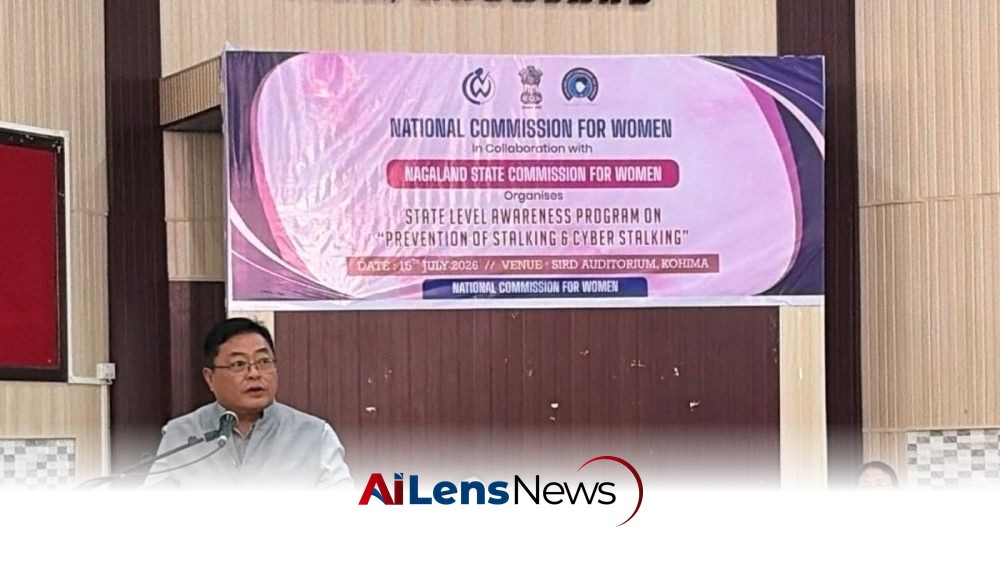


Justice Lanusungkum Jamir emphasizes the need for societal change and legal awareness in combating stalking during a state-level awareness program.
Kohima, India Jul 15, 2026 ALN: The recent call for accountability in stalking prevention by the Chairman of the State Human Rights Commission (NSHRC), Justice Lanusungkum Jamir, underscores a growing recognition of the need to address the pervasive issue of stalking in both its physical and cyber forms. This call to action was made during the State Level Awareness Program on "Prevention of Stalking & Cyber Stalking," which was organized by the National Commission for Women (NCW) in collaboration with the State Commission for Women (NSCW). The event highlights the commitment of various organizations to tackle this pressing social issue and raise awareness among the public.
Stalking, as defined under Section 78 of the Bharatiya Nyaya Sanhita (BNS), encompasses two primary categories: Physical Stalking and Cyber Stalking. Physical stalking involves unwanted and repeated surveillance or harassment that can lead to fear or distress for the victim, while cyber stalking refers to the use of digital platforms to harass, intimidate, or threaten individuals. The legal framework provided by the BNS is an essential tool for protecting individuals from such violations, yet Justice Jamir emphasized that legislation alone cannot resolve the issue. He argued that a comprehensive societal and institutional response is necessary to effectively combat stalking.
Justice Jamir's remarks reflect a broader understanding that stalking is not merely a legal issue but a societal one that requires collective effort. He highlighted the importance of education and awareness in preventing stalking incidents. The first step in addressing stalking, according to Justice Jamir, is for individuals to learn how to document and report instances of unwanted intrusions. This proactive approach is critical in preventing situations from escalating to violence. By clearly communicating boundaries and documenting harassment, victims can build a stronger case against their stalkers, thereby reinforcing their legal rights.
The emphasis on personal boundaries is particularly significant in today’s digital age, where the lines between personal and public life are increasingly blurred. Justice Jamir pointed out that everyone has the right to feel safe and secure, and respecting personal space is a fundamental aspect of that right. The assertion that individuals must be educated on how to respond to unwanted attention is a crucial takeaway from the program. It empowers potential victims with the knowledge that they can take action, rather than feeling helpless in the face of harassment.
Justice Jamir also called for an end to the silence surrounding cyber stalking. He urged individuals to hold perpetrators accountable and to foster a culture where victims feel supported in coming forward. The internet, as he stated, should be a space for learning, communication, and positive connections rather than a platform for fear and intimidation. This perspective is increasingly relevant as more people engage online and as digital interactions become a significant part of daily life.
Moreover, the call to "think before they post" is a vital reminder of the responsibilities that come with digital communication. The spread of rumors and the use of technology to harass others can have devastating consequences for individuals, particularly in a society where online reputations can impact personal and professional lives. Justice Jamir's message encourages a culture of respect and accountability online, where individuals are mindful of their actions and the potential harm they may cause to others.
In concluding his address, Justice Jamir reiterated that everyone has a role to play in making the online world safer. This collective responsibility extends beyond victims and perpetrators to include bystanders, community leaders, and institutions. Staying informed about the risks associated with digital privacy, supporting those affected by stalking, and advocating for stronger protections are all ways individuals can contribute to a safer environment.
The implications of Justice Jamir’s call for accountability in stalking prevention are profound. As awareness grows, there is potential for a shift in societal attitudes towards stalking, leading to greater support for victims and more robust measures to hold perpetrators accountable. Legal frameworks, while necessary, must be complemented by societal change that fosters respect for personal boundaries and promotes healthy interactions both online and offline.
Furthermore, the collaboration between organizations such as the NCW and NSCW is indicative of a unified approach to tackling gender-based violence and harassment. By working together, these organizations can amplify their impact, share resources, and create comprehensive strategies to educate the public about the dangers of stalking. This partnership is essential in mobilizing community support and ensuring that victims have access to the resources they need to seek justice.
As the conversation around stalking continues to evolve, it will be crucial for lawmakers, educators, and community leaders to engage in ongoing dialogue about effective prevention strategies. This includes not only enhancing legal protections but also fostering an environment where victims feel empowered to speak out and seek help. The role of technology in both facilitating and preventing stalking must also be addressed, as advancements in digital communication present both challenges and opportunities in the fight against harassment.
In summary, Justice Lanusungkum Jamir's call for accountability in stalking prevention serves as a vital reminder of the collective responsibility to address this issue. By promoting awareness, educating individuals on their rights, and fostering a culture of respect, society can take meaningful steps towards preventing stalking and ensuring that everyone has the right to feel safe in their personal and digital lives.
Stalking is an issue that transcends geographical and cultural boundaries, affecting individuals across various demographics. The psychological impact on victims can be profound, leading to anxiety, depression, and in some cases, post-traumatic stress disorder (PTSD). The emotional toll of being stalked can result in significant disruptions to a person's daily life, including their work, social interactions, and overall well-being. This highlights the necessity for a comprehensive support system that not only addresses legal ramifications but also provides psychological assistance to victims.
In addition to mental health support, the need for community engagement is paramount. Community awareness programs can serve as a platform for educating the public about the signs of stalking, the importance of reporting incidents, and the resources available for victims. Empowering communities to take a stand against stalking can create an environment where victims feel safe to report their experiences without fear of stigma or retribution.
Educational institutions also have a critical role to play in this conversation. Schools and universities must implement programs that educate students about consent, boundaries, and the implications of stalking, especially in the context of the digital age where social media plays a significant role in interpersonal relationships. By instilling these values early on, future generations can develop a more respectful approach to relationships, both online and offline.
Moreover, the legal system must evolve to keep pace with the changing dynamics of stalking, particularly cyber stalking. As technology advances, so do the methods used by perpetrators to harass their victims. Law enforcement agencies need to be equipped with the training and resources to effectively investigate and prosecute stalking cases, especially those involving digital platforms. This includes understanding the nuances of online behavior and the potential for anonymity that the internet provides to offenders.
In conclusion, the call for accountability in stalking prevention by Justice Jamir not only addresses the immediate need for action but also emphasizes the importance of a holistic approach to tackling this issue. By fostering a culture of respect, enhancing education, and improving legal and psychological support systems, society can take significant strides towards ensuring that stalking is recognized as a serious violation of human rights, deserving of collective action and response.
To learn more about the latest developments in Crime & Law, stay updated with our exclusive reports and analyses on AiLensNews.

