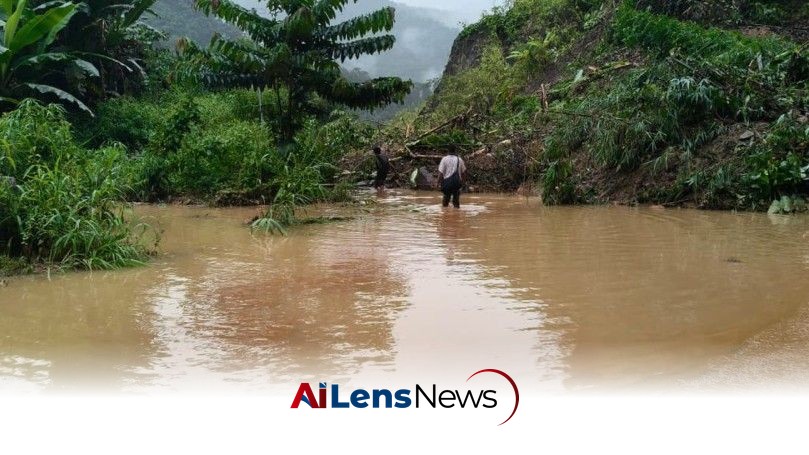


Heavy rainfall has caused significant landslides along the Longleng-Changtongya National Highway, impacting mobility and essential supplies in the region.
Kohima, India Jul 30, 2026 ALN: In the wake of severe weather conditions, Longleng District has been grappling with the aftermath of significant landslides that occurred following heavy rainfall on July 19. This natural disaster has had a profound impact on the region, particularly affecting the Longleng-Changtongya National Highway 702, which is a crucial artery for transportation and communication within the district. The highway, which stretches approximately a kilometer, has been rendered nearly impassable due to the accumulation of debris from the landslides, with the road surface buried under a substantial height of mud and rocks, estimated to be around 6 to 7 feet.
The Deputy Commissioner of Longleng, W. Manpai Phom NCS, has been at the forefront of the response efforts, providing updates on the situation and the extent of the damage. He described the landslides as major disruptions that have not only affected the road infrastructure but have also contributed to the sinking of certain areas within the district. The challenges posed by mudslides, landslides, and washouts have raised concerns regarding the long-term accessibility of the region, as complete restoration efforts may exceed the capabilities of routine maintenance protocols. This situation underscores the vulnerability of the area to extreme weather events and the potential for future disasters.
In response to the crisis, the district administration has mobilized a coordinated effort involving the District Management Authority (DMA) Longleng, the Public Works Department (PWD) R&B Longleng Division, and various local civil society organizations. This collaborative approach aims to address the immediate needs of the affected areas and restore transportation routes as quickly as possible. On July 29, a team led by Deputy Commissioner W. Manpai Phom NCS, which included the Executive Engineer of R&B and representatives from local councils and civil society groups, conducted a site visit to assess the damage and strategize on restoration efforts.
During this visit, the Deputy Commissioner emphasized the importance of community cooperation and support in navigating the challenges posed by the landslides. He urged residents to remain calm and assured them that the administration was working diligently to mitigate the impact of the disaster. The plea for cooperation reflects a broader understanding of the interconnectedness of the community during times of crisis, as local residents are heavily reliant on the highway for mobility and access to essential supplies.
The Deputy Commissioner also expressed gratitude towards various stakeholders who have provided assistance during this difficult time. He acknowledged the support from the state government, including the Chief Secretary, Home Commissioner, and the State Disaster Management Authority (NSDMA), highlighting their responsiveness to the needs of the Longleng community. Additionally, he thanked local MLAs A. Pongshi Phom and B. Bangtick Phom for their presence and support, which have been crucial in rallying resources and attention to the disaster-affected areas.
The Indian Air Force has played a significant role in the ongoing relief efforts by deploying helicopters to transport students and individuals requiring medical attention, as well as to deliver essential commodities to the most severely impacted locations. This aerial support is vital in a region where road access has been compromised, illustrating the importance of multi-agency collaboration in disaster response. The involvement of the Indian Air Force not only aids in immediate relief but also serves to reassure the local population that assistance is available.
In addition to the logistical challenges presented by the landslides, the situation has raised awareness about the broader implications of climate change and the increasing frequency of extreme weather events. The heavy rainfall that precipitated the landslides is indicative of changing weather patterns that have been observed globally, leading to more intense storms and flooding. For Longleng District, this may necessitate a reevaluation of infrastructure resilience and disaster preparedness strategies to better equip the community for future events.
As recovery efforts continue, the long-term restoration of the Longleng-Changtongya National Highway will require significant investment and planning. The Deputy Commissioner has called for existing agencies to work in coordination with the district administration to develop a comprehensive plan for rebuilding and enhancing the resilience of the road infrastructure. This includes not only restoring the highway but also implementing measures to prevent similar occurrences in the future, such as improved drainage systems and slope stabilization techniques.
The role of civil society in this context cannot be understated. Local organizations and village councils have been instrumental in supporting the administration's efforts, providing manpower, resources, and local knowledge that are essential for effective disaster response. Their involvement underscores the importance of community engagement in disaster management, as local entities are often best positioned to address immediate needs and facilitate communication between residents and government authorities.
The landslides in Longleng District are not an isolated incident but part of a broader pattern of increasing natural disasters attributed to climate change. Across India, various regions have experienced similar challenges, with heavy rains leading to flooding, landslides, and other forms of environmental degradation. This trend has prompted discussions at both local and national levels about the need for enhanced disaster preparedness and response mechanisms. It emphasizes the importance of investing in sustainable infrastructure that can withstand the impacts of extreme weather.
Moreover, the socio-economic implications of such disasters can be profound. The disruption of transportation routes affects not only the movement of people but also the supply chains for essential goods and services. Local businesses may face challenges in accessing markets, leading to economic strain on families and communities. The reliance on external aid during recovery periods can further complicate local economies, creating a cycle of dependency that may hinder long-term growth and development.
In the wake of such disasters, mental health also becomes a critical concern. The trauma experienced by residents during extreme weather events can lead to long-term psychological impacts. Community support systems, including local organizations and mental health professionals, play a vital role in addressing these issues. The importance of building resilience in communities extends beyond physical infrastructure to encompass social and emotional well-being.
In conclusion, the severe landslides in Longleng District serve as a stark reminder of the vulnerabilities faced by communities in the face of natural disasters. The collaborative efforts of the district administration, state government, civil society, and the Indian Air Force highlight the importance of a unified response to such crises. As the region navigates the challenges of recovery and restoration, it will be crucial to incorporate lessons learned into future planning and preparedness efforts, ensuring that Longleng is better equipped to handle the impacts of climate change and extreme weather events moving forward. This incident not only calls for immediate action but also a long-term vision for sustainable development and resilience in the face of an uncertain climate future.
To learn more about the latest developments in Crime & Law, stay updated with our exclusive reports and analyses on AiLensNews.

