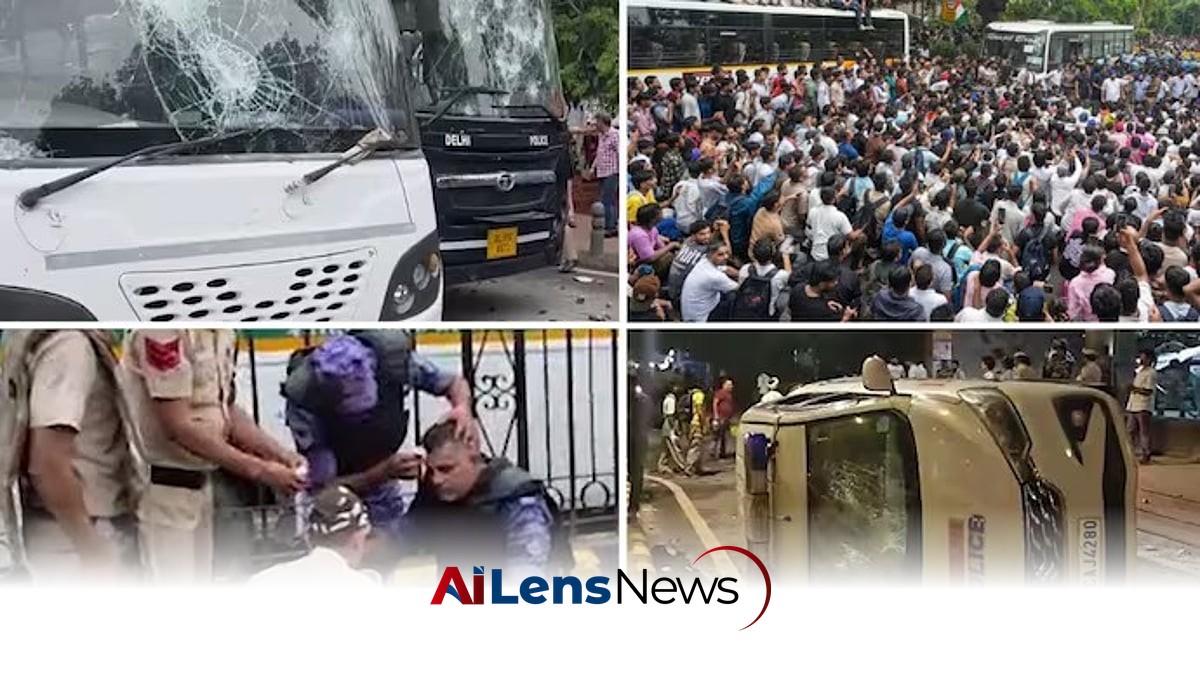


The Delhi Police have registered five FIRs related to the violence during the July 20 protest at Jantar Mantar, investigating potential conspiracy and unrest.
Kohima, India Jul 21, 2026 ALN: Guwahati: The Delhi Police have registered five FIRs in connection with the alleged violence, stone-pelting, and vandalism during the July 20 protest at Jantar Mantar and are investigating whether the unrest was part of a pre-planned conspiracy. This incident has raised significant concerns regarding public safety and the right to protest in the capital.
The events at Jantar Mantar have drawn attention not only for the violence that erupted but also for the broader implications it has on civil liberties and the mechanisms of law enforcement in India. Protests in the national capital are not uncommon, but the level of violence observed during this particular event has prompted a thorough investigation from law enforcement agencies.
According to police sources, the FIRs have been registered at the Parliament Street and Connaught Place police stations under various provisions of the Bharatiya Nyaya Sanhita (BNS), 2023, the Arms Act, 1959, and the Prevention of Damage to Public Property (PDPP) Act. The invocation of these laws underscores the seriousness with which the police are approaching the case, as they aim to uphold public order while also addressing the rights of citizens to assemble and express dissent.
One FIR relates to the alleged unauthorized operation of a drone in the New Delhi district during the ongoing Parliament session. The use of drones in protests has become increasingly common, raising questions about privacy, security, and the potential for surveillance. Drones can capture real-time footage of events, which can be both a tool for protesters to document their actions and a means for authorities to monitor crowds. The implications of drone use in protests are profound, as they intersect with issues of civil rights and state surveillance.
Another FIR concerns an alleged conspiracy to incite violence, with investigators claiming to have gathered key evidence during the probe. This aspect of the investigation is particularly noteworthy as it suggests that the unrest may not have been spontaneous but rather orchestrated by individuals or groups with specific agendas. The police are tasked with determining the extent of this conspiracy and whether it involved coordination among various actors.
Two additional FIRs have been registered over allegations of obstructing government officials, assaulting police personnel, and damaging public property. These charges are serious as they not only threaten the safety of law enforcement officers but also challenge the integrity of public institutions. The allegations of assault on police personnel are particularly concerning, as they highlight the potential for protests to escalate into violence, undermining the very democratic principles that allow for dissent.
The FIR registered at Parliament Street Police Station invokes several sections of the BNS, including offences relating to disobedience of lawful orders issued by public servants, obstruction of public officials, assault on public servants, unlawful assembly, rioting, criminal conspiracy, endangering public safety, and acts committed with common intention. It also includes provisions under the Arms Act and the PDPP Act for the alleged possession of prohibited weapons and damage to public property. These legal frameworks are designed to maintain order and protect citizens, but they also raise questions about the balance between security and civil liberties.
According to the FIR, the accused unlawfully assembled, disrupted public order, obstructed government work, engaged in violent activities, and damaged public property. The allegations are currently under investigation, and the Delhi Police are under pressure to resolve the case quickly to restore public confidence in their ability to manage civil disturbances.
Police sources indicated that additional FIRs may be registered as investigators continue to identify those involved through video evidence. The reliance on digital evidence is becoming increasingly critical in modern policing, as it allows for a more thorough examination of events and can provide clarity in situations where accounts may differ. The use of technology in investigations is a double-edged sword, as it raises concerns about privacy and the potential for misuse of surveillance data.
Officials alleged that some protesters vandalized police vehicles and pelted stones at a police team near Regal Cinema in the Outer Circle of Connaught Place. The incident remains under investigation, and authorities are keen to establish a clear narrative of what transpired during the protest. The location of the violence, near a prominent landmark, adds to the visibility of the incident and the scrutiny it faces from the public and media.
The Delhi Police are relying heavily on digital evidence, with investigators examining more than 250 videos, including footage captured on mobile phones, CCTV cameras, drones, and police body-worn cameras. The footage is being analyzed to identify those allegedly involved in the violence and to determine whether any suspects have previous criminal records. This meticulous approach to gathering evidence reflects a commitment to ensuring that justice is served while also safeguarding the rights of individuals involved.
Investigators are also examining whether those accused of stone-pelting, vandalizing public property, and attacking police personnel during the protest acted in a coordinated and organized manner. The police said the investigation remains ongoing, and further legal action will be taken based on the evidence collected. The outcomes of this investigation could set precedents for how similar protests are handled in the future, particularly in terms of the legal repercussions faced by participants.
As the investigation unfolds, it will be crucial to monitor how the Delhi Police balance their duties to maintain public order with the need to respect citizens' rights to assemble and express dissent. The implications of this case extend beyond the immediate violence at Jantar Mantar; they touch on broader issues of governance, civil rights, and the role of law enforcement in a democratic society.
- Delhi Tightens Security as CJP Holds 'Chalo Sansad' March
To learn more about the latest developments in Crime & Law, stay updated with our exclusive reports and analyses on AiLensNews.

