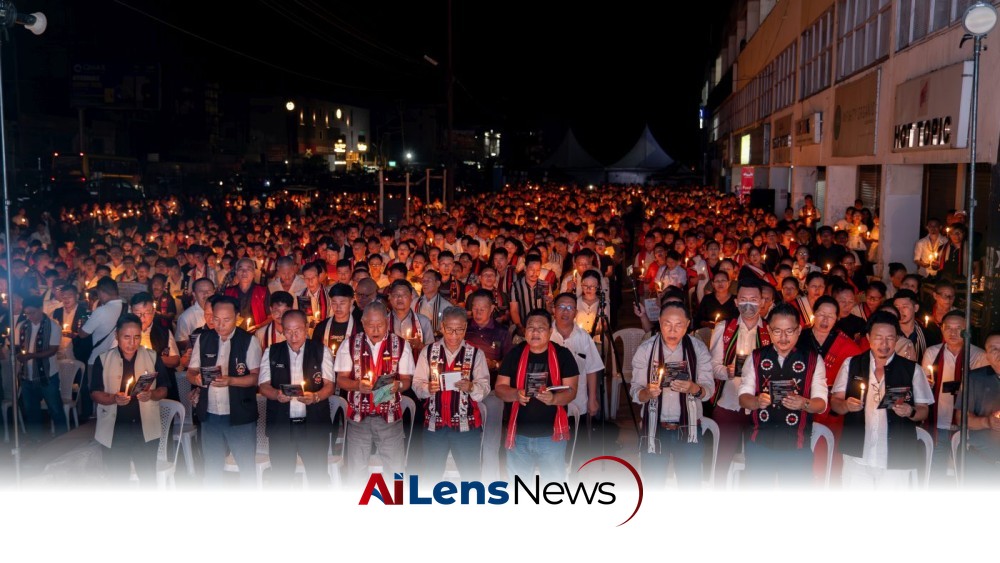


Civil society organizations gathered in Dimapur for a candlelight vigil to honor six Naga men abducted in Manipur, calling for justice and solidarity.
Kohima, India Jul 17, 2026 ALN: The recent candlelight vigil held in Dimapur serves as a poignant reminder of the ongoing struggles faced by communities in the northeastern region of India, particularly those from the Naga ethnic group. The vigil was organized by various civil society organizations, underscoring the collective grief and outrage over the abduction and subsequent deaths of six Naga men from Leilon village in Manipur. This tragic event has not only impacted the families of the victims but has also resonated deeply within the broader Naga community, prompting calls for justice and peace.
The six men, who were reportedly abducted on May 13, had their bodies recovered nearly a month later, on June 10. This timeline highlights the prolonged anguish experienced by their families, who have been left to grapple with the uncertainty and horror of the situation. The incident has sparked widespread condemnation and has drawn attention to the issues of security and safety in the region, which has been marred by violence and conflict for decades.
The candlelight vigil took place at Super Market in Dimapur, a significant location that symbolizes community gathering and solidarity. The event was organized by the Zeliangrong Public Organisation Dimapur (ZPOD), which played a crucial role in mobilizing support from various local groups. The participation of numerous organizations, including the Naga Council Dimapur (NCD), Naga Women Hoho Dimapur (NWHD), and others, reflects a united front among the Naga people in the face of adversity.
During the vigil, GK Rengma, President of the NCD, emphasized the importance of coming together as a community. He articulated that the gathering was not merely about mourning but also about fostering a sense of solidarity and shared purpose among the Naga people. His remarks highlighted the notion that the tragedy experienced by the families of the victims is a collective loss for the entire Naga community, reinforcing the idea that their struggles are interconnected.
Rengma’s metaphor of darkness and light resonates deeply in contexts of communal grief. He noted that while the weight of loss can feel overwhelming, the act of lighting candles symbolizes hope and resilience. Each candle represents not only the memory of the deceased but also the collective strength of the Naga people, urging them to stand united in their quest for justice and security.
Furthermore, Rengma called upon both the Government of Manipur and the Government of India to take decisive action in response to the demands of the United Naga Council. His appeal for swift and impartial justice underscores the pressing need for accountability in cases of violence and abduction, which have plagued the region. The demand for justice is not merely a legal obligation but a moral imperative that resonates deeply with the affected families and the community at large.
Khriezoronuo Zumvu, the Joint Secretary of the NWHD, also addressed the gathering, framing the vigil as a tribute to innocent lives lost to brutal violence. Her poignant statement, “Your loss is our loss,” encapsulates the shared grief that permeates the Naga community. She urged the youth to rise above bitterness and work collectively towards a future where human dignity is upheld, and justice prevails. This call to action is particularly significant in a region where historical grievances and ongoing conflicts often lead to cycles of violence and retribution.
The sentiments expressed by various leaders during the vigil reflect a broader desire for unity among the Naga people. Thamlong Phom, President of the Eastern People’s Union Dimapur (ENPUD), emphasized the importance of practical unity, suggesting that despite tribal differences, the Naga identity should be a unifying factor. His remarks highlight the necessity of a cohesive response to the challenges faced by the community, particularly when addressing issues of violence and injustice.
The condemnation of the killings by Thepfuneituo Rio, President of the Tenyimi Union Dimapur (TUD), further underscores the collective outrage within the community. He cautioned against misinterpreting the Naga people's commitment to peace as a sign of weakness, reinforcing the idea that calls for justice and security are rooted in a desire for a peaceful coexistence. This reflects a broader narrative within the Naga community, where patience and resilience are often tested by external pressures and violence.
Izesile Ramlia, President of the Zeliang Women Organisation Dimapur, echoed the sentiments of her fellow leaders, articulating the emotional toll that such violence takes on families, particularly mothers. Her statement that “no mother should suffer this way” resonates deeply within the context of maternal grief and loss, emphasizing the human cost of violence. She called upon authorities to ensure that justice is served, reflecting the urgent need for accountability in cases of violence against civilians.
Ramdibe, President of the Zeliangrong Youth Organisation (ZYON), framed the issue of justice as transcending religious, caste, and tribal lines, focusing instead on the fundamental principles of humanity. His assertion that “innocent blood demands justice, not revenge” speaks to the broader implications of violence in the region and the need for a transformative approach that prioritizes healing and reconciliation over retribution.
In conclusion, the candlelight vigil held in Dimapur serves as a powerful testament to the resilience and solidarity of the Naga people in the face of tragedy. The collective mourning and calls for justice reflect not only the immediate impact of the abduction and killings but also the broader historical and socio-political context of the region. As the Naga community continues to grapple with the implications of violence and insecurity, the vigil stands as a reminder of the enduring quest for peace, justice, and human dignity. The demands for accountability and the restoration of security in Manipur resonate deeply within the collective consciousness of the Naga people, urging a unified response to the challenges they face.
To learn more about the latest developments in Local & Regional, stay updated with our exclusive reports and analyses on AiLensNews.

