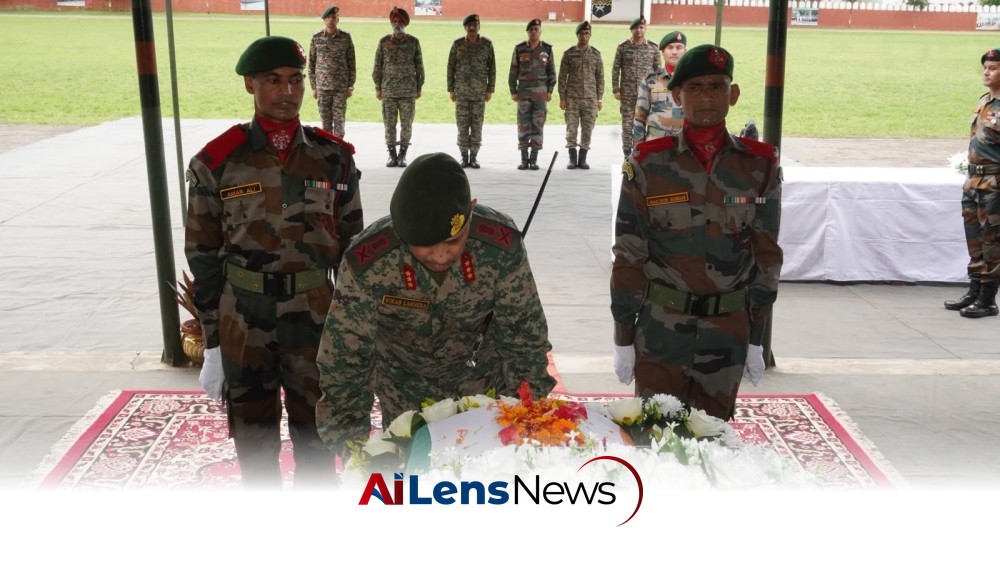


Lt Gen Vikas Lakhera condemns the July 13 blast in Chümoukedima, urging the public to safeguard peace in the region.
Kohima, India Jul 14, 2026 ALN: The Director General of Assam Rifles (DGAR), Lieutenant General Vikas Lakhera, has condemned the fatal blast that occurred on July 13 in Chümoukedima, labeling it a “senseless” act. He described the perpetrators as “enemies of peace.” Speaking at a wreath-laying ceremony on July 14 at the Assam Rifles Training Centre and School (ARTC&S) in Shokhuvi, Lt Gen Lakhera emphasized the importance of maintaining stability in the region.
“I hope and pray to God that better sense prevails, and the hard-earned peace in our state is not lost,” Lakhera stated, adding that those responsible for the attack are acting “against humanity.” When questioned about possible motives behind the suspected IED attack on the Assam Rifles, the DGAR refrained from commenting, stating it was too early to draw conclusions. This cautious approach reflects the complexity of the situation in Northeast India, where various insurgent groups operate under different ideologies and objectives.
The wreath-laying ceremony was attended by several senior military officers, including Lt Gen V M Bhuvana Krishnan, General Officer Commanding-in-Chief of the Eastern Command; Lt Gen Girish Kalia of 3 Corps; Maj Gen Harinder Singh Mavi, IGAR (North); and Brig C S Pathania, Commandant of ARTC&S. Their presence underscored the seriousness with which the military establishment views the attack and its implications for security in the region.
The attack, which took place around 2:30 PM near the Khovanalla iron bridge in Chümoukedima, resulted in the death of one Assam Rifles soldier and injuries to four others. Officials reported that a suspected Improvised Explosive Device (IED) placed in a stationary autorickshaw detonated as a pickup truck transporting Assam Rifles personnel approached National Highway 229. This method of attack highlights the tactics employed by insurgents, specifically targeting military personnel in an attempt to undermine the security apparatus in the region.
The deceased soldier has been identified as Havildar Mohammad Iqbal, a resident of Poonch, Jammu and Kashmir. Lt Gen Lakhera confirmed that Iqbal’s remains would be transported to Delhi before being taken by road to his native village in Poonch. The loss of Havildar Iqbal is a stark reminder of the risks faced by security personnel in a region that has seen its share of violence and insurgency over the years. Each casualty not only represents a loss for the military but also reverberates through local communities, affecting morale and community trust in security forces.
As for the four injured personnel, including an Assistant Commandant, their conditions have been reported as stable. The injuries sustained highlight the dangers that military forces encounter in their operations, particularly in areas prone to insurgent activities. The Assam Rifles, often referred to as the "Sentinels of the Northeast," have been involved in counter-insurgency operations and maintaining peace in the region since its inception. Their dual role as both military personnel and community support is critical in fostering a sense of security among civilians.
Assam Rifles has a long and storied history, dating back to 1835, and has played a crucial role in various military operations in Northeast India. The force is tasked with not only counter-insurgency operations but also with providing assistance in civil administration and disaster relief. The recent attack underscores the persistent challenges that security forces face in a region characterized by ethnic diversity, historical grievances, and ongoing insurgent movements. The historical context of these grievances often complicates the peace process, as different communities may have conflicting demands and narratives.
The use of improvised explosive devices (IEDs) has become a common tactic among insurgent groups in India, particularly in the Northeast. These devices can be difficult to detect and pose a significant threat to both military and civilian populations. The Assam Rifles, along with other security forces, have been working tirelessly to counter these threats, but the complexity of the insurgency in the region continues to pose significant challenges. The ongoing conflict has led to a cycle of violence that affects not only security personnel but also innocent civilians caught in the crossfire.
In the aftermath of the blast, security forces have likely ramped up their operations in Chümoukedima and surrounding areas to prevent further incidents and to apprehend those responsible for the attack. Intelligence operations and community outreach are essential components of counter-insurgency efforts, as they aim to gather information and build trust within local populations. However, the effectiveness of these measures can be hampered by mistrust between communities and security forces, often stemming from previous encounters and the broader historical context of conflict.
The attack also raises questions about the broader security landscape in Northeast India. The region has been plagued by various insurgent groups that seek autonomy or independence from the Indian state, leading to a complex web of conflicts. The Indian government has made efforts to engage with various factions through peace talks, but not all groups are willing to negotiate, and violence often resurfaces. This ongoing tension complicates the prospects for peace and stability, as different factions may pursue their agendas through violent means.
Local communities are also affected by these ongoing conflicts. Civilian casualties, displacement, and disruption of daily life are common consequences of insurgent activities and military responses. The challenge for the Assam Rifles and other security forces is not only to combat insurgency but also to address the root causes of conflict, which often include issues of identity, governance, and socio-economic development. Addressing these underlying issues is crucial for achieving a sustainable peace that goes beyond mere military solutions.
In light of the recent attack, there may be renewed calls for dialogue and peace initiatives aimed at fostering stability in the region. The Assam Rifles, with its deep roots in the local communities, may play a pivotal role in bridging the gap between the government and insurgent groups, provided there is a willingness on both sides to engage in meaningful discussions. Dialogue can serve as a platform for addressing grievances and finding common ground, which is essential for long-term peace.
As the situation develops, the focus will likely remain on the safety of security personnel and civilians alike, as well as on the efforts to restore peace and stability in a region that has long been marred by violence. The implications of such attacks extend beyond immediate casualties; they can impact the morale of security forces, influence public perception, and shape the political landscape in the region. A single incident can reverberate through communities, altering perceptions of safety and trust in the authorities.
The Assam Rifles' commitment to peace, as articulated by Lt Gen Lakhera, will be crucial in navigating the challenges ahead. It is essential for all stakeholders, including the government, security forces, and local communities, to work collaboratively towards a peaceful resolution to the conflicts that have plagued Northeast India for decades. Only through sustained dialogue and efforts to address underlying grievances can lasting peace be achieved. The road to peace is often fraught with challenges, but the commitment to dialogue and understanding can pave the way for a more stable future in a region that has long struggled with the scars of conflict.
To learn more about the latest developments in Crime & Law, stay updated with our exclusive reports and analyses on AiLensNews.

