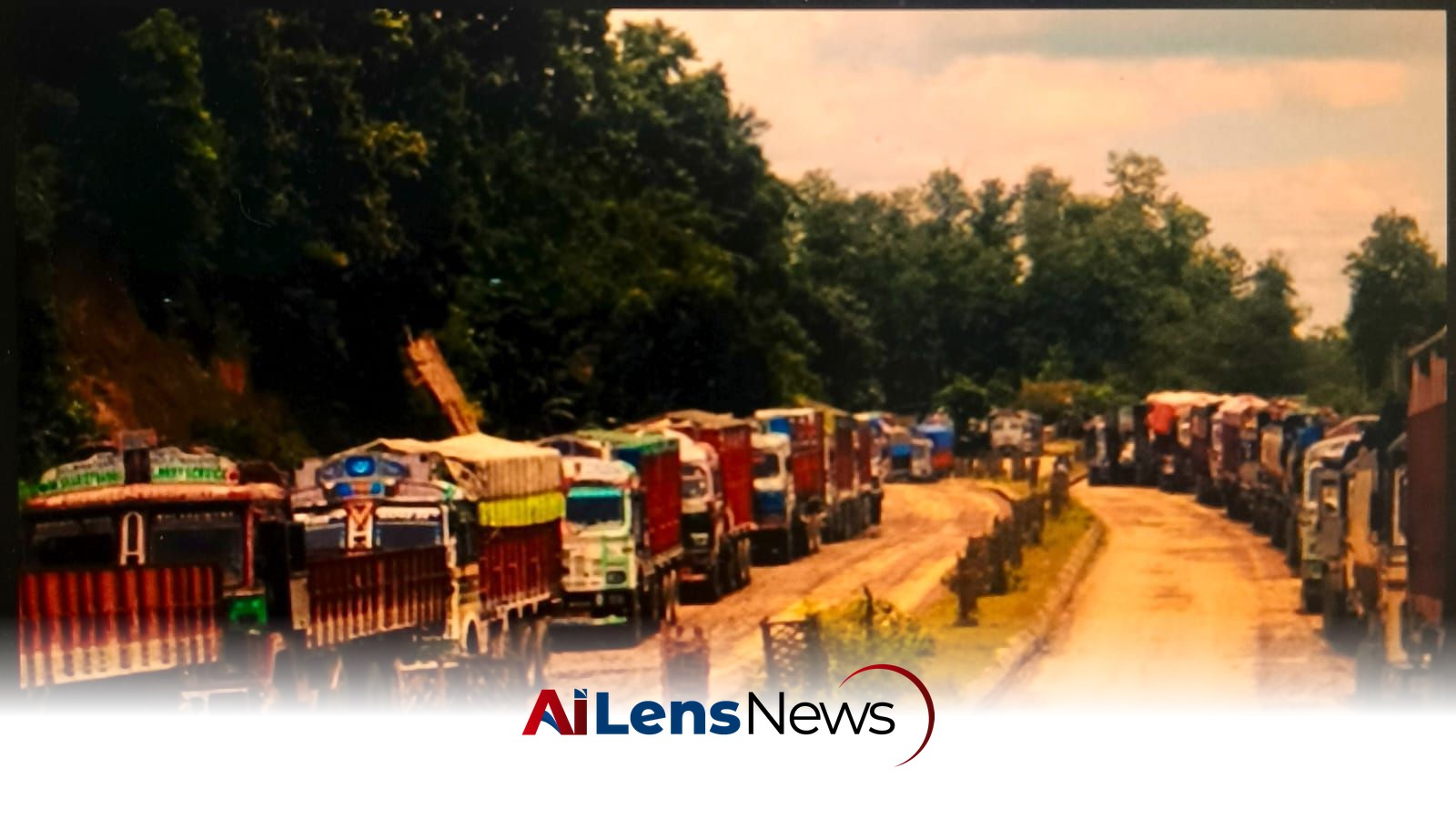


The ongoing Naga blockade on National Highway-2 has severely affected the Kangpokpi district, leading to increased costs and shortages of essential goods.
New Delhi, India Jul 14, 2026 ALN: It has now been two months since a Naga blockade on National Highway-2 commenced. This blockade, which is primarily aimed against the Kuki-Zo people, has resulted in a range of repercussions for other tribal communities in the region as well. The blockade has not only disrupted the flow of goods and services but has also heightened tensions among various ethnic groups in Manipur, particularly in the Kangpokpi district.
The Naga community, in their efforts to assert their grievances, established a check-post in the Namdilong area, situated in the Imphal district along NH2. This check-post serves as a critical juncture where every vehicle, whether personal or commercial, and all commuters passing through are stopped and subjected to thorough inspections. The primary aim of these checks is to scrutinize the contents of vehicles for grocery or other essential household items, which have become increasingly scarce due to the blockade.
In order to facilitate the transportation of supplies from Imphal to the Kangpokpi region, residents are forced to pay what can be termed as 'taxes' at the Naga check-post. These fees, which can range from 1,000 to 5,000 Rupees, are levied in exchange for a 'token' that permits individuals to commute. Only after this payment is made are people allowed to move across the highway and transport the much-needed supplies back to their homes in Kangpokpi. This practice has led to significant economic strain on the local population, who are already grappling with the rising costs of essential items.
The blockade began as a form of protest following the discovery of the mutilated bodies of six Naga civilians, who had been abducted on May 13, 2026. The tragic event, which took place in the Leilon village of the Kangpokpi district, has been a flashpoint for escalating tensions between the Naga and Kuki-Zo communities. The Kuki-Zo Council later admitted that members of their community were responsible for the killings, which has further inflamed hostilities. In response to the incident, the National Investigation Agency (NIA) has initiated an inquiry into the murders and has made two arrests, yet the Naga community has made it clear that the blockade will continue until they feel that complete justice has been served.
As the blockade endures, the residents of the Kangpokpi district who do not belong to the Naga community are facing considerable challenges. The additional 'taxes' imposed by the Nagas have led to skyrocketing prices for essential commodities. For instance, the cost of an LPG cylinder has surged to approximately 4,000 to 5,000 Rupees, while a litre of petrol now costs around 250 Rupees. The price of a 50-kg bag of rice has also increased dramatically, reaching around 3,000 Rupees. These inflated prices have placed an immense burden on the local population, many of whom rely on these basic necessities for their daily survival.
One resident of Motbung village, located in the Kangpokpi district, articulated the dire situation, stating that "Every wholesale and retail shop in our village is now empty, and the price for every single commodity is way too high." This sentiment reflects a broader sense of despair among the residents, who are struggling to cope with the economic fallout of the blockade. The same resident further explained the challenges of procuring supplies, noting, "I get 1-2 kgs of food supplies from Imphal or Kanglatongbi, to carry which the Nagas ask for money; but for this small quantity, I argue with them and make my way through the check-post. The real issue begins when the quantity of the commodity you are carrying is more. For instance, if one carries 30 bags of cement for construction, a 'tax' of 1,000-2,000 has to be paid." This illustrates the everyday negotiations and struggles that residents endure just to meet their basic needs.
In a recent development, the Naga community has taken further steps to enforce the blockade. A directive issued by the Naga Village Guard, Northern Command, on July 13, stated that they had received reports indicating that certain Nepalese individuals were supplying essential commodities to their adversaries. Consequently, the directive ordered that the Namdilong-Kanglatongbi Gate would cease issuing any transportation permissions to Nepalese, regardless of the justification provided. This move underscores the increasing militarization of the blockade and reflects the Naga community's determination to control the flow of goods across their territory.
The directive also warned that any non-compliance would be met with severe consequences, stating, "Any dereliction from this directive shall be dealt with, in ways befitting, by the NVG-NC and beyond." This kind of rhetoric raises concerns about the potential for violence and further unrest in the region, as the blockade continues to exacerbate existing tensions among the various ethnic groups in Manipur.
It is important to understand the broader context of the Naga blockade within the historical and political landscape of Manipur. The state has been a hotbed of ethnic conflict for decades, with various groups vying for recognition, autonomy, and rights. The Naga and Kuki-Zo communities have a long history of rivalry, which has been fueled by competition over land, resources, and political representation. In recent years, attempts at peace talks and negotiations have often faltered, leading to a cycle of violence and retaliation.
The implications of the ongoing blockade extend beyond immediate economic hardships. The blockade has the potential to further entrench divisions among the communities, making reconciliation efforts increasingly difficult. As the situation continues to evolve, it is crucial for local leaders, government officials, and civil society organizations to engage in dialogue and seek peaceful resolutions to the underlying issues driving the conflict.
In conclusion, the Naga blockade on National Highway-2 has had profound and far-reaching effects on the residents of the Kangpokpi district and surrounding areas. The economic impact, coupled with the rising tensions between ethnic communities, poses significant challenges for the stability and peace of the region. As the blockade persists, the need for a comprehensive approach to address the grievances of all communities involved becomes ever more pressing. Without concerted efforts to foster dialogue and understanding, the potential for further conflict remains a looming threat over Manipur.
To learn more about the latest developments in Local & Regional, stay updated with our exclusive reports and analyses on AiLensNews.

