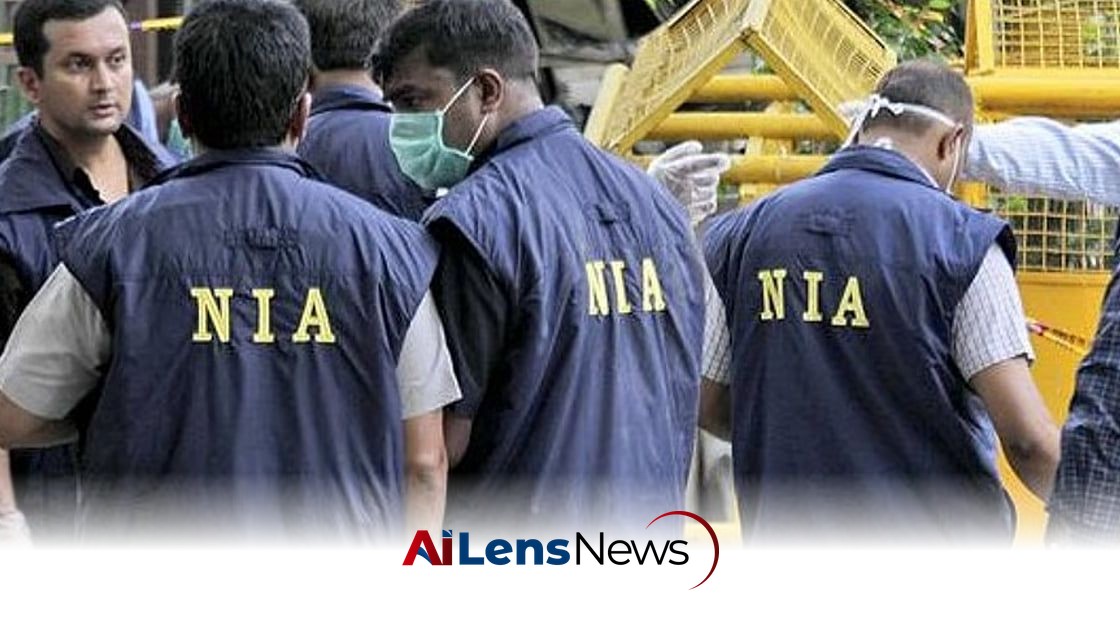


The National Investigation Agency has arrested two additional suspects linked to the murder of six Naga civilians in Manipur's Kangpokpi district.
New Delhi, India Jul 18, 2026 ALN: A team of security officials led by the National Investigation Agency (NIA) on Saturday arrested two more persons for their alleged involvement in the killing of six Naga civilians in Manipur's Kangpokpi district, a police statement said.
Following investigation in the abduction and killing of six Naga individuals, a joint team of NIA, Manipur Police, and CRPF arrested the two accused, it said.
The arrested persons have been identified as Lungoulal Vaiphei, a resident of Leilon Vaiphei village, and Lunminthang Sitlhou alias Jack, a resident of Molhoi Village in the Kuki-majority Kangpokpi district, police said.
Further efforts are on to arrest other individuals connected with the case, it said.
The six Naga civilians were abducted by armed men on May 13 from Leilon Vaiphei in Kangpokpi district. Their bodies were recovered from the vicinity of Leilon Vaiphei village on June 10, triggering protests by Naga and Meitei communities demanding arrests of the perpetrators.
The abduction and subsequent murder of the six individuals have raised significant concerns regarding the safety and security of civilians in the region, which has a complex socio-political landscape. Manipur is known for its ethnic diversity, with various groups including the Naga and Kuki communities, each having their own historical grievances and aspirations. The tensions between these groups have often led to violence, making the region a focal point for conflict.
The situation in Manipur is further complicated by a history of ethnic strife that has its roots in colonial and post-colonial policies, land disputes, and the struggle for political autonomy. The Naga and Kuki communities, among others, have long-standing issues related to identity and territorial claims, which have manifested in violent confrontations over the years. The state has seen countless instances of armed insurgency, with various factions vying for recognition and rights, often resulting in clashes that claim innocent lives.
In the aftermath of the incident involving the six civilians, Naga groups launched an economic blockade on all routes to Kangpokpi district. This action led to a surge in the prices of essential commodities in the Kuki Zo majority district, exacerbating the already strained relations between the two communities. The blockade was not just a logistical challenge but also a symbolic act of protest, reflecting the deep-seated grievances of the Naga community. It was a collective response to express their outrage and demand justice for the slain individuals, emphasizing the need for accountability and a sense of security for their community.
Earlier, on July 10, the NIA along with police and CRPF arrested a couple from Leilon Vaiphei for their alleged involvement in the killing of the six Naga civilians. These arrests formed part of a broader investigation that has been ongoing since the discovery of the bodies. The NIA has been tasked with probing the case due to its sensitive nature, which has implications for peace and stability in the region. The agency's involvement underscores the seriousness with which the Indian government views such incidents, particularly in areas that are prone to unrest.
The killing of the six civilians is not an isolated incident but rather part of a troubling trend of violence in Manipur. Over the years, the state has witnessed numerous incidents of ethnic clashes, armed insurgency, and inter-community violence, which have often resulted in loss of life and property. The region's history of conflict is deeply rooted in issues of identity, land rights, and political representation, making it challenging for authorities to address the underlying causes of violence.
The NIA's involvement in this case reflects the seriousness with which the Indian government views such incidents, particularly in areas that are prone to unrest. The agency is known for handling cases that have national implications, especially those involving terrorism and organized crime. By stepping in, the NIA aims to ensure a thorough investigation and bring the perpetrators to justice, which is crucial for restoring public confidence in the rule of law.
As the investigation continues, community leaders from both the Naga and Kuki sides have called for restraint and dialogue to prevent further escalation of violence. There are concerns that if the situation is not managed carefully, it could lead to more clashes between the two communities, perpetuating a cycle of violence that has plagued the region for decades. The call for dialogue is essential in a region where misunderstandings and lack of communication can easily lead to violent confrontations.
Moreover, the socio-economic impact of such incidents cannot be understated. The blockade has led to shortages of essential goods, affecting daily life for many residents in Kangpokpi district. The rising prices of food, fuel, and other necessities have put additional strain on families already grappling with the fallout from the violence. Humanitarian organizations have expressed concern over the potential for increased hardship for vulnerable populations in the area, as the economic repercussions of the blockade ripple through the community.
In light of these developments, it is essential for authorities to engage with community leaders and stakeholders to foster dialogue and reconciliation. Building trust between the communities is paramount for long-term peace and stability in Manipur. The government must also address the underlying issues that contribute to ethnic tensions, such as economic disparities and lack of political representation, to create a more inclusive environment for all communities. Ensuring equitable development and addressing grievances can help mitigate future conflicts and foster a sense of belonging among different ethnic groups.
In conclusion, the recent arrests in the Naga civilians' murder case highlight the ongoing challenges faced by Manipur in managing ethnic relations and ensuring the safety of its citizens. The situation remains fluid, and the response from both the government and the communities involved will be crucial in determining the path forward. As the investigation unfolds, it is hoped that justice will be served and that steps will be taken to prevent further violence in this diverse and complex region. The need for a comprehensive approach to conflict resolution, which includes dialogue, economic development, and political engagement, is more pressing than ever to ensure a peaceful coexistence among the various communities in Manipur.
To learn more about the latest developments in Crime & Law, stay updated with our exclusive reports and analyses on AiLensNews.

