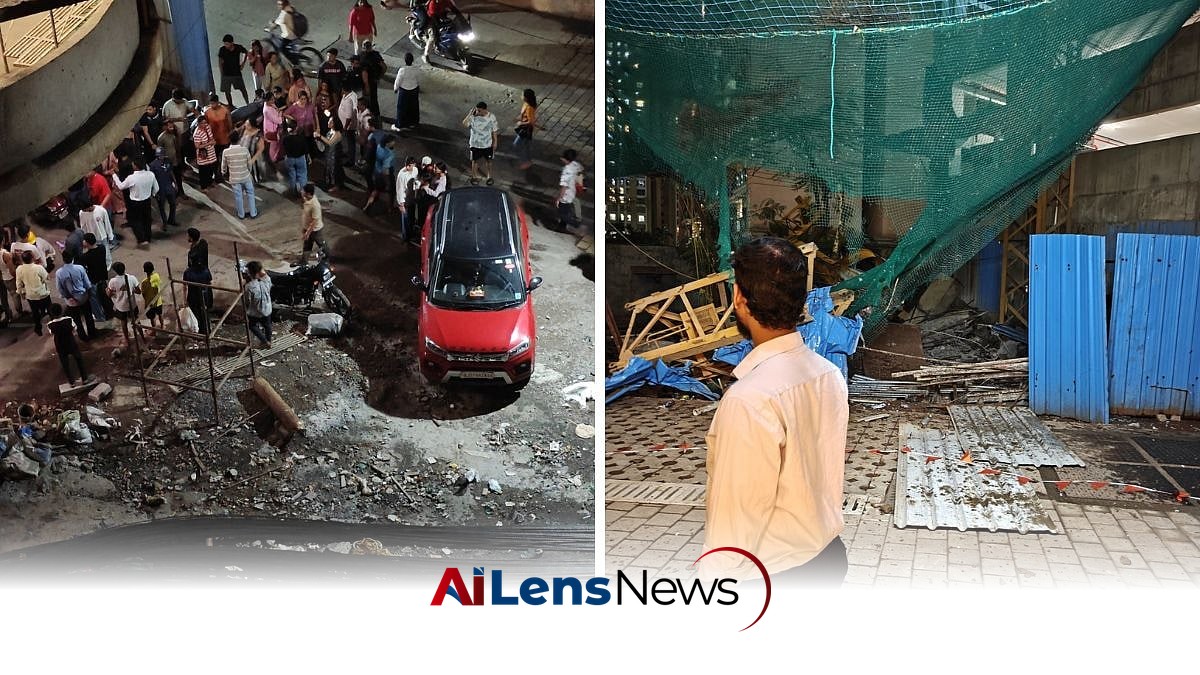


A construction crane collapsed from the 11th floor of a building in Mira Road, injuring one person critically and damaging 12 vehicles. Rescue operations are ongoing.
New Delhi, India Jul 17, 2026 ALN: Mira Road: A major accident occurred in the Mira Road area of Mumbai on Friday evening when a construction crane suddenly collapsed from the 11th floor of an under-construction building. The massive impact resulted in severe damage to nearly 12 vehicles and left one person critically injured. The victim has been rushed to a hospital for immediate medical treatment.
According to the available information, construction work is actively underway at the RERS building inside the JP North Complex. In the evening, the crane being used for the construction work suddenly malfunctioned and came crashing down. Due to the immense weight of the crane, the two-wheelers and four-wheelers parked below were completely crushed into pieces, damaging at least 12 vehicles in total.
The collapse triggered a deafening noise, causing alarmed residents to rush to the spot. Upon arrival, bystanders noticed a man trapped underneath the heavy iron debris of the fallen crane. They quickly pulled him out and rushed him to a nearby private hospital, where he is currently undergoing treatment in the Intensive Care Unit (ICU). Meanwhile, a video documenting the aftermath of the incident has gone viral on social media.
Upon receiving information about the mishap, the Fire Brigade of the Mira-Bhayandar Municipal Corporation (MBMC), local police, and emergency rescue teams rushed to the site. They have initiated operations to clear the debris and remove the crushed vehicles. While the rescue work continues, the exact technical cause behind the crane's sudden collapse remains unclear.
This incident raises serious concerns regarding construction safety protocols in urban areas, particularly in densely populated regions like Mira Road. The construction industry in India has been under scrutiny for several years due to a series of accidents that have resulted in injuries and fatalities. Many of these incidents can be attributed to inadequate safety measures, poor maintenance of equipment, and sometimes, a lack of proper training for workers.
In the case of the Mira Road crane collapse, the immediate focus is on the injured individual and the damaged property. However, the broader implications of such accidents cannot be overlooked. The incident not only highlights the risks faced by construction workers but also the potential dangers posed to residents and passersby in the vicinity of construction sites.
Authorities are expected to conduct a thorough investigation into the incident to determine the cause of the crane's malfunction. This will likely involve inspecting the crane's maintenance records, the qualifications of the operators, and adherence to safety regulations. If negligence is found, it could lead to significant legal repercussions for the construction company involved.
Moreover, this incident could prompt local government officials to reevaluate existing safety regulations for construction sites. In recent years, there have been calls from various stakeholders, including labor unions and safety advocates, for stricter enforcement of safety standards in the construction industry. Such measures could include mandatory safety audits, regular training sessions for workers, and more rigorous oversight of construction practices.
The public response to this incident has been one of shock and concern, with many residents expressing their fears about the safety of nearby construction projects. Social media platforms have been flooded with discussions regarding the need for better safety measures and accountability in the construction sector. Residents have also called for more transparency from construction companies regarding their safety practices.
In the aftermath of the collapse, it is crucial for the local community to come together to address these safety concerns. Community meetings could be organized to discuss the incident, share experiences, and propose solutions to improve safety at construction sites. Engaging local residents in these discussions can empower them to advocate for their safety and hold construction companies accountable.
As investigations continue, it remains to be seen what long-term changes may arise from this incident. The construction industry in India is a vital part of the economy, contributing significantly to job creation and infrastructure development. However, ensuring the safety of workers and the public must be a top priority to prevent future tragedies.
In conclusion, the crane collapse in Mira Road serves as a stark reminder of the inherent risks associated with construction work. While the immediate focus is on the injured individual and the damage caused, it is essential to address the systemic issues that contribute to such accidents. By prioritizing safety and accountability, the construction industry can work towards preventing similar incidents in the future, thereby protecting both workers and the communities they serve.
This incident is not an isolated case but rather part of a broader pattern of safety issues that have plagued the construction sector in India. Over the past decade, there have been numerous reports of accidents involving cranes, scaffolding collapses, and other construction-related mishaps. These incidents often lead to severe injuries and fatalities, raising alarms about the adequacy of safety regulations and their enforcement.
According to data from various labor organizations, the construction industry has one of the highest rates of workplace accidents in India. Factors contributing to this alarming statistic include the rapid pace of urbanization, which has led to a surge in construction activities, often without corresponding improvements in safety measures. The pressure to meet deadlines and reduce costs can sometimes result in corners being cut, which jeopardizes worker safety.
Furthermore, the lack of stringent regulatory oversight exacerbates the situation. While there are laws in place governing construction safety, their enforcement is often lax. Local authorities may not have the resources or manpower to conduct regular inspections of construction sites, leading to a culture of complacency among builders and contractors. This negligence can create hazardous working conditions, putting both workers and the general public at risk.
In response to these ongoing safety concerns, various advocacy groups have been pushing for reforms in the construction industry. These reforms include calls for better training programs for workers, stricter licensing requirements for equipment operators, and enhanced safety protocols that must be adhered to at all times. There is also a growing demand for accountability measures that would hold construction companies responsible for accidents that occur due to negligence.
Community engagement is also essential in addressing construction safety issues. Residents living near construction sites often feel powerless when it comes to advocating for their safety. By organizing community forums and encouraging dialogue between residents, construction companies, and local authorities, it is possible to foster a collaborative approach to safety. Such initiatives can empower residents to voice their concerns and demand safer practices from construction companies operating in their neighborhoods.
As the investigation into the Mira Road crane collapse unfolds, it will be crucial to monitor the responses from both the construction industry and local government. Will this incident serve as a catalyst for change, prompting stricter regulations and better safety practices? Or will it fade into the background, just another statistic in a long list of construction accidents? The outcome will likely depend on the collective actions of the community, advocacy groups, and policymakers.
Ultimately, the goal should be to create a construction environment that prioritizes safety above all else. This includes not only protecting the workers who build our infrastructure but also ensuring the safety of the communities that surround these construction sites. The Mira Road crane collapse is a wake-up call that underscores the urgent need for reform in the construction industry, and it is imperative that all stakeholders work together to prevent such tragedies from occurring in the future.
To learn more about the latest developments in Local & Regional, stay updated with our exclusive reports and analyses on AiLensNews.

