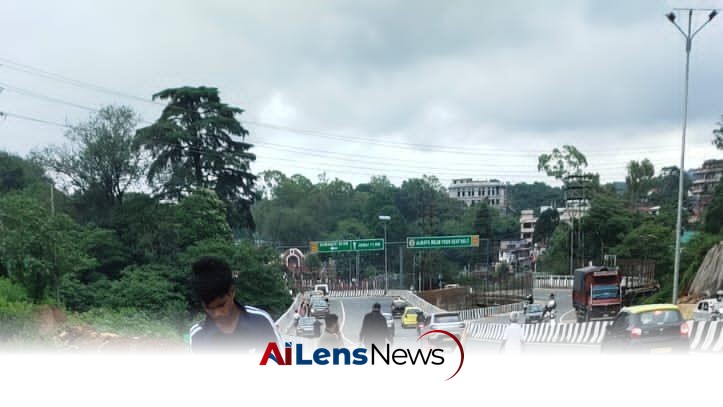


Authorities have confirmed that cracks on the Umshyrpi bridge's pedestrian walkway will not be repaired until after the monsoon season, attributing the damage to heavy vehicle parking.
Shillong, India Jul 17, 2026 ALN: After several citizens shared videos on social media showing cracks on the pedestrian walkway near the Umshyrpi bridge, authorities today attributed these issues to the parking of heavy vehicles at the edge of the road. The emergence of these cracks has raised concerns among the local population, prompting discussions on the safety and structural integrity of the bridge and its surrounding infrastructure.
Officials stated that the contractor has been instructed to install a metal crash barrier one meter away from the edge, in accordance with guidelines, to prevent heavy vehicles from parking in that area. This decision comes in light of the evident damage caused by heavy vehicles, which are often seen parked along the edges of highways, a practice that is not only against regulations but also detrimental to the infrastructure. The installation of a crash barrier is expected to serve as a deterrent against such violations, thereby preserving the integrity of the pedestrian walkway.
According to regulations, vehicles are prohibited from parking on the edges of highways; however, this rule is frequently violated. The habitual disregard for these regulations by drivers has been a source of frustration for both the authorities and the local community. The situation has underscored the need for stricter enforcement of parking regulations, as well as public awareness campaigns to educate drivers about the potential hazards of parking in restricted areas. Without such measures, the safety of pedestrians and the durability of infrastructure are at risk.
Regarding the recent videos depicting undulation on the four-lane road at Umshyrpi, authorities explained that this was due to improper compaction. Poor compaction during the road construction process can lead to a range of issues, including uneven surfaces, which can pose risks to both vehicles and pedestrians. Unfortunately, these defects cannot be addressed at this time due to the ongoing monsoon season. An official clarified that the contractor has been directed to rectify the problems as soon as the monsoon concludes, highlighting the challenges that weather conditions pose to construction and maintenance activities.
This repair is a contractual obligation for the contractor, who is responsible for maintenance for five years. Payments will only be processed once the defects are resolved in accordance with the contract agreement. This clause is significant, as it ensures that the contractor remains accountable for the quality of work performed and the ongoing maintenance of the infrastructure. It also serves to protect public funds by ensuring that payments are contingent upon satisfactory completion of repairs. In the context of public infrastructure, such contractual stipulations are crucial for ensuring that taxpayers’ money is utilized effectively and that infrastructure remains safe and reliable for the community.
Meanwhile, authorities also reported that a polycover, intended for erosion protection over the slope, is being damaged by individuals walking along the slope down to the valley. This activity tears the polycover and disrupts the slope, which may exacerbate erosion, especially during the rainy season. The erosion of slopes can lead to several environmental and safety concerns, including landslides, which pose a threat to both infrastructure and human safety. The damage to the polycover underscores the need for better management of public access to sensitive areas. It raises questions about how to balance public enjoyment of natural spaces with the need for environmental conservation and infrastructure protection.
This project is part of the larger Shillong–Dawki Road initiative, which spans 90 kilometers and has a total cost of Rs 1,377.5 crore. The project includes the construction of a four-lane road from Umshyrpi to Umtyngngar and a two-lane road from Umtyngngar to Dawki. This initiative aims to enhance connectivity in the region, facilitating trade and travel while promoting local economic development. However, the challenges faced during construction and maintenance highlight the complexities involved in large infrastructure projects, particularly in areas prone to adverse weather conditions. The integration of local communities in the planning stages may help address some of these challenges by ensuring that local knowledge and needs are considered.
The Shillong–Dawki Road initiative is not only critical for improving transportation but also for boosting tourism in a state known for its natural beauty and cultural heritage. As the state government seeks to attract more visitors, the importance of maintaining safe and reliable infrastructure becomes increasingly evident. The ongoing issues with the Umshyrpi bridge and surrounding roads may serve as a cautionary tale about the need for diligent oversight and adherence to construction standards. The potential for increased tourism revenue underscores the necessity of investing in high-quality infrastructure that can withstand the demands placed upon it by both local and visiting populations.
In addition to the immediate concerns regarding the structural integrity of the bridge and road, there are broader implications for urban planning and infrastructure development in Shillong. The city has been experiencing rapid growth, leading to increased traffic and a higher demand for reliable transportation networks. As such, the authorities must balance development with sustainability, ensuring that infrastructure projects do not compromise the environment or public safety. Urban planners and local governments face the challenge of accommodating growth while maintaining the quality of life for residents, which often requires innovative solutions and community engagement.
In conclusion, the situation surrounding the Umshyrpi bridge and the associated road infrastructure highlights the importance of proper construction practices, regulatory compliance, and community awareness. As the monsoon season continues, the focus will remain on monitoring the situation and preparing for necessary repairs once conditions allow. The local government is tasked with addressing these challenges while also planning for the future of Shillong’s infrastructure in light of growing demands and environmental considerations. The lessons learned from this situation could inform future projects and help to create a more resilient infrastructure that meets the needs of the community while safeguarding the environment.
To learn more about the latest developments in Local & Regional, stay updated with our exclusive reports and analyses on AiLensNews.

