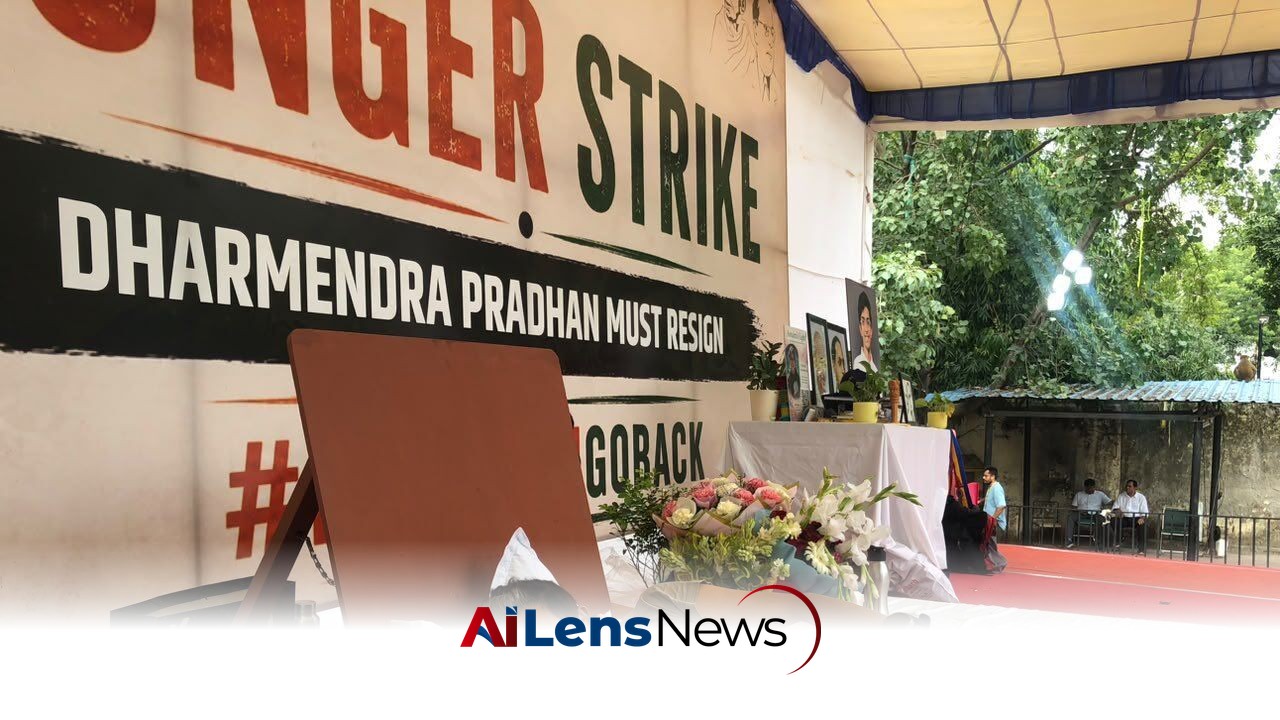


Activist Sonam Wangchuk continues his hunger strike, prompting the Cockroach Janta Party to announce a mass hunger strike on July 16 in solidarity.
Shillong, India Jul 15, 2026 ALN: Activist Sonam Wangchuk remains under round-the-clock medical supervision as he completes the 18th day of his hunger strike. Wangchuk, known for his advocacy for educational reforms and environmental issues in Ladakh, has garnered significant attention not only for his personal sacrifice but also for the broader implications of his protest. The Cockroach Janta Party (CJP), leading protests over alleged irregularities in the NEET examination, has intensified its criticism of the Centre for not engaging with demonstrators.
The National Eligibility cum Entrance Test (NEET) is a highly competitive examination in India, serving as a gateway for students aspiring to pursue medical education. Recent allegations of corruption and irregularities in the NEET examination process have led to widespread discontent among students and their families, prompting protests across the country. The CJP's protest at Jantar Mantar has now entered its 26th day, reflecting the mounting frustration among students and activists regarding the government's inaction.
The organization announced a one-day mass hunger strike on July 16 to show solidarity with Wangchuk and the students involved in the agitation. This collective act of protest highlights the growing unrest among the student community, which feels marginalized and unheard in the face of systemic failures in the education sector.
According to a medical bulletin from the CJP, Wangchuk is reported to be "very weak" and is under continuous medical observation. His weight has dropped to 57.15 kg, a decline of 400 grams over the last 24 hours, marking a total weight loss of 8.9 kg since the start of his fast. His blood pressure was recorded at 105/76, blood sugar at 80 mg/dL, and oxygen saturation at 97 percent, with his hydration status described as fair. These medical indicators reflect the serious physical toll that prolonged fasting can take on an individual, emphasizing the gravity of Wangchuk's commitment to his cause.
Doctors have stated that Wangchuk remains conscious and mentally alert but requires constant monitoring. The medical team's vigilance underscores the risks associated with hunger strikes, particularly in the context of Wangchuk's age and health status. Hunger strikes have historically been used as a form of nonviolent protest, aimed at drawing attention to social injustices, but they also pose significant health risks to the individuals involved.
“Day 18 of Sonam Wangchuk's hunger strike. The man who chose to put his own life on the line to seek justice for students who died by suicide has received nothing but silence from the government. The government is not just unaccountable; it is also cruel,” CJP founder Abhijeet Dipke remarked in a social media post. This statement highlights the emotional and psychological burden carried by those who feel compelled to take such drastic measures to advocate for change. The reference to students who have died by suicide adds a poignant layer to the protest, drawing attention to the mental health crisis that many students face in the competitive educational landscape of India.
Dipke questioned why Prime Minister Narendra Modi has not initiated dialogue with the protesters and why Union Education Minister Dharmendra Pradhan has not been held accountable. This call for accountability reflects a broader demand for governmental transparency and responsiveness, particularly in matters concerning education and youth welfare. The lack of engagement from government officials has fueled discontent among protesters, who argue that their voices are being ignored.
“Instead of asking why an opposition leader hasn't supported CJP, or why every CJP team member isn't on a hunger strike alongside Sonam sir, ask the questions that actually matter,” he added. This statement emphasizes the need for a focus on substantive issues rather than political posturing, urging supporters to rally around the core demands of the protest.
The organization has renewed its appeal for people to join the proposed "Chalo Sansad" march on July 20, demanding a transparent examination system, accountability for recurring paper leaks, and the removal of the Education Minister. The call for a march to the Parliament signifies a strategic move to elevate the protest to a national platform, aiming to capture the attention of lawmakers and the media alike. Such actions often serve to amplify the voices of marginalized groups and compel political leaders to address pressing issues.
Meanwhile, at a separate protest site, All India Students' Association (AISA) leaders Neha, Manish, and Aameen have continued their fast despite deteriorating health. The persistence of these student leaders illustrates the depth of commitment among activists to address the grievances of students, even in the face of personal health challenges. Their actions resonate with the larger narrative of student activism in India, which has a rich history of mobilization against perceived injustices.
The Left-backed student organization reported that a delegation of academics, including Nivedita Menon, Aditya Nigam, Anuradha Chenoy, and Radha Kumar, visited the students. Such visits from respected academics lend credibility to the protests and highlight the intersection of education and activism. Samajwadi Party MP Priya Saroj, MLA Atul Pradhan, and MLC Man Singh Yadav also extended their support and urged participation in the July 20 Parliament march, showcasing the political dimension of the protests and the potential for solidarity across party lines.
On Tuesday, prominent political figures, including Trinamool Congress chief Mamata Banerjee, Samajwadi Party president Akhilesh Yadav, Shiv Sena (UBT) chief Uddhav Thackeray, and AAP national convenor Arvind Kejriwal, appealed to Wangchuk to end his fast. The involvement of high-profile politicians underscores the significance of Wangchuk's protest and the broader implications for educational policy in India. Veteran actor Zeenat Aman also urged the government to engage in dialogue with the activist, illustrating how public figures from various sectors are rallying around the cause.
Former Gujarat Chief Minister Shankersinh Vaghela was among those who visited Jantar Mantar to express solidarity with Wangchuk and the CJP protesters. Actor Swara Bhaskar also joined the demonstration, reflecting the growing cultural and social support for the movement. The participation of celebrities can often amplify the message of protests, drawing in a wider audience and increasing public awareness of the issues at stake.
The CJP has expressed gratitude to Congress MP Shashi Tharoor for his support of the agitation. Tharoor's involvement may lend a political weight to the movement, potentially influencing other lawmakers to take a stand on the issues raised by the protesters.
Dipke has appealed to supporters to change their social media display pictures as a mark of solidarity with Wangchuk. This digital activism is a modern extension of traditional protest methods, allowing individuals to express their support and raise awareness through online platforms. According to the organization, over 1.3 lakh people have registered support through its missed-call campaign backing the proposed Parliament march. This level of engagement indicates a significant grassroots mobilization, highlighting the resonance of the issues among the student population and the general public.
As the hunger strike enters its 18th day, the situation remains critical, with Wangchuk's health deteriorating. The outcome of this protest may have lasting implications for educational policy in India, particularly regarding the NEET examination and the accountability of educational authorities. The ongoing protests serve as a reminder of the power of collective action and the importance of dialogue between the government and its citizens.
To learn more about the latest developments in Politics, stay updated with our exclusive reports and analyses on AiLensNews.

