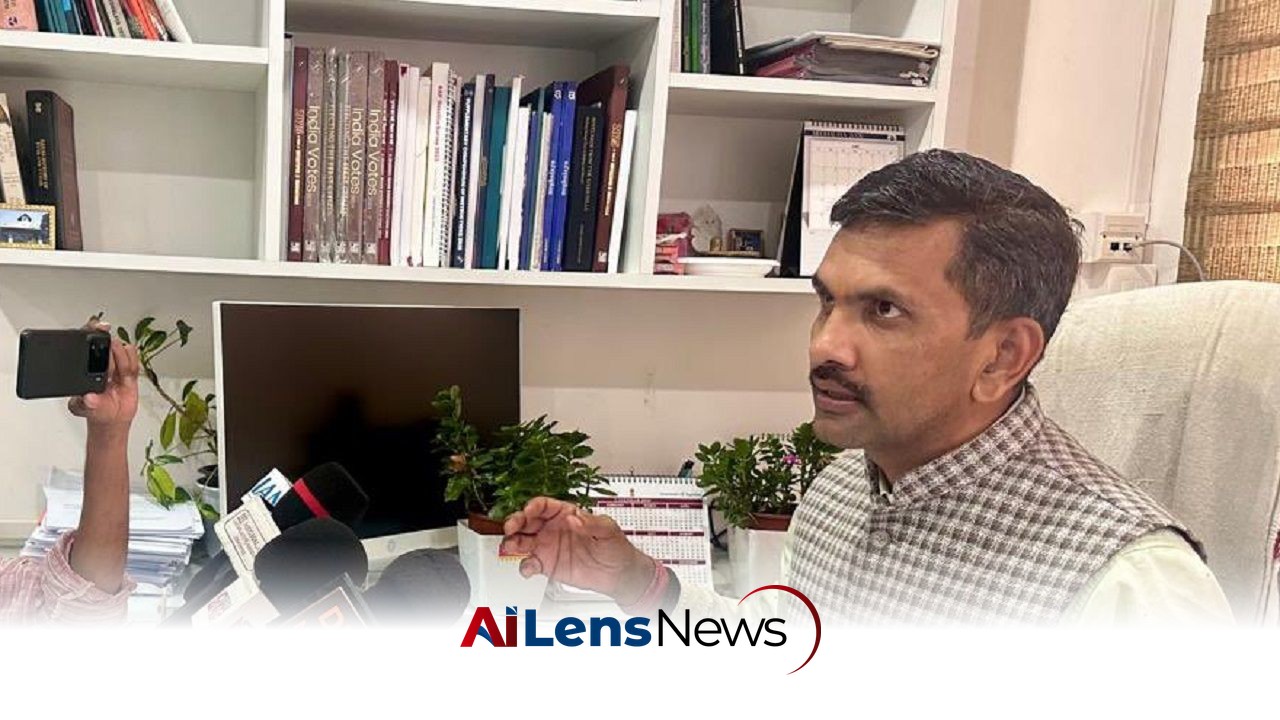


The Special Intensive Revision (SIR) 2026 of the Electoral Roll has reached a significant milestone with 98.17% of Enumeration Forms distributed, according to Chief Electoral Officer Dr. B.D.R. Tiwari.
Shillong, India Jul 21, 2026 ALN: SHILLONG, JUL 21: The Special Intensive Revision (SIR) 2026 of the Electoral Roll has achieved a major milestone with 98.17% of Enumeration Forms (EFs) distributed across the state, Chief Electoral Officer Dr. B.D.R. Tiwari said on Tuesday. This achievement marks a significant step in the electoral process, reflecting the ongoing efforts to enhance voter registration and participation in the democratic process.
Addressing the media, the CEO emphasized that the progress made in the distribution of EFs is indicative of the commitment of the election machinery and the enthusiastic participation of voters ahead of the draft roll publication. The SIR initiative is aimed at ensuring that the electoral rolls are accurate and up-to-date, which is crucial for conducting free and fair elections.
“As on 21 July 2026, out of a total 23,49,645 electors, 23,06,585 Enumeration Forms have been distributed, achieving an overall 98.17% coverage,” Dr. Tiwari stated. This statistic underscores the extensive outreach efforts undertaken by electoral officials to ensure that eligible citizens have the opportunity to register to vote.
In addition to the distribution of EFs, digitization efforts are also progressing well, with 14,07,446 EFs digitized so far, accounting for 62.15% of the total electorate. The move towards digitization is part of a broader strategy to modernize the electoral process, making it more efficient and accessible to voters. The digitization of electoral data allows for better management and analysis of voter information, ultimately leading to improved service delivery during elections.
In terms of distribution performance, three districts recorded 100% coverage: West Jaintia Hills, South West Khasi Hills, and South West Garo Hills. These districts have set a benchmark for effective voter outreach and engagement. Following closely behind are East Garo Hills at 99.93% and Ri-Bhoi at 99.80%. Such high levels of coverage are indicative of the local electoral officials' dedication and the effectiveness of their strategies in reaching out to voters.
When it comes to digitization, the top-performing districts include West Khasi Hills with 79.86%, South West Khasi Hills at 78.51%, East Jaintia Hills at 75.44%, West Garo Hills at 74.03%, and South West Garo Hills at 73.81%. These figures highlight the varying levels of success across different regions, which may be attributed to factors such as local infrastructure, community engagement, and the availability of resources.
As of July 21, a total of 53,908 electors, or 2.29% of the electorate, have been identified under Absentee, Shifted, Death, and Duplicate (ASDD) categories. This includes 5,795 absent voters, 13,379 shifted voters, 32,382 deceased individuals, and 2,029 duplicate entries. Identifying these categories is essential for maintaining the integrity of the electoral rolls and ensuring that only eligible voters are included in the final list.
Additionally, 323 electors refused to accept the Enumeration Form. Dr. Tiwari stated that these cases will be handled in accordance with the Registration of Electors Rules, 1960, after due verification and an opportunity for the concerned electors to clarify their status. This process underscores the importance of transparency and fairness in the electoral registration process.
Dr. Tiwari reiterated that electors who do not submit their duly filled EFs within the prescribed timeline will not have their names included in the Draft Electoral Roll, which is scheduled for publication on 5th August 2026. The draft will be displayed at all polling stations, providing a critical opportunity for voters to verify their registration status. “All eligible electors are advised to submit their Enumeration Forms to their respective Booth Level Officers (BLOs) or through the online mode by downloading the ECINET App or visiting before the deadline,” he urged.
To monitor progress effectively, Dr. Tiwari has been conducting weekly video conferences with District Election Officers, Electoral Registration Officers, and Assistant Electoral Registration Officers. This proactive approach aims to address any challenges that may arise during the distribution and collection phases, ensuring that the process remains on track.
The focus during these meetings has been on house-to-house distribution, collection, digitization, and resolution of field-level issues. Such direct engagement with local officials is crucial for identifying and addressing any bottlenecks that may hinder the successful completion of the SIR process.
On July 21, the CEO also met with representatives of recognized National and State Political Parties. This meeting was significant as it provided a platform for political stakeholders to discuss their roles in the electoral process and the importance of voter registration. Dr. Tiwari appreciated their participation and noted the appointment of 892 Booth Level Agents (BLAs) across the state to assist electors and ensure transparency. The involvement of political parties is vital for fostering an inclusive electoral environment, as it encourages civic engagement and promotes trust in the electoral process.
“I urge all political parties to continue extending their cooperation for the timely and successful completion of the SIR exercise,” he stated. The collaboration between electoral officials and political entities is essential for achieving the goal of a comprehensive and accurate electoral roll.
Dr. Tiwari commended the efforts of District Election Officers, Electoral Registration Officers, Assistant Electoral Registration Officers, BLOs, BLO Supervisors, and all officials involved for the progress made thus far. Their hard work is fundamental in ensuring that every eligible citizen is included in the electoral roll, thereby strengthening the democratic process.
Furthermore, he appealed to electors who have not yet submitted their forms to cooperate with BLOs during house-to-house visits. This call to action is crucial, as the success of the SIR 2026 initiative largely depends on the active participation of the electorate.
“The Office of the CEO reiterates its appeal to all eligible electors to actively participate in SIR 2026 and ensure that every eligible citizen is included in the Electoral Roll, thereby strengthening free, fair, inclusive, and participative elections,” Dr. Tiwari added. The implications of this initiative extend beyond the immediate electoral cycle; a well-registered electorate is foundational for a vibrant democracy, as it enables citizens to exercise their right to vote and influence the governance of their communities.
To learn more about the latest developments in Politics, stay updated with our exclusive reports and analyses on AiLensNews.

