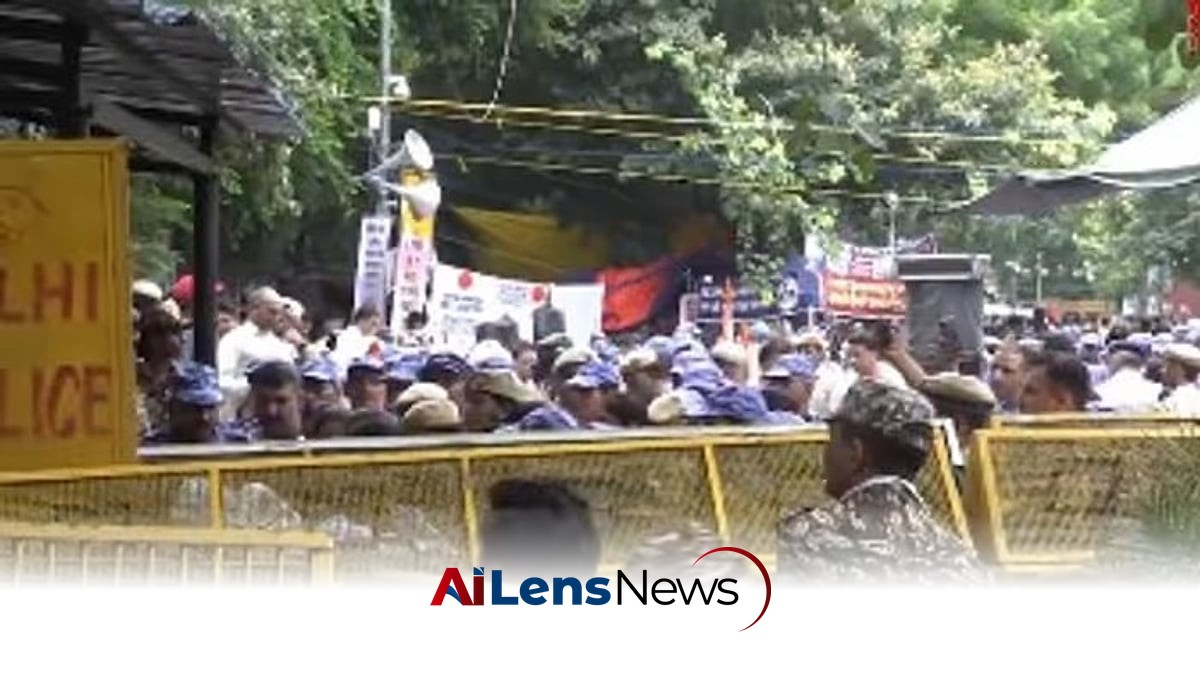


Security measures have been heightened in New Delhi's Jantar Mantar after climate activist Sonam Wangchuk was hospitalized due to health issues during a hunger strike.
Shillong, India Jul 18, 2026 ALN: Guwahati: Today, security has been intensified in and around Jantar Mantar and across parts of New Delhi after climate activist Sonam Wangchuk, whose health deteriorated during a 20-day hunger strike, was shifted to a government hospital following a brief commotion at the protest site. This incident highlights the ongoing tensions surrounding environmental activism in India, particularly as climate change issues gain increasing prominence on national and global agendas.
Wangchuk, a prominent engineer and environmentalist known for his innovative approaches to sustainable living, has been a vocal advocate for climate action. His hunger strike was aimed at drawing attention to pressing environmental issues, including the need for sustainable practices and policies to combat climate change. This method of protest is often employed by activists to bring awareness and urgency to their causes, but it can also lead to serious health risks, as seen in Wangchuk's case.
A heavy deployment of Delhi Police and paramilitary forces has been made at Jantar Mantar and surrounding areas to maintain law and order and prevent any untoward incidents. Barricades have also been erected, while security personnel have been stationed at key locations to regulate the movement of protesters and visitors. The increased security measures reflect the authorities' concerns over potential unrest, especially in the wake of Wangchuk's hospitalization.
Deputy Commissioner of Police (New Delhi) Sachin Sharma stated that Wangchuk was shifted to the hospital in compliance with the Delhi High Court's directions after his health deteriorated. "Following the directions of the High Court and in accordance with his medical condition and expert medical advice, we have taken Sonam Wangchuk to an appropriate government hospital. This was a necessary medical intervention and he is now under medical supervision," Sharma said. This statement underscores the legal and medical frameworks that govern such situations, where the health and safety of individuals engaged in protests must be balanced with the need for public order.
In an official statement, Delhi Police confirmed that Wangchuk had been admitted for essential medical care on the advice of medical experts and in accordance with the Delhi High Court's order. "As per the orders of the Hon'ble High Court and on expert medical advice, due to the deteriorating health condition of Shri Sonam Wangchuk, he has been shifted to hospital for essential medical care," the statement said. This highlights the judicial oversight that can play a role in protests, particularly when health issues arise, reflecting a broader commitment to ensuring the well-being of individuals even in contentious circumstances.
Police added that a brief commotion occurred when some protesters allegedly attempted to obstruct the authorities while they were carrying out the High Court's directions. Security arrangements have since been strengthened to ensure peace and prevent any further disruption in the area. The incident raises questions about the dynamics of protest movements in India, where activists often face significant challenges and opposition from authorities, particularly when their actions disrupt public order or draw attention to contentious issues.
The context of Wangchuk's protest and subsequent hospitalization is situated within a larger narrative of climate activism in India, where activists are increasingly vocal about the urgent need for action against climate change. India, being one of the countries most vulnerable to the impacts of climate change, faces a unique set of challenges that necessitate immediate and effective responses. Issues such as air pollution, water scarcity, and extreme weather events are becoming more pronounced, prompting activists like Wangchuk to take a stand through direct action.
Wangchuk's methodology, which includes hunger strikes and public demonstrations, is indicative of a broader trend among activists who seek to apply pressure on governments and institutions to prioritize environmental concerns. The effectiveness of such protests can be a double-edged sword; while they can raise awareness and galvanize public support, they can also lead to confrontations with authorities, as seen in this instance.
The implications of Wangchuk's situation are multifaceted. On one hand, his hospitalization may serve to highlight the seriousness of the issues he is advocating for, potentially drawing more attention to his cause. On the other hand, it raises concerns about the treatment of activists and the conditions under which they operate. The response from law enforcement and the judiciary indicates a recognition of the need to manage protests carefully, balancing the rights of individuals to express dissent with the need to maintain public order.
In the aftermath of this incident, it is likely that discussions around the treatment of climate activists and the methods employed in protests will continue to evolve. The interplay between activism, health, and law enforcement will remain a critical area of focus, especially as climate-related issues become increasingly urgent. As the world grapples with the realities of climate change, the actions of individuals like Sonam Wangchuk will continue to resonate, serving as a reminder of the personal sacrifices often made in the pursuit of environmental justice.
Moreover, the heightened security measures at Jantar Mantar may set a precedent for how future protests are managed in the capital. Authorities may adopt stricter protocols to ensure that protests do not escalate into situations that could endanger public safety or the health of participants. This could lead to a chilling effect on activism, where individuals may feel deterred from participating in protests due to fears of potential repercussions.
In conclusion, the hospitalization of Sonam Wangchuk during his hunger strike underscores the complexities surrounding climate activism in India. It raises important questions about health, safety, and the role of law enforcement in managing public dissent. As the nation continues to confront the challenges posed by climate change, the actions and fates of activists like Wangchuk will undoubtedly shape the discourse around environmental policy and activism in the years to come.
To learn more about the latest developments in Health & Public Safety, stay updated with our exclusive reports and analyses on AiLensNews.

