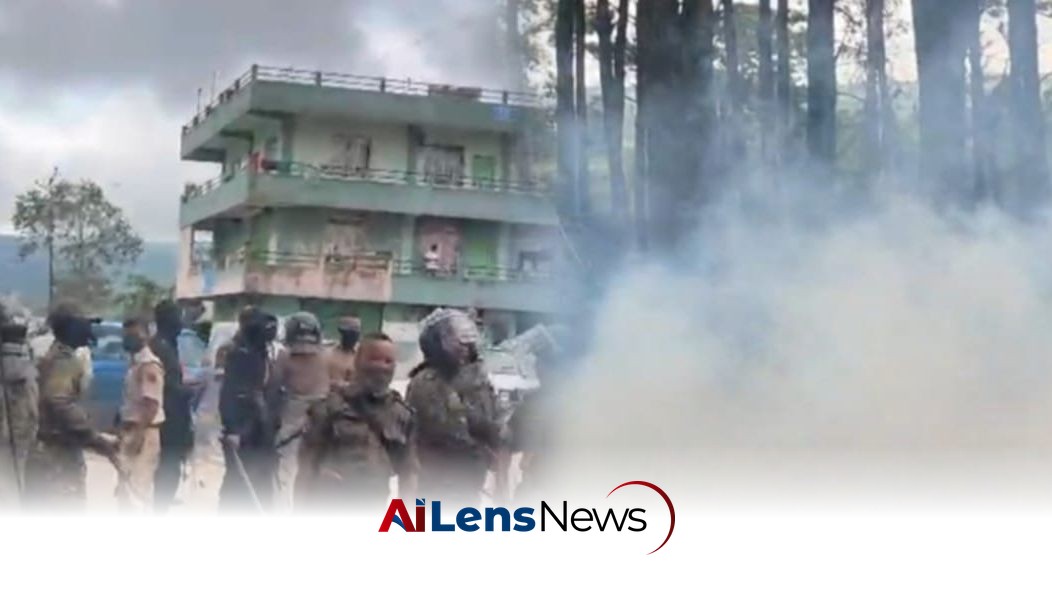


Security measures have been intensified in East Jaintia Hills ahead of the Shree Cement public hearing, following protests and arrests. Local groups are divided over the project’s impact.
Shillong, India Jul 31, 2026 ALN: Security was tightened in East Jaintia Hills ahead of the Shree Cement public hearing at Lumsyrman, Narpuh Elaka, after protests and arrests were reported on Thursday. The heightened security measures reflect the ongoing tensions surrounding the proposed cement plant and limestone mining project, which has become a focal point of local dissent and activism. This situation is emblematic of the broader conflict often seen in resource-rich regions where economic development initiatives clash with local community interests and environmental concerns.
The Shree Cement project, estimated at ₹1,800 crore, has been a contentious issue since its announcement. Local communities have expressed concerns over potential environmental degradation, land rights infringements, and the impact on their livelihoods. The project aims to establish an integrated cement plant and associated limestone mining operations, which proponents argue will generate employment opportunities and stimulate economic development in the region. However, many residents and activists fear that the environmental costs may outweigh the economic benefits. The opposition is rooted in a deep-seated belief that the region's ecological balance, which includes diverse flora and fauna, could be irreparably harmed by industrial activities.
In Shnongrim village, anti-project locals took direct action by blocking vehicles of State Pollution Control Board officials who had arrived a day before the hearing. This blockade highlights the deep-seated opposition among certain community members, who feel that their voices have not been adequately heard in the decision-making process. The vehicles were held for some time before being allowed to proceed to Lumsyrman, indicating a tense standoff between authorities and protesters. Such actions are not uncommon in areas where local populations feel marginalized, and they reflect a growing trend of grassroots activism against large-scale industrial projects.
Videos circulating on social media depicted chaotic scenes, with individuals fleeing as police pursued protesters. This situation underscores the volatility of public sentiment regarding the cement project and the lengths to which some community members are willing to go to express their dissent. While there has been no official confirmation regarding injuries or detentions, the presence of police and the reported chase suggest a significant law enforcement response to the protests. The rapid escalation of tensions raises questions about the effectiveness of police strategies in managing public dissent and the potential for further confrontations in the future.
East Jaintia Hills Superintendent of Police Shailendra Bamaniya addressed the situation, suggesting that there may be “vested interests” attempting to incite unrest. His statement reflects the authorities' perspective that external influences may be exacerbating local tensions. “The situation is peaceful now. Any incident will be examined,” he remarked, indicating a commitment to maintaining order while also acknowledging the complexities of the situation. This claim of external interference is often used by authorities in similar contexts to deflect criticism of their handling of local grievances and to justify a heavy-handed approach to policing protests.
The Jaintia Students’ Union (JSU) has been vocal in its opposition to the project, and on the same day as the protests, police in Daistong arrested several leaders of the Jaintia National Council (JNC) without providing clear reasons for their detention. Those arrested include President Sambormi Lyngdoh, General Secretary Wanshwa Suting, Assistant Secretary Allmiki Ryngkhlem, and Executive Member Hillarius Siangshai. The JSU has indicated that it is attempting to locate Publicity Secretary Mebanteilang Sukhlain, who is also reportedly missing. These arrests have further inflamed tensions and raised concerns about the suppression of dissent in the region. Such actions can often lead to increased polarization within communities, as supporters of the detained leaders mobilize in protest against perceived injustices, further complicating the situation.
The public hearing scheduled for July 31 is intended to record the views of all stakeholders regarding the Shree Cement project. Officials have confirmed that the hearing will take place at 8 AM at Lumsyrman, despite the protests. This hearing is critical, as it provides a platform for community members to voice their concerns and opinions. However, the backdrop of protests and arrests may overshadow the proceedings, leading to questions about the effectiveness of the hearing in addressing local grievances. The integrity of the public hearing process is paramount, as it can either validate or undermine the legitimacy of governmental decision-making in the eyes of the local populace.
Pressure groups including the JSU, JNC, Hynniewtrep Youth Council (HYDC), and Khasi Students’ Union (KSU) have collectively boycotted the public hearing process. Their boycott is rooted in a belief that the project poses significant environmental risks and violates land rights. The groups argue that the government has not adequately considered the potential negative impacts on local ecosystems and communities, particularly given the region's rich biodiversity and cultural heritage. This collective action not only demonstrates the unity among various local organizations but also highlights the critical role that civil society plays in advocating for environmental protection and social justice.
Conversely, there is a segment of the local population that supports the Shree Cement project, viewing it as a potential catalyst for job creation and economic growth. Proponents argue that the establishment of the cement plant could provide much-needed employment opportunities in an area where economic development has been slow. This division within the community highlights the complexities of balancing economic aspirations with environmental and social responsibilities. The differing viewpoints underscore the need for comprehensive impact assessments and community engagement initiatives that can help bridge the divide between development goals and community concerns.
As the public hearing approaches, the situation in East Jaintia Hills remains tense. Local leaders and activists continue to mobilize against the project, while authorities are tasked with maintaining order and addressing the concerns of both supporters and opponents of the cement plant. The outcomes of the hearing and the broader community response will likely have lasting implications for the region’s development trajectory, environmental stewardship, and social cohesion. The interplay between activism and government response will be crucial in determining how such projects are perceived and managed in the future.
In conclusion, the Shree Cement project encapsulates the ongoing struggle between development and environmental preservation in East Jaintia Hills. The tensions surrounding the public hearing reflect broader societal issues related to land rights, community engagement, and the role of local governance in managing natural resources. As stakeholders prepare to voice their opinions, the need for a transparent and inclusive dialogue becomes increasingly critical in navigating the future of the region. The ability of local authorities to foster a constructive conversation among all parties will be essential in finding a path forward that respects both the economic aspirations of the community and the imperative to protect its environmental and cultural heritage.
To learn more about the latest developments in Crime & Law, stay updated with our exclusive reports and analyses on AiLensNews.

