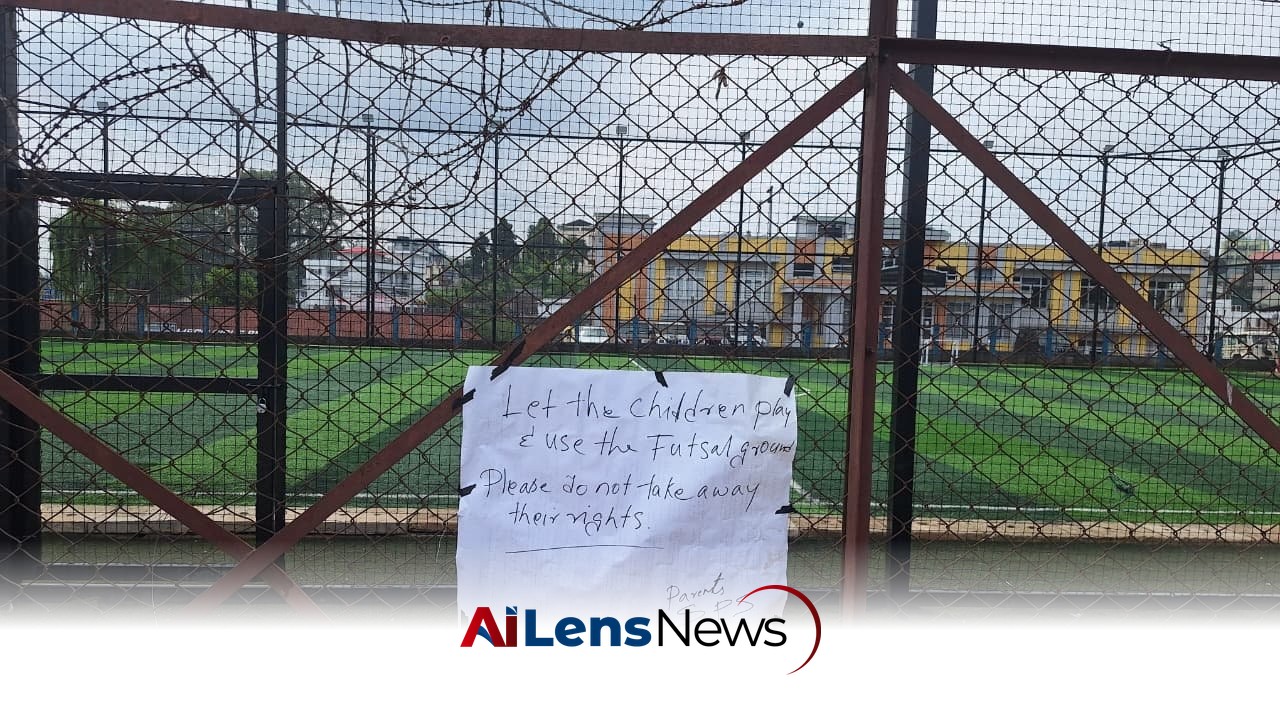


Residents express concerns over the commercialization of the futsal ground at Shillong Public School, claiming it restricts student access and raises safety issues.
Shillong, India Jul 25, 2026 ALN: Residents of Nongkynrih locality, situated under the Laitumkhrah Dorbar Shnong, have recently voiced their concerns and discontent regarding the commercial use of the futsal ground at Shillong Public School. The facility, which was initially intended to provide recreational and sports opportunities for students, has been handed over to a private entity, leading to allegations that it has effectively denied local students access to this important resource.
The futsal ground, officially known as the SPS Tynrai Football Arena, was inaugurated on May 14, 2026, as a collaborative effort between Shillong Public School and the Tynrai Academy. The aim of this partnership was to enhance football training and encourage physical activities among students. However, the recent shift towards commercialisation has raised significant concerns among local residents and parents alike.
Residents have reported that since the futsal ground opened to the public, they have experienced increased disturbances during nighttime hours. Complaints have been made regarding loud noises and commotion from individuals congregating in vehicles near the futsal ground, often late into the night. These disturbances have not only disrupted the peace of the locality but have also raised safety concerns, particularly for families and children living in the vicinity.
Furthermore, residents have highlighted that the access to Shillong Public School and the Directorate of School Education and Literacy, which previously closed at 9 PM, is now open throughout the night. This change has contributed to a perceived decline in safety for pedestrians, particularly during late hours when the area is less populated. The residents have expressed that these developments have created an unsafe environment and are calling for action to address these issues.
In addition to concerns about noise and safety, residents have questioned the legality and ethics of allowing a public facility to be used for commercial purposes. They have pointed out that the Dorbar Shnong, the local governing body, was not consulted or informed about the decision to commercialise the futsal ground. This lack of communication has led to feelings of disenfranchisement among the residents, who feel that their voices and concerns have been overlooked in the decision-making process.
Moreover, the residents have raised broader questions regarding the state government’s commitment to promoting sports and physical activities for children. They argue that instead of fostering an environment that encourages healthy lifestyles and sportsmanship among students, the commercialisation of public facilities undermines these goals. The transformation of the futsal ground into a commercial entity appears to contradict the original intent of providing accessible sports facilities for the youth.
The issue of commercialisation was initially brought to light by parents of students attending Shillong Public School, who organized protests in June 2026 against the restricted access to the futsal ground. Following these protests, the school administration implemented a temporary solution, allowing students to use the ground in batches. However, this arrangement has not alleviated the concerns of the local residents, who continue to advocate for unrestricted access to the facility for all students in the area.
The situation at the SPS Tynrai Football Arena reflects a larger trend in many communities where public facilities are increasingly being privatised or commercialised. This trend raises important questions about the balance between private enterprise and public access to recreational spaces. As cities and towns grapple with budget constraints and the need for revenue generation, the temptation to monetize public assets can lead to significant community backlash, particularly when such actions are perceived to prioritize profit over public good.
In light of these developments, the residents of Nongkynrih locality are calling for a dialogue between the Dorbar Shnong, the school administration, and the private entity managing the futsal ground. They seek to establish a framework that prioritizes the needs of students and the community while also addressing the concerns of safety and noise disturbances. The residents are hopeful that by raising their voices, they can influence a reconsideration of the current management of the futsal ground, ensuring that it serves its intended purpose as a resource for the youth rather than a commercial venture.
The implications of this situation extend beyond the immediate concerns of the Nongkynrih residents. It highlights a growing tension between community needs and commercial interests, especially in urban areas where public spaces are often at a premium. As municipalities continue to navigate these complex dynamics, the voices of local residents will be crucial in shaping policies that balance the interests of private entities with the rights of the community to access public resources.
As the discourse surrounding the futsal ground continues, it remains to be seen how the involved parties will respond to the residents' concerns. The outcome of this situation may set a precedent for how similar issues are handled in other communities, particularly as the demand for recreational facilities grows amid increasing urbanization and population density.
To understand the broader implications of this situation, it is essential to consider the role of public spaces in urban environments. Public facilities, such as parks, sports grounds, and community centers, are vital for promoting social interaction, physical health, and community cohesion. When these spaces are commercialized, there is a risk that access will become restricted to those who can afford to pay, effectively excluding lower-income families and children from the benefits of these facilities.
Moreover, the commercialization of public spaces often leads to a shift in focus from community engagement to profit generation. This can undermine the original goals of such facilities, which are to foster inclusivity and promote healthy lifestyles. The residents of Nongkynrih are not only advocating for their immediate concerns but are also raising awareness about the importance of maintaining public access to recreational spaces for the benefit of all community members.
In recent years, many cities have faced similar challenges as they seek to balance the need for revenue with the imperative to provide accessible public amenities. In some cases, this has led to the establishment of public-private partnerships that aim to leverage private investment while ensuring community access. However, these arrangements must be carefully structured to avoid compromising the public's right to use and enjoy these facilities.
As the situation unfolds in Nongkynrih, it serves as a reminder of the need for transparent communication and community involvement in decision-making processes. Local governing bodies, such as the Dorbar Shnong, play a crucial role in representing the interests of residents and ensuring that their voices are heard. When decisions are made without adequate consultation, it can lead to mistrust and conflict within the community.
Ultimately, the outcome of the protests and discussions surrounding the SPS Tynrai Football Arena will likely influence how similar situations are approached in the future. It highlights the importance of community advocacy in protecting public resources and ensuring that they remain accessible to all. As urban areas continue to grow and evolve, the need for equitable access to recreational spaces will become increasingly critical for fostering healthy, vibrant communities.
In conclusion, the residents of Nongkynrih locality are standing up for their rights to access public facilities that were initially intended for their benefit. Their protests reflect a broader movement advocating for the preservation of public spaces in the face of commercial pressures. As they continue to raise their voices, it is essential for all stakeholders to engage in constructive dialogue to find solutions that honor the original purpose of these facilities and meet the needs of the community.
To learn more about the latest developments in Crime & Law, stay updated with our exclusive reports and analyses on AiLensNews.

