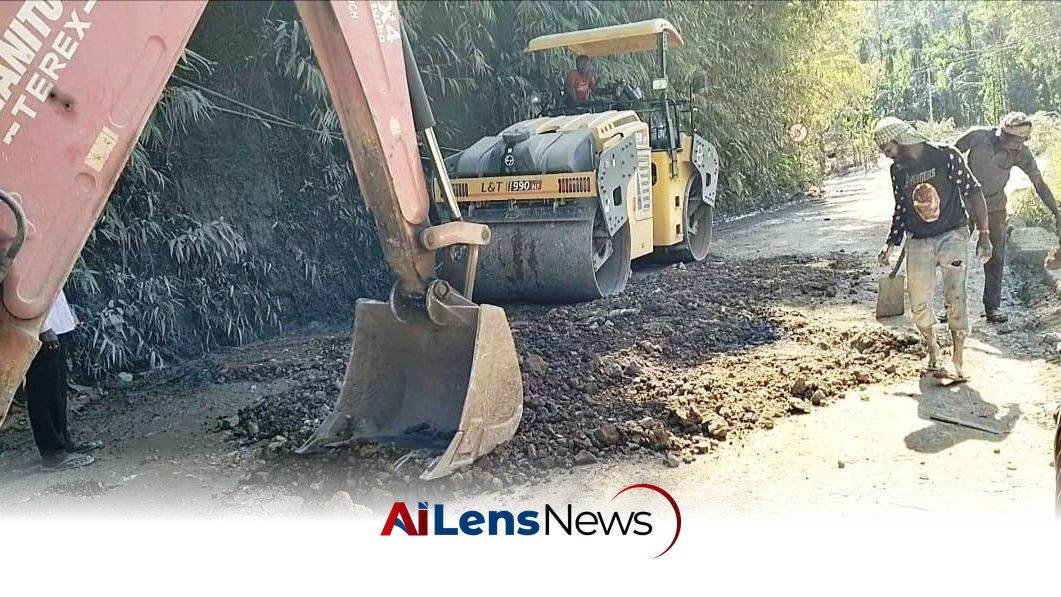


The National Highways Authority of India has awarded a contract for slope stabilisation at seven vulnerable locations along NH 6 to mitigate landslide risks.
Shillong, India Jul 16, 2026 ALN: The National Highways Authority of India (NHAI) has awarded a third specialised contract for slope stabilisation at seven identified vulnerable locations along the Jowai-Ratacherra stretch of National Highway 6 in the Jaintia Hills, aimed at preventing recurring landslides. This initiative comes in response to the persistent challenges posed by the region's unique topography and climatic conditions, which have historically made it prone to landslides, particularly during the monsoon season.
The Jowai-Ratacherra stretch of NH 6 is a vital artery for transportation in the northeastern region of India, connecting various towns and facilitating the movement of goods and people. The significance of maintaining this highway cannot be overstated, as it plays a crucial role in the economic development of the area, linking it to larger markets and providing access to essential services. However, the road's vulnerability to landslides has raised serious concerns regarding safety and accessibility, prompting the NHAI to take decisive action.
In its submission before the High Court, the NHAI informed that the contract was awarded to MFB Geotech Private Limited on July 3, 2025. The authority noted that this new scope of work is distinct from previous contracts, which primarily focused on road strengthening. The current contract involves specialised geotechnical solutions designed to prevent landslides, including soil nailing and drainage enhancements. Soil nailing is a technique that involves inserting steel bars into the ground to create a stable structure that can withstand the forces of nature, while drainage enhancements are critical in managing water flow and reducing the risk of erosion.
The NHAI reported to the court that slope stabilisation and related works are currently 85 percent complete. Critical work at Byndihati, which includes the construction of retaining walls and micropiling operations with Pavement Quality Concrete (PQC), is in progress. Retaining walls are essential for holding back soil and preventing it from collapsing onto the roadway, while micropiling provides additional support to structures at risk of failure. However, completion is expected to take at least two more months, primarily due to the area's frequent rainfall, which complicates construction efforts and can lead to further delays.
Additionally, the NHAI stated that routine maintenance activities, including pothole repairs, road furniture upkeep, cleaning of drains, and clearance of debris from landslides, are being conducted regularly across the entire 102.255 km stretch. This ongoing maintenance is crucial for ensuring the safety and usability of the highway, as neglecting these tasks can lead to deteriorating road conditions and increased risks for motorists.
The ongoing slope stabilisation work is scheduled for completion by January 3, 2027. The NHAI assured the court that a status report indicating the progress of the work will be submitted regularly. This commitment to transparency is vital, as it allows stakeholders, including local communities and government entities, to stay informed about the project's status and any potential impacts on travel and commerce.
NHAI PIU-Shillong Project Director in charge, Hemant Kumar Tiwari, who was present during the hearing on July 13 before the division bench of Chief Justice Revati Mohite Dere and Justice Wanlura Diengdoh, assured that action will be taken against contractors if they fail to address any defects. This assurance reflects the NHAI's commitment to maintaining high standards of quality and accountability in infrastructure projects, which is essential for building public trust and ensuring that taxpayer money is used effectively.
The role of the judiciary in this matter is also noteworthy. Amicus Curiae S. Panthi requested time from the court to inspect and submit a report on the status of the road. This involvement underscores the importance of judicial oversight in public infrastructure projects, particularly in regions where environmental factors can significantly impact the safety and efficacy of such initiatives. The court's engagement ensures that the interests of the public are represented and that the NHAI is held accountable for its commitments.
The implications of these slope stabilisation efforts extend beyond immediate safety concerns. By investing in geotechnical solutions to prevent landslides, the NHAI is not only safeguarding the lives of travelers but also enhancing the long-term viability of the transportation network in the Jaintia Hills. Improved road conditions can lead to increased economic activity, as businesses benefit from better access to markets and consumers enjoy more reliable transportation options.
Moreover, the success of this project could serve as a model for other regions facing similar challenges. The techniques and strategies employed in this slope stabilisation initiative may be applicable to other vulnerable stretches of highway across India, particularly in hilly and mountainous terrains. As climate change continues to exacerbate weather patterns and increase the frequency of extreme weather events, proactive measures such as these will be essential in ensuring the resilience of infrastructure.
In conclusion, the NHAI's initiative to undertake slope stabilisation along NH 6 is a critical step in addressing the challenges posed by landslides in the Jaintia Hills. With a focus on specialised geotechnical solutions and a commitment to ongoing maintenance and accountability, the NHAI aims to enhance the safety and reliability of this vital transportation corridor. As the project progresses, it will be essential to monitor its impact on local communities and the broader economic landscape, ensuring that the benefits of improved infrastructure are realized for all stakeholders involved.
To better understand the context of this initiative, it is important to consider the geographical and climatic conditions of the Jaintia Hills region. This area is characterized by steep slopes, rocky terrain, and significant rainfall during the monsoon season, creating a natural environment that is susceptible to landslides. The topography of the Jaintia Hills, along with the heavy precipitation, has historically posed challenges for road construction and maintenance, making effective slope stabilisation techniques crucial.
The Jowai-Ratacherra stretch of NH 6 is not only important for local connectivity but also serves as a key route for transporting goods to and from the region. The highway connects several important towns and cities, facilitating trade and commerce. Any disruption to this route due to landslides can have a cascading effect on the local economy, impacting businesses and livelihoods. Thus, the NHAI's proactive approach to addressing these vulnerabilities is not just a matter of infrastructure maintenance but is also integral to the economic stability of the region.
In addition to the immediate benefits of improved road safety and connectivity, the slope stabilisation project is also expected to have environmental implications. By implementing geotechnical solutions that focus on soil stability and drainage, the NHAI aims to mitigate the risk of erosion and preserve the natural landscape of the Jaintia Hills. This is particularly important in an era where environmental degradation is a growing concern, and infrastructure projects must be designed with sustainability in mind.
Furthermore, the involvement of local communities in the monitoring and maintenance of the highway can foster a sense of ownership and responsibility towards the infrastructure. Engaging local stakeholders in the process can also enhance the effectiveness of maintenance efforts, as they are often more attuned to the unique challenges and needs of their environment. This collaborative approach can lead to better outcomes and a more resilient infrastructure system.
As the NHAI continues to implement this slope stabilisation project, it will be important to assess not only the technical aspects of the work but also the social and environmental implications. Regular updates and transparency in reporting will be crucial in ensuring that all stakeholders remain informed and engaged. The successful completion of this project could set a precedent for future infrastructure initiatives in similarly vulnerable regions, showcasing the importance of innovative engineering solutions in addressing the challenges posed by climate change and natural disasters.
In summary, the NHAI's slope stabilisation efforts on NH 6 represent a multifaceted approach to addressing the challenges of landslides in the Jaintia Hills. By integrating geotechnical solutions, ongoing maintenance, and community involvement, the NHAI is not only enhancing road safety but also contributing to the long-term economic and environmental health of the region. As the project moves forward, its impacts will be closely monitored, providing valuable insights for future infrastructure development in the face of a changing climate.
To learn more about the latest developments in Local & Regional, stay updated with our exclusive reports and analyses on AiLensNews.

