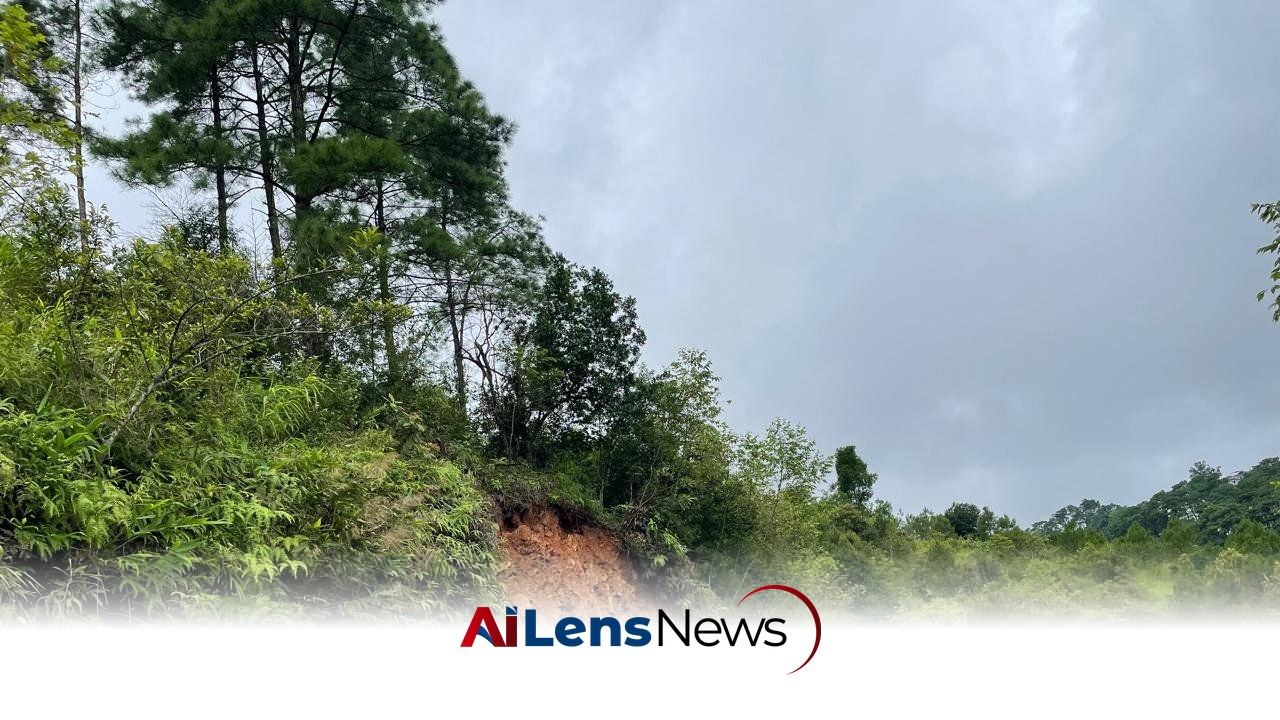


Multiple minor landslides have occurred along the Umiam Damsite road, prompting concerns of larger slides as the IMD forecasts heavy rainfall for the coming days.
Shillong, India Jul 22, 2026 ALN: Multiple minor landslides were witnessed on Monday along the Umiam Damsite road, raising fears that continued rainfall could trigger bigger slides without immediate preventive action. The Umiam Damsite road is not only a vital route for local commuters but also serves as part of the critical Shillong-Guwahati-Silchar corridor, which experiences heavy vehicular movement daily. This road connects the northeastern states of India, facilitating transportation of goods and services, as well as providing access to various towns and cities.
Photos from the area showed mud, rocks, and uprooted vegetation spilled onto the roadside after portions of the hillside gave way. Although traffic was not fully blocked, the debris along the stretch made movement risky, particularly during inclement weather. A reporter who visited the site observed similar minor slides at several points, indicating that the area is under significant stress due to the ongoing weather conditions. These landslides can pose serious risks not only to vehicles but also to pedestrians, highlighting the need for urgent attention from local authorities.
The India Meteorological Department (IMD) has forecast heavy rain and thunderstorms across the region for the next five days, until July 25. According to the July 21 bulletin, isolated heavy rain is likely over South West Khasi Hills, East Khasi Hills, and East Jaintia Hills on Monday, with thunderstorms and lightning expected at a few places. From Tuesday to Friday, the forecast indicates that isolated heavy rain will persist over East Khasi Hills, while thunderstorms are anticipated at many locations throughout the state. This prolonged period of adverse weather raises concerns about the stability of the region's infrastructure.
IMD has issued warnings regarding probable impacts that may arise from the anticipated weather conditions. These include waterlogging and flooding in low-lying areas, which can disrupt daily life and hinder transportation. The risk of landslides is particularly heightened in hilly regions, such as those surrounding the Umiam Damsite road. The IMD's advisory highlights the potential for damage to old structures, falling trees, and the closure of bridges, all of which could have serious implications for local communities and emergency services.
Flash floods, power and communication disruptions, as well as damage to crops and quarry areas were also flagged by the IMD. The agricultural sector, which is vital for the local economy, could face significant challenges if the rains lead to crop damage or loss of access to farming areas. Additionally, quarry operations, which are essential for construction and infrastructure development, may also be adversely affected by the weather conditions.
In its advisory, IMD has urged people to avoid low-lying, waterlogged, and landslide-prone areas, and has advised motorists to drive carefully on slippery roads. This is particularly important given the current state of the Umiam Damsite road, where minor landslides have already occurred. Authorities have been prompted to regulate traffic and ensure that safety measures are in place to protect commuters. Schools in flood-prone areas and mining/quarry operations have been advised to suspend work during intense rain, emphasizing the need for precautionary measures to safeguard the community.
The implications of such weather events are far-reaching, not only affecting transportation and safety but also the local economy and community well-being. The Umiam Damsite road's importance as a transport artery makes it a focal point for both local and regional traffic, and any disruptions can have cascading effects on trade and mobility. As the IMD continues to monitor the situation, local authorities are expected to implement emergency measures to mitigate the risks associated with the forecasted weather.
Furthermore, the occurrence of landslides and heavy rainfall in the region underscores the growing concerns around climate change and its impact on weather patterns. The northeastern states of India, characterized by their unique geography and ecosystems, are particularly vulnerable to extreme weather events. The region's topography, consisting of hilly terrains and dense vegetation, can exacerbate the effects of heavy rainfall, leading to increased soil erosion and landslides. With the increasing frequency of such occurrences, there is a pressing need for comprehensive disaster management strategies and infrastructure resilience planning to better prepare for future challenges.
In addition to immediate safety concerns, the long-term implications of climate change on the region's agriculture and economy cannot be overlooked. The agricultural sector, which employs a significant portion of the local population, is particularly susceptible to the impacts of erratic weather patterns. Prolonged rainfall can lead to waterlogged fields, affecting crop yields and threatening food security. This, in turn, can lead to economic instability, especially for families that rely heavily on agriculture for their livelihood.
Local authorities are increasingly aware of the need for sustainable practices that can mitigate the adverse effects of such weather. Initiatives aimed at improving drainage systems, reforestation, and soil conservation are vital in reducing the risk of landslides and maintaining agricultural productivity. Investments in infrastructure that can withstand extreme weather events are essential for ensuring the safety and mobility of residents and commuters alike.
In conclusion, the minor landslides along the Umiam Damsite road serve as a stark reminder of the potential dangers posed by heavy rainfall and the necessity for proactive measures to ensure safety and maintain infrastructure integrity. As the region braces for continued rain and possible thunderstorms, the focus will remain on safeguarding the community and minimizing disruptions to daily life and economic activities. The ongoing situation highlights the need for collaboration between government agencies, local communities, and environmental organizations to develop effective strategies that can address both immediate and long-term challenges in the face of changing weather patterns.
To learn more about the latest developments in Crime & Law, stay updated with our exclusive reports and analyses on AiLensNews.

