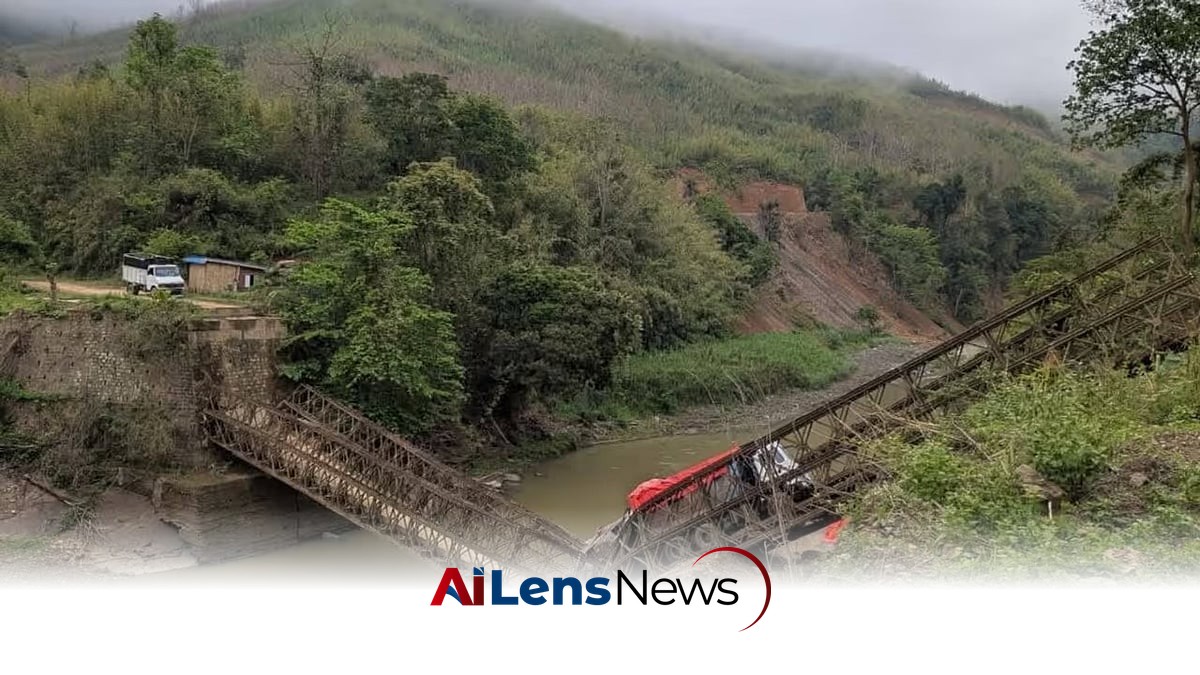


In a recent attack, suspected militants blew up a Bailey bridge in Kamjong district, severing vital road links for local villages and raising security concerns.
Shillong, India Jul 22, 2026 ALN: Guwahati: Today, suspected militants used improvised explosive devices (IEDs) to destroy a Bailey bridge over the Namban Lok River in Kamjong district, cutting off the only road linkage between several villages and the district headquarters, police said.
The police remarked that the attack took place at about 9.30am between Phange and Chatric villages. The bridge was built as part of the Pradhan Mantri Gram Sadak Yojana (PMGSY) and was the only bridge to provide access between Chatric and the rest of the villages and the district headquarters. This scheme, launched by the Indian government in 2000, aims to provide all-weather road connectivity to unconnected villages, thereby facilitating economic development and improving access to essential services such as healthcare and education.
The PMGSY is a significant initiative aimed at enhancing rural infrastructure, which is crucial for the socio-economic development of remote areas. By connecting these villages with better roads, the government aims to reduce poverty, improve living standards, and ensure that residents have access to markets, schools, and healthcare facilities. The destruction of such a critical piece of infrastructure not only disrupts these goals but also poses immediate risks to the safety and well-being of the local population.
The attackers also allegedly set fire to a Bolero pick-up truck belonging to the Telecom Department that was parked on the bank of Namban Lok River during the attack. The car was totally destroyed in the fire. The destruction of infrastructure, particularly in remote areas, not only disrupts local economies but also exacerbates the challenges faced by residents in accessing basic services. This incident highlights the vulnerability of public service vehicles and infrastructure to militant attacks, which can have cascading effects on the delivery of essential services.
Preliminary investigations suggest that the attackers used IEDs to demolish the bridge. They suspect it was an act of vandalism with the aim of damaging public property, interrupting the transport and communication services, and terrorizing the local population. Such acts of violence are not isolated; they are often part of a larger pattern of insurgency and militancy in the region, which has a complex history involving various ethnic groups and political movements. The use of IEDs is particularly alarming as it indicates a level of sophistication and planning that could suggest the involvement of organized militant groups.
The incident has been called a serious threat to public safety and state security. The region of Manipur has been grappling with insurgency for decades, with various militant groups fighting for greater autonomy or independence. The destruction of infrastructure, particularly in a remote area like Kamjong, can have far-reaching implications, potentially isolating communities and making them more vulnerable to further attacks. The ongoing strife in Manipur is rooted in a combination of historical grievances, ethnic tensions, and demands for greater political representation, which complicates the situation further.
A suo motu case has been filed at the CSD Police Station under relevant law, and an investigation has been initiated to find out and arrest the attacker. The police and security forces are likely to increase their presence in the area to prevent further incidents and to reassure the local population. The challenge for law enforcement is not just to respond to acts of violence but to address the underlying issues that fuel unrest in the region. This includes engaging in dialogue with community leaders, understanding local grievances, and working towards a more inclusive governance model that addresses the needs of all ethnic groups.
No militant outfit has claimed responsibility for the incident so far. This absence of a claim can suggest a few scenarios: the attack may have been carried out by a faction that operates independently, or it could be part of a broader strategy by a known militant group to instill fear in the local population. In either case, the lack of accountability and the ongoing cycle of violence underscore the need for comprehensive peace-building efforts in the region. The anonymity of the attackers complicates the response as it raises questions about the motivations behind the attack and the potential for further violence.
The implications of such attacks extend beyond immediate physical damage; they can lead to a breakdown in community trust and cooperation with authorities. Residents may become fearful of reporting suspicious activities, which can hinder law enforcement efforts. Furthermore, the destruction of infrastructure can lead to economic stagnation in affected areas, as businesses struggle to operate without reliable transportation routes. The psychological impact on the community can also be profound, as fear and uncertainty can lead to social fragmentation and a breakdown in communal ties.
In the wake of the attack, local leaders and community members may feel compelled to come together to address the growing insecurity. Initiatives aimed at fostering dialogue between different ethnic groups and the government can play a crucial role in mitigating tensions. However, achieving lasting peace in Manipur will require addressing the grievances that fuel militancy, including issues of identity, resource allocation, and political representation. Efforts to promote understanding and cooperation among different ethnic groups are essential to building a more cohesive society.
In a related development, Randeep Hooda, a prominent actor and social activist, has urged the people of Manipur to unite for peace during a recent meeting with the Chief Minister. His call for unity comes at a critical time when the region is facing heightened tensions and violence. Public figures like Hooda can play an influential role in shaping public opinion and fostering a culture of peace and reconciliation. The involvement of celebrities and influential figures can help draw attention to the need for peace and encourage community mobilization towards constructive dialogue.
As investigations continue, the focus will remain on ensuring the safety of residents and restoring vital infrastructure. The government and security forces are expected to take decisive action against those responsible for the attack while also engaging with the community to rebuild trust. The situation in Manipur serves as a reminder of the ongoing challenges faced by many regions in India, where the legacy of conflict continues to impact daily life. Restoring normalcy in the region will require a concerted effort from both the government and civil society to address the root causes of conflict.
In conclusion, the destruction of the Bailey bridge in Kamjong district is not just an isolated incident of violence but rather a reflection of the broader issues facing Manipur. Addressing these challenges will require a multifaceted approach that includes security measures, community engagement, and a commitment to long-term peace-building initiatives. As the region grapples with the aftermath of this attack, the resilience of its people and the actions taken by authorities will play a crucial role in shaping the future of Manipur. The path to peace is often fraught with difficulties, but with sustained efforts and a willingness to engage in dialogue, there is hope for a more stable and prosperous future for all communities in the region.
To learn more about the latest developments in Crime & Law, stay updated with our exclusive reports and analyses on AiLensNews.

